

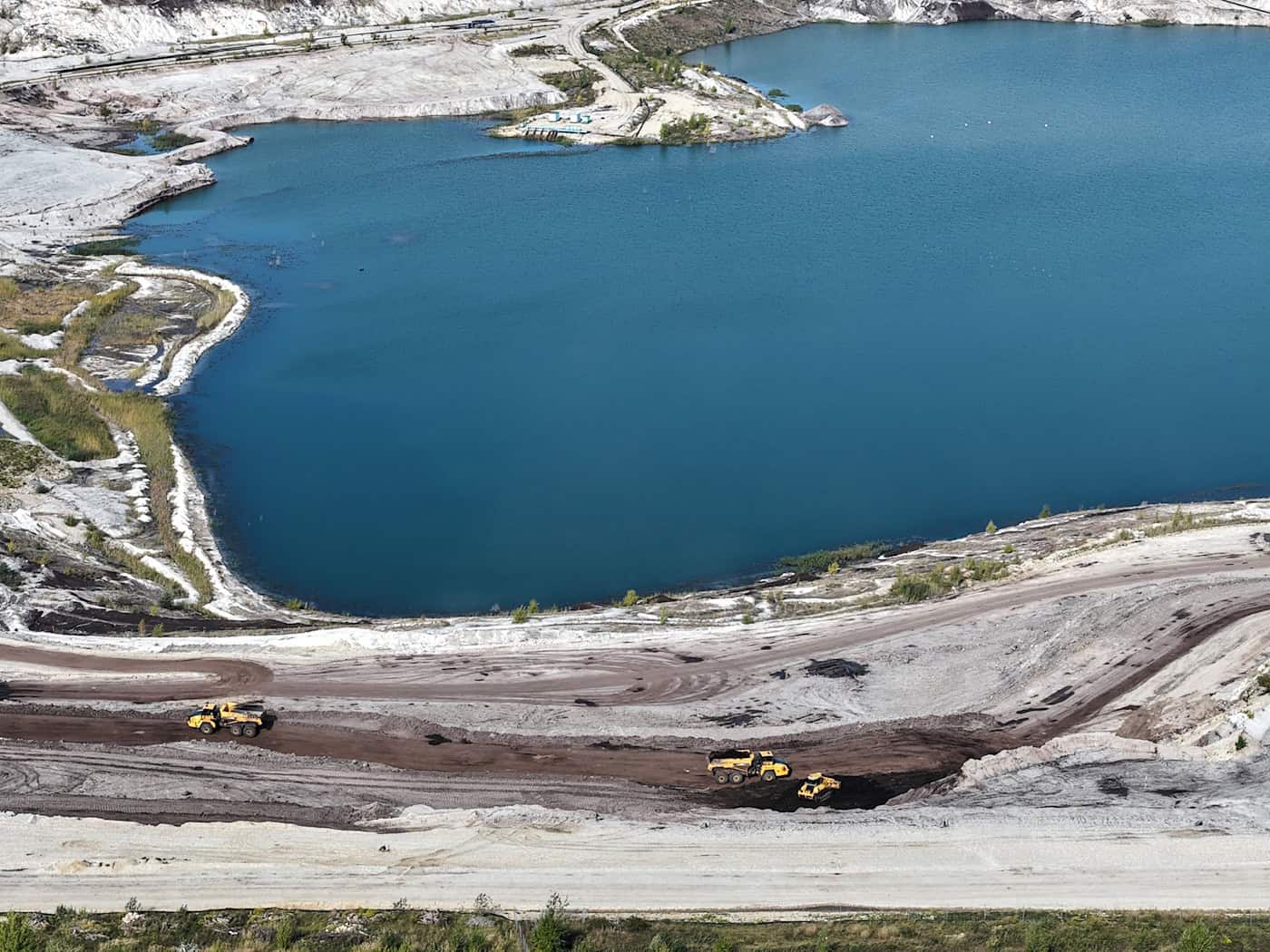
The flooding of the still-active open-pit lignite mines—Vereinigtes Schleenhain in Saxony and Profen in Saxony-Anhalt—could take longer than previously anticipated. Low river levels and falling groundwater levels could affect the current plans, Patrick Halka, head of the Leipzig Regional Planning Office, told the German Press Agency. Specialized working groups are currently examining, among other things, what volumes of water will be available for flooding in the future and what minimum ecological flow rates must be maintained in the rivers. However, it is not yet possible to assess whether this will have concrete consequences for the planned lakes. From the perspective of mining reclamation expert Martin Kreßner of the TU Bergakademie Freiberg, a reduced water supply could lead to longer reclamation periods, increased technical complexity, and higher costs. Companies would have to prepare for “extended project timelines until the reclamation work is completed,” Kreßner told the dpa. According to the expert, planners are increasingly moving away from the idea of accelerating the flooding of open-pit mine pits with water from rivers. If the water level rises more slowly than previously planned, increasing technical measures to stabilize the slopes may therefore become necessary. ““That will definitely put a financial strain on us,” said Kreßner. However, he does not see a fundamental alternative to flooding: Once artificial drainage of the mining areas ends, the groundwater level will automatically rise again. Therefore, there is “effectively no alternative to the formation of a residual lake”. Mibrag, the mining company responsible for the open-pit mines, does not see the basic plan as being called into question. Spokesperson Sebastian Exner stated that multi-year precipitation data series were used to forecast the duration of flooding. Individual years with low precipitation were factored into these calculations. Some of the planned open-pit residual lakes are already being flooded and will develop in parallel with active mining operations. The water that must be pumped out anyway to keep the deposit clear can be used for this purpose. For the final remaining pit, however, water must be supplied from outside sources—typically from surrounding waterways, Exner said. Current public plans call for water from the Mulde and the Weiße Elster, among other sources. The target water levels are set by the authorities. Lake Pereser is one of the lakes planned for the future. According to plans presented to the public so far, it is set to become the largest body of water in the Leipzig Neuseenland, with an area of about twelve square kilometers, a water volume of approximately 430 million cubic meters, and a depth of up to 80 meters. According to Mibrag, flooding is scheduled to begin around 2039. In Saxony-Anhalt, Lake Schwerzau and Lake Domsener are to be created on the site of the Profen open-pit mine. Currently, the relevant authorities in Saxony and Saxony-Anhalt are reporting groundwater levels that are half a meter below the long-term average across nearly the entire region. Following the prolonged drought this summer, rivers also continue to carry only a fraction of their usual water volumes. Copyright 2026, dpa (www.dpa.de). All rights reservedExpert: “This will put a financial strain on us”
Lake Pereser is set to become the largest of all post-mining lakes in the region


