Logo Die Sachsen News
Nachrichten / Culture

The "Red Elvis" died 40 years ago

The "Red Elvis" died 40 years ago
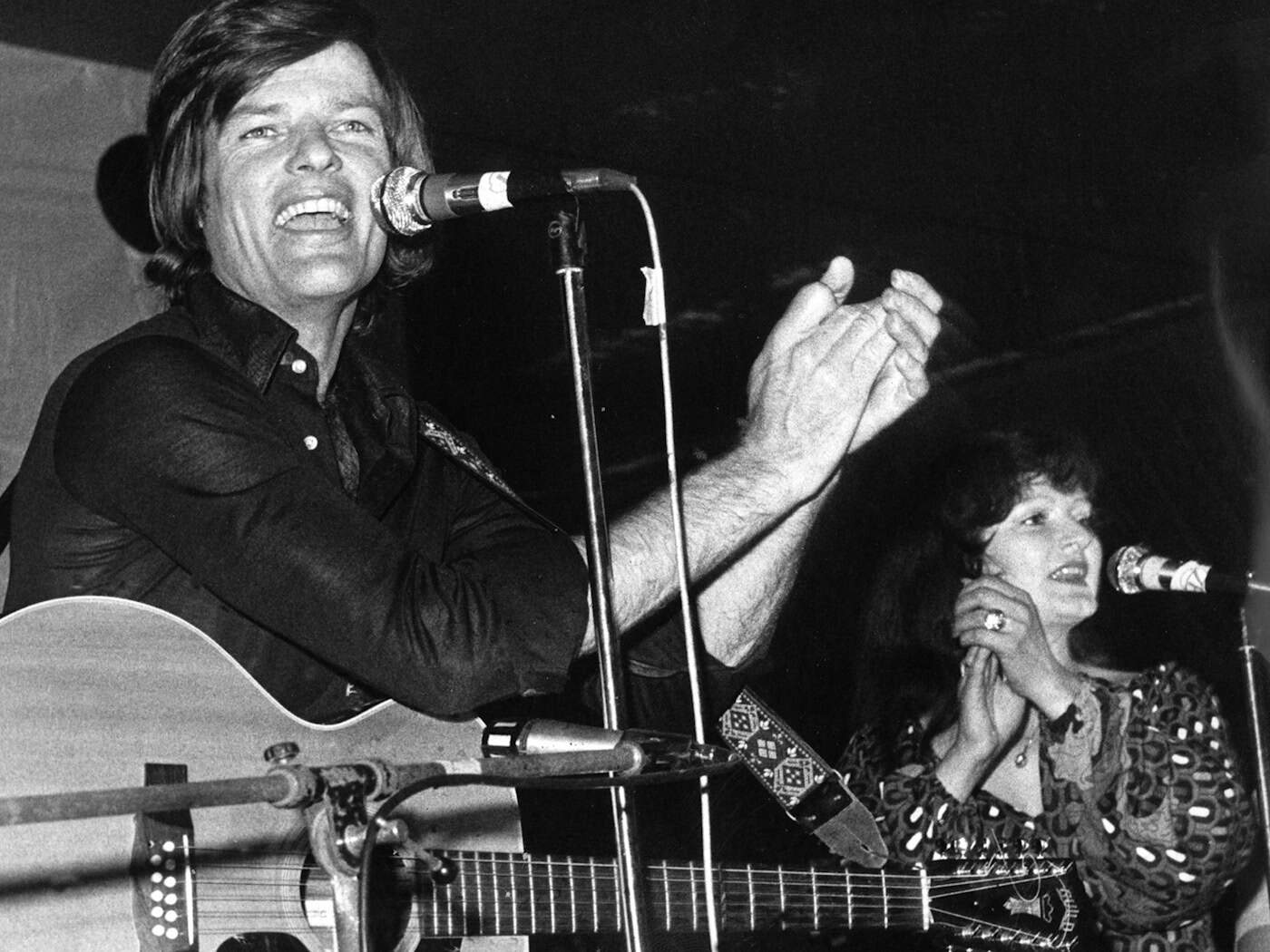
The American singer and actor Dean Reed lived in East Germany until 1986. / Photo: Nicola Galliner/dpa
Von: DieSachsen News
An American star as an East German icon—contradictory to the very end: Why Dean Reed’s death in June 1986 remains a mystery to this day.

He could have made a career as the Marlboro Man: tall, athletic, charismatic. But Dean Reed turned his back on the U.S. and became an icon in the GDR. Forty years after his death on June 13, 1986, the “Red Elvis” remains one of the most contradictory figures of the Cold War.

To this day, rumors persist that the Stasi murdered him following his alleged suicide in 1986. GDR historian Stefan Wolle, however, does not believe this: “I don’t think the Stasi would have done that. That just wasn’t their style,” the scientific advisor to the GDR Museum told the German Press Agency. 

Mehr aus dieser Kategorie

Career under socialism

Born in 1938 in Denver, Colorado, Reed made a name for himself as a rock ’n’ roll singer in Latin America. In the 1960s and 70s, he became increasingly politically active, protesting against the Vietnam War and U.S. policy. He moved in the circles of left-wing international figures—from Chilean President Salvador Allende to Palestinian leader Yasser Arafat. 

In the early 1970s, he finally embarked on an unusual chapter: After meeting Leipzig teacher Wiebke Dorndeck at the 1971 Leipzig Documentary Film Festival, he married her, settled in the GDR, and became a star there.

Singing Cowboy in the Workers’ and Peasants’ State

In the “Workers’ and Peasants’ State,” Reed appeared as a singing cowboy, sang in German, English, and Spanish, and acted in films—often as a Western hero. The GDR leadership presented him as a reformed American who had consciously chosen socialism.

“The fact that he came from the U.S. and was already known as a rock ’n’ roll singer and actor was something special in itself. The GDR was proud of that and promoted it accordingly,” says historian Wolle.

The American’s presence was enough for the GDR leadership

At the same time, Reed was more than just a political figurehead. He was considered charming, approachable, and communicative—an entertainer who connected with his audience. According to Wolle, he mostly avoided making open ideological statements. While he did speak out against U.S. imperialism, he never clearly identified with the GDR’s political system. 

That was enough for the GDR leadership: “The mere fact that he was present in the GDR was sufficient politically,” says Wolle. “He stood for peace, for justice, for freedom, and for democracy. But he never specified that more precisely. As a pop singer, he didn’t have to.”

The historian describes Reed as “a very likable, clever, and intelligent man, but one who possessed a high degree of naivety
and therefore avoided the actual political contradictions.”

Reed always lived in a state of conflict: “On the one hand, as a U.S. citizen, he could travel the world as he pleased. And at the same time, he accepted the fact that this wasn’t the case for the vast majority—99.9 percent—of GDR citizens,” says Wolle. 

Life in constant contradiction

This ambivalence shaped his life. While he publicly identified with the GDR, privately he harbored doubts and contradictions. “This contradiction is so obvious; there’s no getting around it,” says the historian.

His marriage to Wiebke Dorndeck broke down; in 1981, he married the actress Renate Blume. Contemporary witnesses report tensions and conflicts. According to the officers’ report, he snapped at GDR People’s Police officers in 1982 when they pulled him over for speeding: “You don’t write down the government limousines that just passed me at 160 kilometers per hour. It’s like a fascist state in here. Like most of the 17 million people in this country, I’ve had enough of this!”

Farewell letter vanished into Stasi files

Reed was in crisis. By then, he was also increasingly out of demand as a singer and actor in the GDR. On June 13, 1986, he suddenly disappeared. His widow Blume recalls in the documentary “The Red Elvis”: “He packed his bag and said he was going to the people who love him. However, he did not specify a concrete destination.”

Reed was found dead a few days later on the shore of Lake Zeuthen near Berlin. His 15-page farewell letter disappeared into the Stasi files until the end of the GDR.

“My death has nothing to do with politics,” the “singing cowboy” wrote in it. But his death was a political issue of the highest order. SED leader Erich Honecker himself, whom Reed had explicitly greeted in the letter, issued the statement that it was an accident. In the West, speculation arose that the Stasi might have eliminated Reed because he was planning to return to the U.S. To this day, speculation persists that the suicide note may have been written by the Stasi.

Historian Wolle says: “He had had a terrible argument with his wife, and that weighed him down so much and wore him out, and perhaps the somewhat difficult political situation added to it.” And: “There is also no evidence that the Stasi had a hand in it. It was likely indeed a personal matter.”

The “Bild” newspaper published the previously sealed farewell letter in 2004. The letter has now surfaced in “a Berlin archive”
, according to the newspaper report—without further details. A copy of the document was reportedly leaked to the paper. 

GDR Museum Seeks Memorabilia

His death became a political issue. While the GDR leadership spoke of an accident, critics in the West saw a possible connection to Reed’s growing dissatisfaction and thoughts of leaving the country. In his suicide note, however, he states that his death had “nothing to do with politics.”

The letter is now kept in the Federal Archives, explains Simone Uthleb, press spokesperson for the GDR Museum. However, the museum does keep some of Reed’s personal items in its storage facility, including a wedding photo and a record. Additional exhibits are welcome: “If anyone has items or an entire collection and would like to place them in good hands, we would be happy to accept them,” says Uthleb.

Copyright 2026, dpa (www.dpa.de). All rights reserved

Die Übersetzungen werden mithilfe von KI automatisiert. Wir freuen uns über Ihr Feedback und Ihre Hilfe bei der Verbesserung unseres mehrsprachigen Dienstes. Schreiben Sie uns an: language@diesachsen.com.
Sachsen News
Artikel von

Sachsen News

Sachsen News ist für die Inhalte selbst verantwortlich. Es gilt der Kodex der Plattform. Die Plattform prüft und behandelt Inhalte gemäß den gesetzlichen Vorgaben, insbesondere nach dem NetzDG.

Social Media