


Philipp Klöckner at "Brains on Silicon" in Dresden: This Is the Real Danger of AI
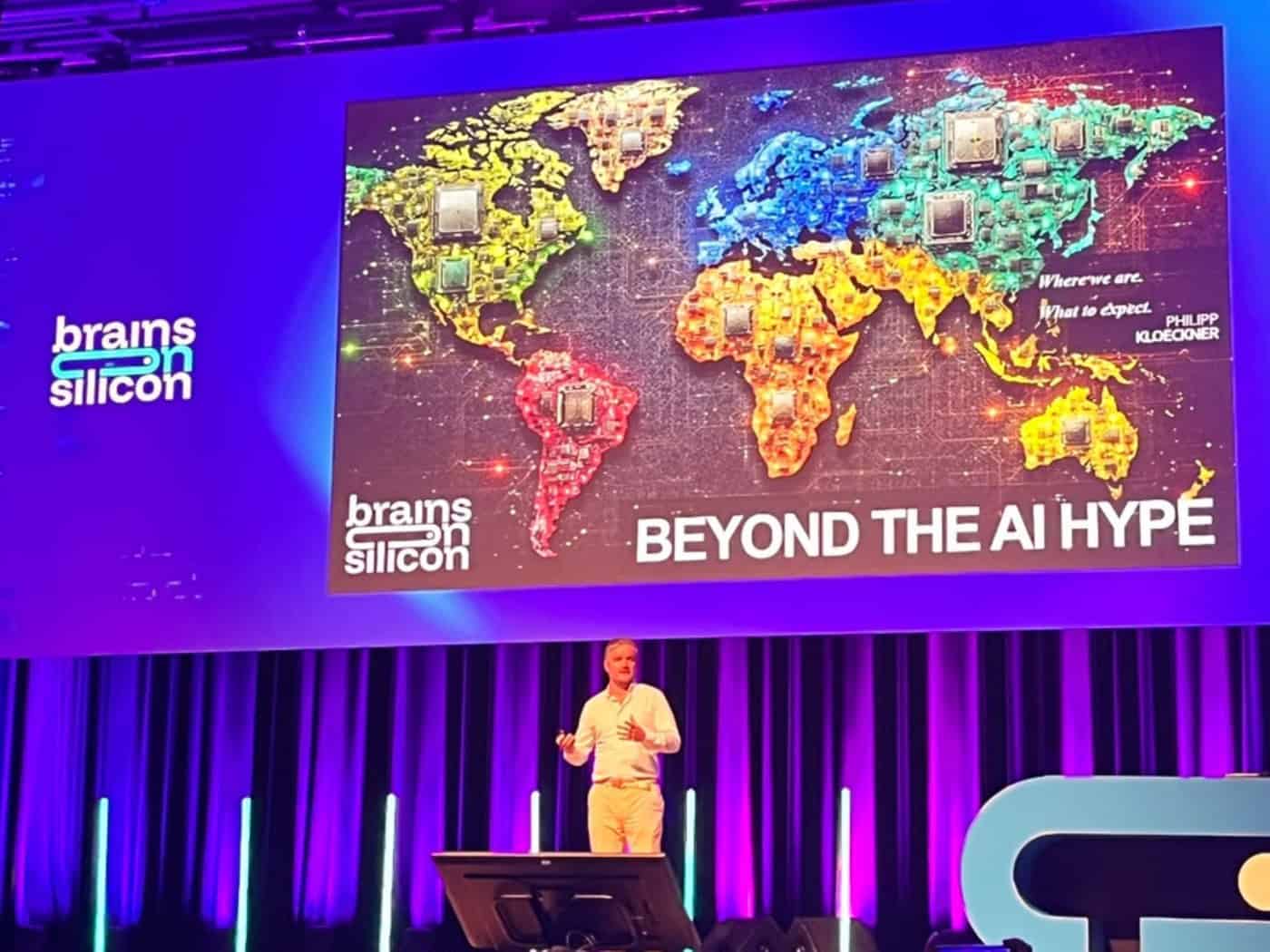
Dresden. Every day, approximately $2 billion flows into new AI data centers worldwide—more in a single year than the combined cost of four of humanity’s largest projects. And yet, most companies have so far gained very little from AI. Tech analyst Philipp Klöckner highlighted this contradiction on Tuesday at the conclusion of the Brains on Silicon conference in Dresden.
The technology itself is regularly underestimated, Klöckner said. First, people claimed AI couldn’t write good texts, then it couldn’t create images, and then it couldn’t develop software. “Anything AI can’t do well enough today, it will very likely be able to handle within the next six months,” Klöckner said. Since last year, agents have been working increasingly autonomously and tackling tasks that used to take them an entire day to compute.
More Money Than for Four Mega-Projects
Investments in data centers had risen to around $400 billion by 2025 and were expected to reach between $800 billion and $1 trillion this year, Klöckner calculated. That exceeds the operating profits of the major corporations, which are now taking on debt to fund these projects. For comparison, he cited the Manhattan Project, the Marshall Plan, the Apollo Program, and the International Space Station (ISS). Adjusted for inflation, these four projects combined would have cost less than a single year of AI data centers.
This trend is also being driven by new investors. Chipmaker NVIDIA invested over $90 billion in AI companies last year, and with the expected IPOs of OpenAI and Anthropic, retail investors will soon be getting in on the action as well.
The Real Challenge Is Everyday Life
The biggest problem isn’t the technology, but how it’s used, Klöckner said. While many companies are using AI in some form, around 60 percent are stuck in pilot projects, and only about a third are rolling out the applications on a large scale. Even in their personal lives, most people use AI rarely and superficially, with just a few queries per week.
This is precisely where the business opportunities of the coming years lie. The major providers are therefore teaming up with consulting firms and financial investors to handle the rollout for companies. In the mass market, Google is virtually impossible to catch up with, because its search engine directly displays AI-generated answers and reaches billions of people.
Job Fears Without a Data Basis
Klöckner warned against exaggerated fears about job losses. While hiring has slowed in some professions, there is no reliable data to support short-term job losses caused by AI. The often-cited decline in entry-level jobs began even before ChatGPT and is largely due to rising interest rates. In the legal sector, for example, more people are being hired than ever before.
In his view, it would be a mistake to stop hiring entry-level employees. It is precisely these new hires who bring the skills needed to work with AI into companies, just as young people brought the internet into businesses 20 years ago.
Two Dangers and a Debate Over the Pace
Klöckner did not cite machines taking on a life of their own as the greatest risks, but rather the deliberate manipulation of opinions and the misuse of AI as a tool. Anthropic has just documented that a militant cell in Houthi-controlled northern Yemen used the AI system Claude to develop missile software. A test launch reportedly failed, and no operational system has been confirmed.
Leading AI labs want to slow down the pace because control and security measures can no longer keep up. “They’re building the fastest Formula 1 cars in the world, but they don’t have guardrails,” said Klöckner. U.S. President Donald Trump, on the other hand, is pushing for acceleration and rejects strict regulations, partly out of concern that China is catching up.

