


The “Queen of Autumn” holds court in Thuringia
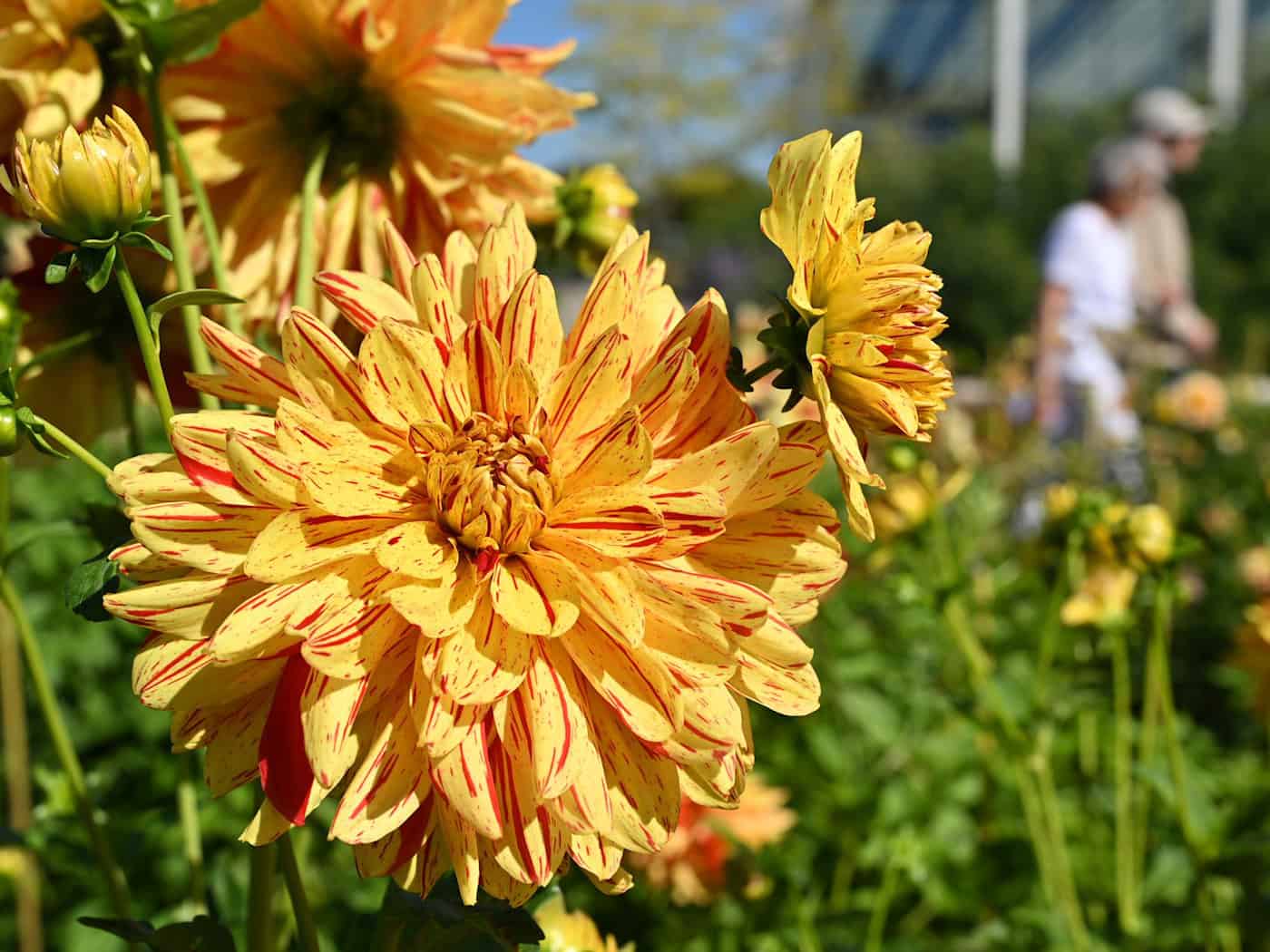
As the gardening year draws to a close in the fall, the highlight of the season begins in Gera and Bad Köstritz: It is only then that the dahlia reaches full bloom. Known as the “Queen of Autumn,” this ornamental plant has long been part of a rich cultural tradition, particularly in the eastern part of the state. Just how vibrant this tradition is was evident in recent weeks: In early September, the dahlia was celebrated in Gera and Bad Köstritz with dedicated festivals spanning an entire weekend each—featuring hundreds of visitors, a packed program, and the crowning of the Dahlia Queen as well as the “Dahlia of the Year.” Even outside of these celebrations, the dahlia plays a major role in the region. Nearly 2,000 dahlias in about 100 varieties can be admired every year in the dahlia garden in Gera, explains Alexander Fröhlich, the city’s head of the landscaping department. The exact number varies each year depending on the planting plan. The garden was established as early as 1928 and has weathered the turmoil of the war, German reunification, and the city’s financial difficulties. According to the city administration, this makes the garden in Gera one of the oldest dahlia show gardens in the world. The garden’s 100th anniversary is set to be celebrated in 2028. The dahlia garden is traditionally supplied by growers from Bad Köstritz, where the first German commercial dahlia nursery was established as early as 1826 under the leadership of the enterprising horticultural pioneer Christian Deegen. The boom of the early years, when the region had developed into a defining force in European garden culture, has since faded. Until the 1960s, there were still more than 20 commercial nurseries in Köstritz, including three specializing in dahlia cultivation, explains Dirk Panzer, owner of the dahlia specialist nursery Paul Panzer. Today, his family business—which celebrated its 150th anniversary in 2022—is the last operation in Thuringia specializing in dahlias. Today, Bad Köstritz supplies more than just the Gera Dahlia Garden. Among other places, visitors can also admire the magnificent flowers from eastern Thuringia at Erfurt’s Egapark. According to a spokesperson for the municipal utilities, 250 varieties in 15 classes are currently on display at Egapark. Among them is the oldest German variety still available commercially, the “Kaiser Wilhelm” dahlia from 1881. But dahlias from Bad Köstritz can also be seen on Mainau Island in Lake Constance, at the Frankfurt Palmengarten, and at Hamburg’s Volkspark, according to Panzer. Anyone looking for dahlias for their home garden can visit the Panzer family’s show garden, which features around 350 different varieties. Those who want to learn more about the history of the dahlia will also find what they’re looking for in Bad Köstritz: The Dahlia Center, which opened in 2007 as an official companion project to the Federal Horticultural Show, is aimed at both interested visitors and scientific experts. It houses the “German Dahlia Archive,” a museum, and its own show garden, where historic dahlia varieties and the original wild species are cultivated across approximately 400 square meters. Originally native to Mexico, the dahlia boasts a wide variety of forms: Shapes range from the classic, rounded ball dahlia to the exotic-looking cactus and staghorn dahlias with narrower petals. There are also virtually no limitations when it comes to color: Except for the color blue—which, according to Panzer, dahlias are genetically unable to produce—anything is possible. According to the dahlia expert, there are currently around 30,000 registered varieties worldwide, of which an estimated 10,000 still exist. Recent breeding efforts have aimed, among other things, to make dahlias last longer in a vase. But the dahlia isn’t just pretty to look at: its tubers are also edible. The taste varies depending on the variety and is most comparable to that of Jerusalem artichokes. They are prepared similarly to potatoes. To raise awareness of this use of the plant, the Panzer family has even created their own dahlia cookbook. But how did the dahlia—which is still known as a “Georgine” in some regions today—end up in Thuringia in the first place? The first written mention of the dahlia dates back to the late 16th century. Initially cultivated in Spain, the dahlia was brought to Germany by the naturalist Alexander von Humboldt, says Panzer. With the commercial nursery founded by Christian Deegen and the emergence of other horticultural businesses in the region, the foundation for the local dahlia tradition was laid. In 2024, the “Dahlia Tradition in the Middle Elster Valley” was added to Thuringia’s State Register of Intangible Cultural Heritage. For dahlia growers, however, economic survival is becoming increasingly difficult, according to Panzer. Since the operation of the Dahlia Center also relies heavily on volunteer work, its future is currently uncertain. Copyright 2026, dpa (www.dpa.de). All rights reservedA major anniversary is coming up in 2028
From Thuringia to the World
Dahlias are also a culinary delight

