


Climate Twins: German Cities on a Mediterranean Course
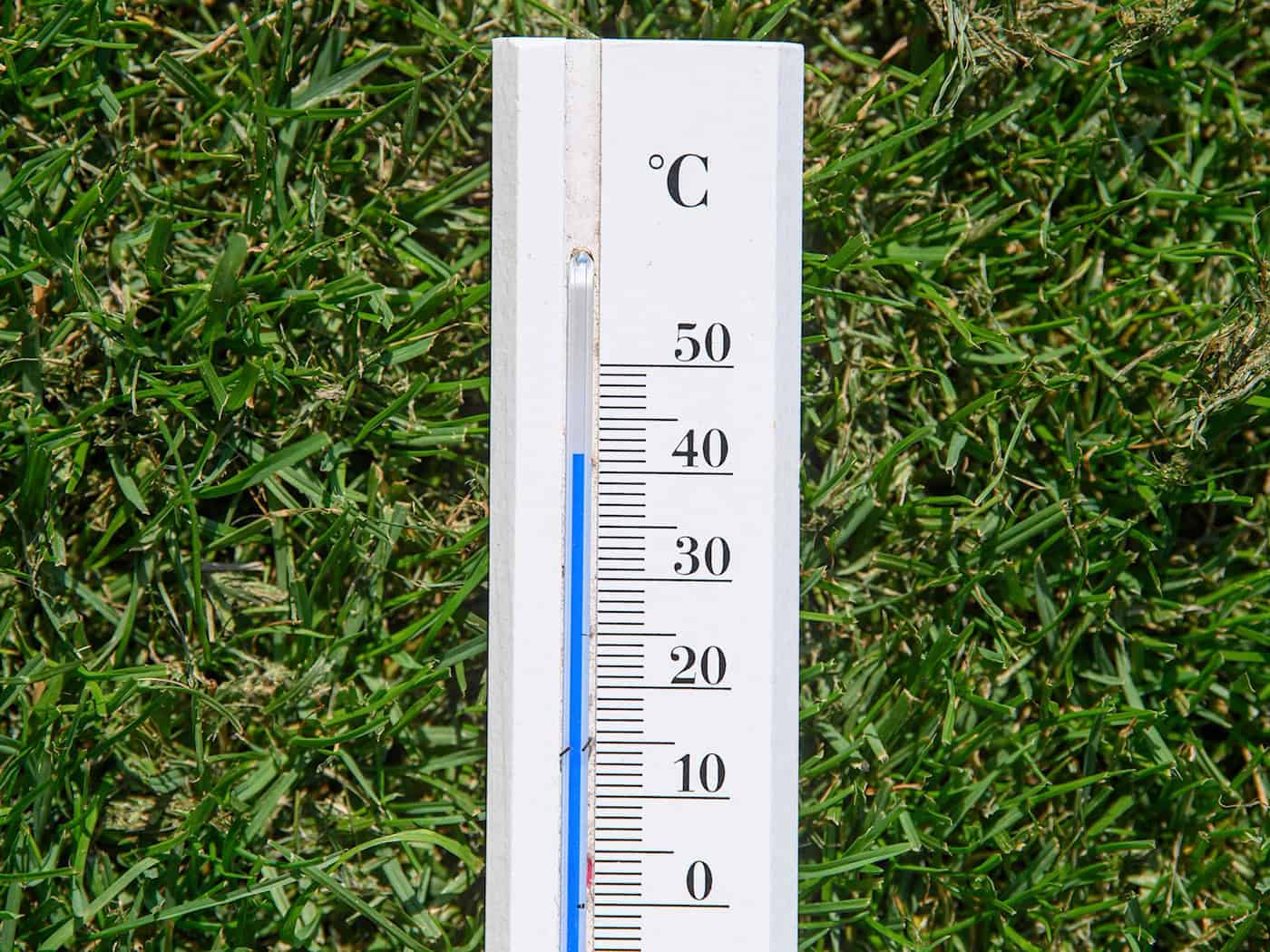
What do Dresden and Kupinovo in Serbia, Magdeburg and Bomborto in Italy, or Erfurt and Zrnovci in North Macedonia have in common? They are what are known as “climate twins.” According to model scenarios, the climate in the three state capitals of Saxony, Saxony-Anhalt, and Thuringia will be, in 60 years, what it already is today in the twin cities mentioned above. One thing is already clear: Climate zones are shifting northward—all regions in Germany will experience a climate similar to that which currently prevails in the Mediterranean region and the Balkans. A study conducted in 2021, in which the Federal Environment Agency was among the participants, already reached this conclusion. To this end, parameters such as average air temperatures, precipitation, and wind conditions from 1986 to 2015 were analyzed for 41 German locations spread across all federal states and various types of terrain. The data were then compared with regions in Europe that had similar average values from 1960 to 1991. This is how the “twins” were identified. “It turned out that the regions were all located 100 to 600 kilometers further southwest—all the way into France,” wrote author Alice Quack in an article for the Association of German Engineers. The idea of “climate twins” has a very practical side: it allows cities to plan for the future. If they know what kind of climate lies ahead, they can learn from their twin—for example, in terms of architecture, heat protection, irrigation, or tree species. The authors of the study expect that some cities in Saxony, Saxony-Anhalt, and Thuringia will experience “Italian-like conditions” in terms of climate. They could learn a great deal from cities in Emilia-Romagna in particular. This applies, for example, to Leipzig and its twin city Molinella; to Zwickau and Gera and their twin city Ripapersico; and to Dessau (Altedo) and Jena (Gambulaga). For Weimar, Lapovo in central Serbia would be a point of contact, and for Chemnitz, Toletino in the Italian region of Marche. Such scenarios can also be simulated on an interactive map from the Center for Environmental Science at the University of Maryland. The Federal Environment Agency writes: “Hamburg with a climate like that of the Adriatic, high temperatures in Lusatia all year round like in northern Spain, and Frankfurt with climatic conditions comparable to those in Croatia. At first glance, many people might like this idea.” But what sounds like a pleasant thought experiment actually poses an enormous challenge for the respective regions, ecosystems, and infrastructures. If climate change proceeds without climate protection measures, average temperatures would rise significantly in the coming decades, while average precipitation would change only slightly, the report continued. By the end of the century, the climate in most German cities could range between the conditions previously found on the French Atlantic coast and the Adriatic coast from central Italy to Croatia. “Cities that are currently relatively cool and humid by German standards, such as Hamburg, Bremerhaven, or Stralsund, could end up with a climate similar to that of the French Atlantic coast—between Nantes and Bordeaux,” according to the forecast by the Federal Environment Agency. Relatively hot and very dry German cities such as Brandenburg or Cottbus could have a climate similar to that of northern Spain, for example near Pamplona. “The comparison offers insights into what would need to change in Germany so that we can prepare for a much warmer climate in the future. And it also makes clear what makes climate change so dangerous and such a challenge for adaptation: the speed of change,” the experts emphasize. Even if analogies might be vivid, that doesn’t mean that, for example, building structures or ecosystems from another city could simply be replicated. Dresden-based climatologist Daniel Hertel points out the uncertainties. It’s less about forecasts and more about climate models—about projections. “We project the current climate into a possible future. There can be various futures. That’s why there’s always a range within which these developments are likely to occur.” However, one cannot say that at a specific point in time, conditions will be exactly the same in this or that location. According to Hertel, however, general conclusions can be drawn—for example, when looking at temperature. “The temperature is rising. This has an impact on evaporation, which has increased dramatically. Added to this is an increase in the duration of sunshine, which also influences evaporation.” Precipitation totals remain fairly consistent over the course of the year at present, but there are significant differences in distribution. This, in turn, could severely impact harvests. Even if some things are still unclear, one thing is certain: This year’s summer heat, with record temperatures exceeding 40 degrees Celsius, has reignited the debate about impacts and protective measures. Cities are developing heat management plans, planting trees, creating cool spaces, and aiming to store as much of the precious rainfall as possible for use during dry periods. People have started to think about this—the only question is whether the “turning point in climate change” can still be achieved. Experts like Hertel are optimistic that it is still possible to keep climate change within manageable limits. Since the first consequences are already visible and global emissions continue to rise—albeit more slowly—we must learn to cope with the impacts. The scientist advocates for an honest social and political debate. The question is which future climate risks the majority is willing to accept, which it is not, and who bears liability in case of doubt. It also involves what consequences this could mean for individuals: “The precautionary principle must apply. Science can make recommendations on this. Politicians must formulate guidelines or targets.” Copyright 2026, dpa (www.dpa.de). All rights reservedGerman cities can learn from their twins
An enormous challenge for the respective regions
Average temperatures will rise without countermeasures
The Speed of Change Is What Makes Climate Change Dangerous
More Sunshine—Higher Evaporation
Learning to cope with the impacts

