


Vandalism in Saxon Switzerland Takes a Toll on Nature and Public Funds
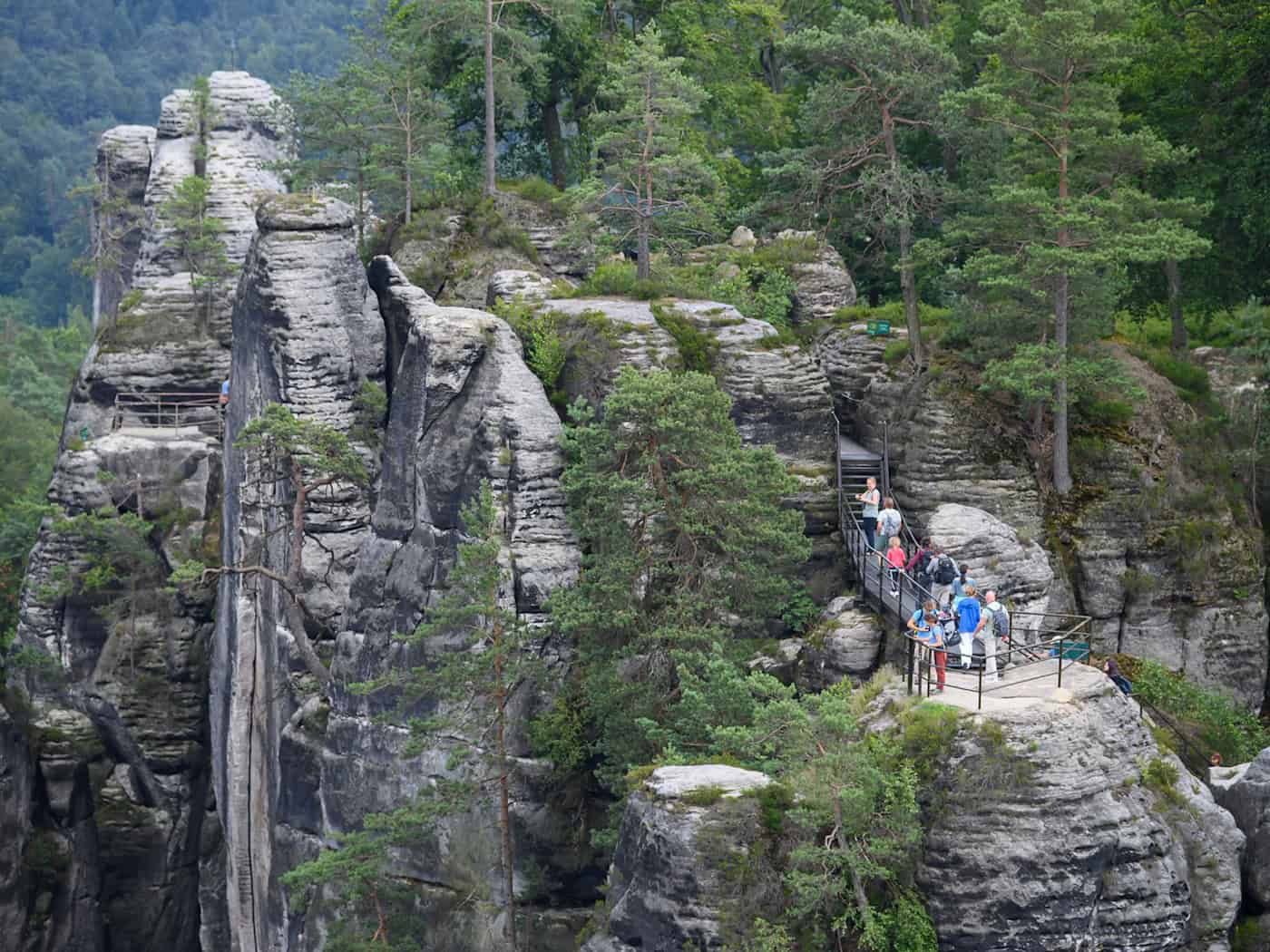
Traces of vandalism are repeatedly found in Saxon Switzerland National Park. Visitors carve their initials into rocks and trees, leave graffiti, or tamper with trail signs. The Saxon Switzerland National Park and Forest Administration estimates annual costs of between 20,000 and 25,000 euros for removing graffiti, paint, and stickers. “We’ve recently discovered damage at the Cottaer Spitzberg, the Lilienstein Obelisk, and the Großer Zschirnstein. What happened there is unprecedented,” said Jens Posthoff from the administration’s staff office. Exact statistics are not kept because the damage must be assessed differently in terms of both material and non-material severity. According to Posthoff, the damage to the rocks primarily consists of graffiti, totaling an area of about 50 square meters each year. The sites of the incidents are generally far apart. Aside from isolated cases, the spray-painted areas are rarely larger than 1.5 square meters. “Carvings in trees are the exception; on trees, we see local clusters of spray-painting with lettering or symbols,” said Posthoff. For the most part, the damage consists of stickers and messages of all kinds applied to trail signs with markers. The damage to trail signs in particular correlates with visitor numbers and the age group in certain areas. “Apart from the current damage to the sandstone and cultural monuments, removing graffiti remains manageable. The key is that the paint pigments haven’t been on the surfaces for too long,” Posthoff emphasized. The situation is different with highlighters and stickers, whose removal takes a lot of time and effort. After repeatedly cleaning the signposts with solvents, they would have to be replaced. According to Posthoff, in cases of graffiti, the police were able to clearly attribute the acts to specific individuals. “This is the result of cross-state police investigations. First, the offenses must be punishable by law; the judiciary decides on the severity of the punishment and the daily fines.” This summer, unknown individuals severely damaged several rocks. According to police, the perpetrators allegedly used cordless power tools to carve the initials “J+D” into the sandstone and monuments. They sometimes added a heart symbol to these. Among the sites affected were the Schrammstein viewpoint, the Papststein, the Hercules Columns in the Bielatal, and the Schrammtor. An incident also caused a stir in the neighboring Bohemian Switzerland National Park. The park’s landmark, the Prebischtor, was affected. Because a boy used a sharp object to scratch the rock on one of the viewing platforms at the sandstone bridge, his parents must now pay a fine equivalent to about 400 euros. Another visitor had filmed the incident with his cell phone and alerted the authorities. “Our goal is to present nature to our guests in a visually unspoiled state—free of political messages or declarations of support for soccer clubs—to ensure an authentic nature experience. Repairing the damage is financed with taxpayer money. All funds spent on repairing damage are diverted from the maintenance of tourist infrastructure such as climbing routes or hiking trails,” Posthoff clarified. Copyright 2026, dpa (www.dpa.de). All rights reservedGraffiti is often not extensive
Perpetrators used cordless power tools
Funds for damage repair are lacking elsewhere

