

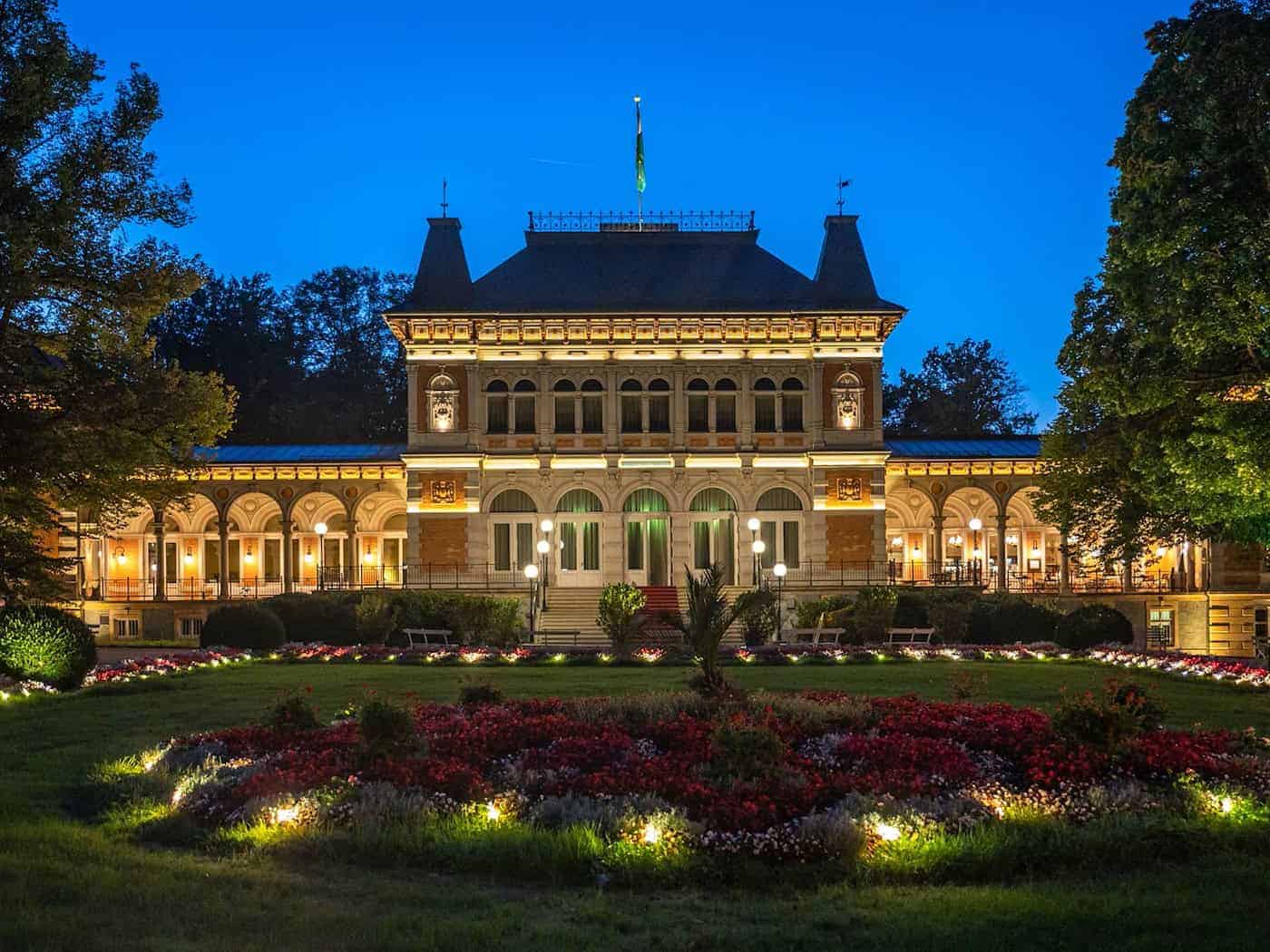
Saxony's cities and municipalities are calling for the state to participate in a possible financial compensation for the health resorts and spas in the state. The state must contribute at least the same amount and create a legal basis for this, said Ralf Leimkühler, Deputy Managing Director of the Association of Towns and Municipalities (SSG), to the German Press Agency. This is the prerequisite for such a financial equalization for health resorts. The SSG committees are currently discussing the idea. A decision has not yet been made. The background to this are demands from the 14 state-recognized health resorts in Saxony for financial compensation due to additional expenditure. According to surveys by the Saxon Spa Association, the 14 affected municipalities together lack around ten million euros annually, which are not covered by the current levy models. Saxony's Tourism Minister Barbara Klepsch recently backed the demands of the spas. "We know - and this has also been proven by an expert opinion - that the health resorts in particular have additional burdens in their respective budgets due to the task they fulfill," said the CDU politician. The aim is to provide financial relief for this. According to the CDU politician, this had not been achieved in the previous double budgets of the Free State. "But we also need to join forces with the municipal family," said Klepsch. For around ten years, the state tourism association has been campaigning for a financial instrument to relieve the burden on the resorts, said Director Andrea Kis. The spas generate around 650 million gross revenue: "Added value that does not flow directly into the resorts, but has an impact on the entire region." Helfried Böhme, Managing Director of the Saxon Spas Association, referred to existing financial mechanisms in other federal states. There is financial compensation for spas in neighboring Thuringia, for example, and in around half of all federal states. "Everyone else is fighting for it." The additional expense for the title of spa resort is considerable: healing water must be constantly sampled and analyzed, a spa park must be operated and maintained, infrastructure must always be kept in top condition. At the same time, there are additional requirements that prevent some companies from settling here. The result is that many places lack the necessary funds for investment due to the already increasing burden on municipal budgets. In the far south of Saxony, the two spa towns of Bad Brambach and Bad Elster want to merge this year. The reasons for this include the budget problems that the municipality of Bad Brambach has been experiencing for years, according to local administrator Thorsten Schnurre. According to the FDP politician, this is at least partly due to its obligations as a health resort. With their special status as Saxon state spas, Bad Brambach and Bad Elster have significantly more support from the state than others. "However, we need the compensation for health resorts because it naturally also affects the others," said Schnurre. Bad Brambach is currently trying to renew its status as a health resort. The status is a "double-edged sword". "We can't build the way we want to because of the protected zones for medicinal water and we can't set up every type of industry." The process, which is necessary every ten years, takes several years of preparation and numerous expert opinions and is correspondingly cost-intensive. But Schnurre is certain: "The status has done us a hell of a lot of good - through the operation of the Saxon state baths alone." This also applies to the wider area: the majority of overnight stays in Upper Vogtland take place in the two spa towns. The cultural events in neighboring Bad Elster also radiate far beyond the region. However, he also knows that there are places that doubt whether it would be worth renewing the spa resort title. Copyright 2026, dpa (www.dpa.de). All rights reservedTourism Minister Klepsch: Create financial relief
Bad Brambach and Bad Elster: merger due to tight budgets


