


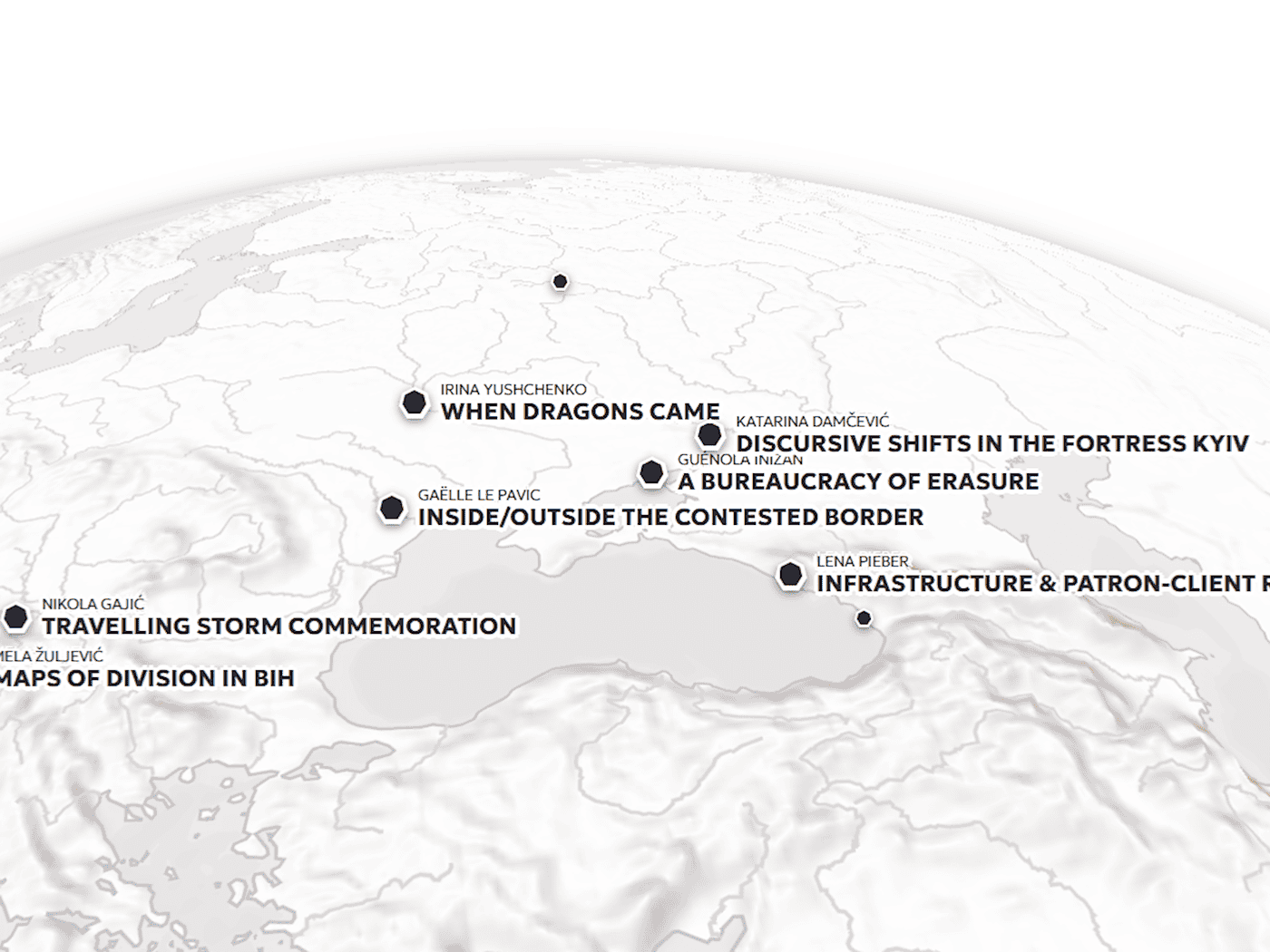
Conflict maps often appear objective and unambiguous. Yet what they show — and what they leave out — is rarely neutral. Behind every map are decisions, perspectives, and political interpretations. A new platform published by the Leibniz Institute for Regional Geography in Leipzig aims to make exactly that visible.
The online atlas Visualising Conflict/Peace is now freely accessible. It was developed as part of the research network Conflict and Cooperation in Eastern Europe, or KonKoop for short. Researchers from geography, political science, history, and anthropology collaborated on the project across national borders.
Conflicts on the map
The atlas brings together case studies from Eastern Europe, the Western Balkans, the South Caucasus, and Central Asia. Users can explore conflicts and peace processes on different levels, from local disputes to international entanglements. What makes the platform unusual is that it also reveals how its own maps were created. What data was used? Which decisions shaped the visualisations? Whose perspective is visible — and whose is missing?
“We want to show that maps are not neutral depictions of conflicts, but interpretations that are themselves shaped by political and social realities — and that also help shape those realities,” says IfL researcher Dr. Mela Žuljević, who played a key role in developing the atlas. According to Žuljević, the project is intended to make different perspectives visible and encourage critical reflection.
An atlas that grows
The project describes itself as a “living” atlas. It is deliberately designed to remain open and expandable, with new case studies and perspectives to be added over time. The atlas encourages users not only to read maps, but also to question them. That matters more than it may seem at first glance. Maps influence how we think about conflicts. They help determine what becomes visible and what remains hidden. An atlas that openly reveals these choices can encourage a more critical view of maps and political narratives.
Especially since the war in Ukraine, maps have become a central tool for understanding conflicts. Maps showing front lines, spheres of influence, and territorial claims circulate every day. At the same time, researchers increasingly argue that such visualisations are never completely neutral. The Leipzig atlas is part of a growing international debate around critical cartography. Scholars in this field question the idea that maps are objective representations of reality. Instead, they examine how maps shape political perspectives and frame conflicts in different ways. The new atlas from Leipzig seeks to make these mechanisms visible. It is available online in English and can be accessed free of charge.
Further information at:
https://visualisingconflictpeace.de

