


Water crisis hits the poorest particularly hard
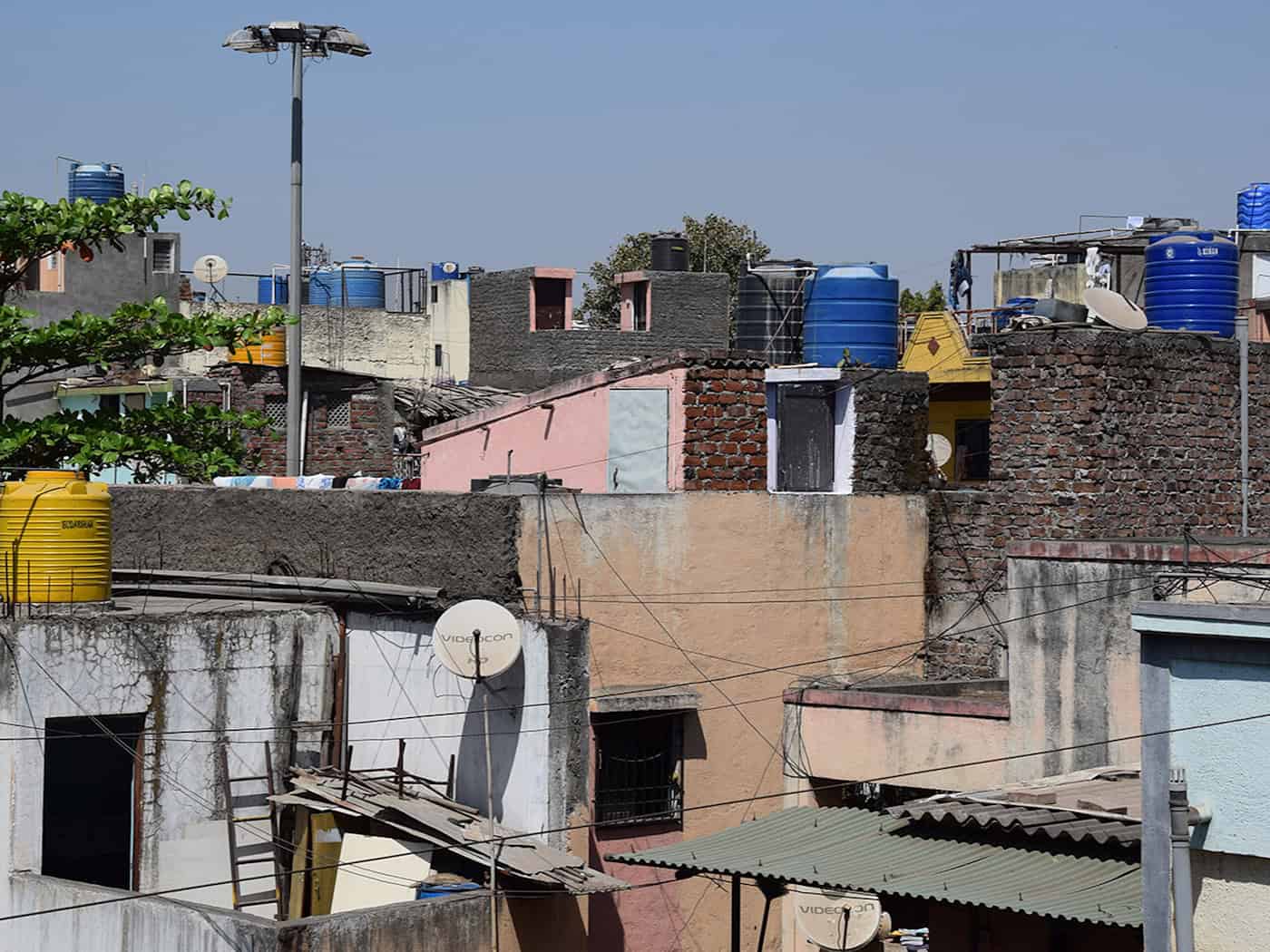
Many people take water from the tap for granted. However, it is becoming increasingly scarce in fast-growing cities around the world. A new study shows that poor people in particular are bearing the consequences.
Researchers involving the Helmholtz Centre for Environmental Research (UFZ) in Leipzig have investigated the situation in the Indian megacity of Pune. Their findings were published in Earth's Future.
Drought exacerbates social inequality
Many large cities are already struggling with water shortages. According to the study, up to half of the urban population could be affected by 2050. Cities such as Cape Town and Chennai show how quickly the situation can escalate. In Pune, millions of people live without safe access to tap water. The analysis shows that multi-year droughts greatly exacerbate the situation. Without political changes, there is a threat of drastic consequences.
The researchers write that "low-income residents can expect an increase in water costs and a drop in supply to almost half of the minimum requirement per person per day". Water could then cost up to a fifth of income. Such developments have also been documented internationally. Studies show that water crises often reinforce existing inequalities. Those who earn the least pay the most and receive the least.
Germany is not immune either
The good news is that solutions are possible. The combination of several measures is crucial. These include investments in pipelines, stricter rules for groundwater and new market models. A regulated trade in water between agriculture and the city would be particularly effective. This could significantly reduce costs for poor households. Steven Gorelick, head of the study, emphasizes that sustainable solutions can only be found through cooperation between many disciplines. He is Professor of Earth System Science at Stanford University and has been working on water issues in India for more than a decade.
The modeling itself is also new. "Our approach makes it possible for the first time to systematically map complex interactions between water resources, infrastructure and social decisions," explains Dr. Christian Klassert, environmental economist at the UFZ and co-author of the study. But even extensive measures are not enough for everyone. Additional social support is needed.
The researchers see parallels with Europe. Drought years such as those after 2018 show that water-rich regions can also be affected. The model developed should therefore continue to be used. It could help to identify risks early on and plan political decisions better. Water is not just a question of nature. It is also a question of politics and justice.
Original publication:
Ankun Wang, Christian J. A. Klassert, Raphael Karutz, Mikhail Smilovic, Taher Kahil, Peter Burek, Yuanzao Zhu, Heinrich Zozmann, Bernd Klauer, Karin Küblböck, Ines Omann, Anjuli Jain Figueroa, Yoshihide Wada, Rosamond Naylor, and Steven M. Gorelick: Drought-Driven Water Insecurity in an Emerging Indian Megacity: A Coupled Multi-Agent Systems Approach for Policy Evaluation, Earth's Future

