


Old wind turbine becomes new kitchen
Wind turbines are considered an important component of the energy transition. But at some point, even their huge rotor blades will reach the end of their service life. What happens to them then has so far been difficult to solve. This is because the material they are made of is difficult to recycle. Researchers at Leipzig University of Applied Sciences (HTWK) are working on finding new solutions to this problem.
Dimitrij Seibert from the Composite Circularity Lab at HTWK Leipzig was a guest of Portuguese project partner APM in Lagos in February and March 2026. For almost four weeks, the teams worked together on how composite materials can be reused from disused large components. Composite materials consist of several materials bonded together, such as glass or carbon fibers embedded in plastic. They are particularly stable and lightweight at the same time. This is precisely what makes them interesting for wind turbines or aircraft. At the same time, however, this combination makes recycling more difficult.
Old rotor blades become an outdoor kitchen
The visit was part of the EU project EuReComp, which started in April 2022 and ended in March 2026. It is part of the Horizon Europe research program and brings together research institutions and companies from several European countries. The aim of the project is to find ways to ensure that materials from wind turbines or aircraft can be reused wherever possible.
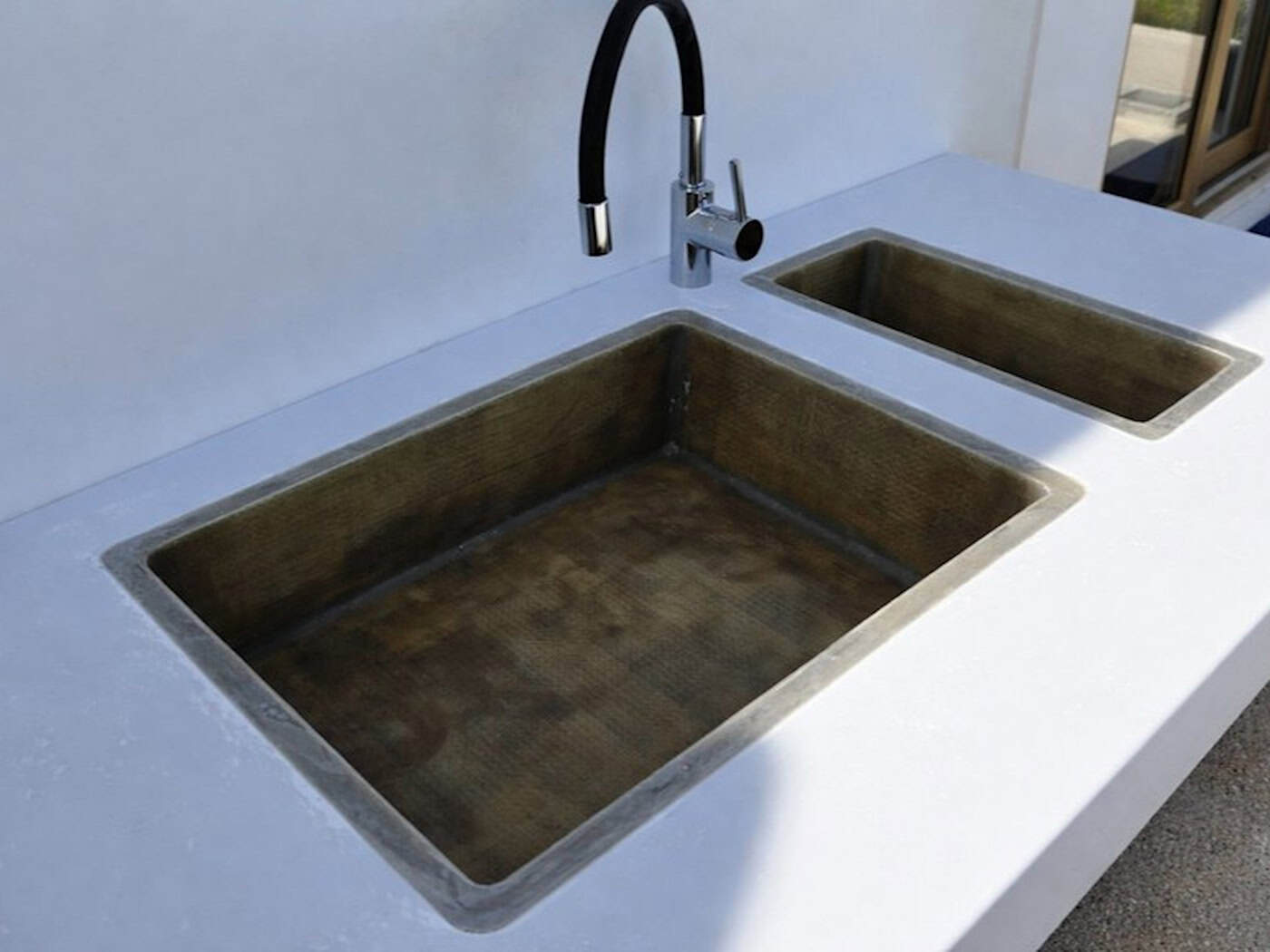
The results of the visit are tangible. Together with APM, Seibert built an outdoor kitchen for the so-called Tiny House Rocca, a small model house that was created as part of the project. The material for the kitchen comes from a disused rotor blade. The old material was given a new shape using hand lamination and vacuum infusion processes, all techniques in which liquid plastic is specifically incorporated into fiber structures. The result shows that discarded materials from industry can be reused for new applications.
The project is based on the so-called R6 strategy. It describes various ways of keeping materials in the usage cycle for as long as possible: Reuse, repair, refurbish, remanufacture, repurpose and finally recycle. The aim is to use raw materials and energy as efficiently as possible.
Why the problem is getting bigger
With the expansion of wind energy, the amount of old rotor blades is also growing. Many of the turbines that were built in the early years of the energy transition are now approaching the end of their useful life. Because rotor blades are made of complex composite materials, they are difficult to dismantle or recycle. This is why the search is on for ways to reuse the materials or convert them for new products. Projects such as EuReComp aim to develop practical solutions for this.
The outdoor kitchen made from a former rotor blade is therefore not just a design object. It also shows how new products can be created from materials that are difficult to recycle.

