

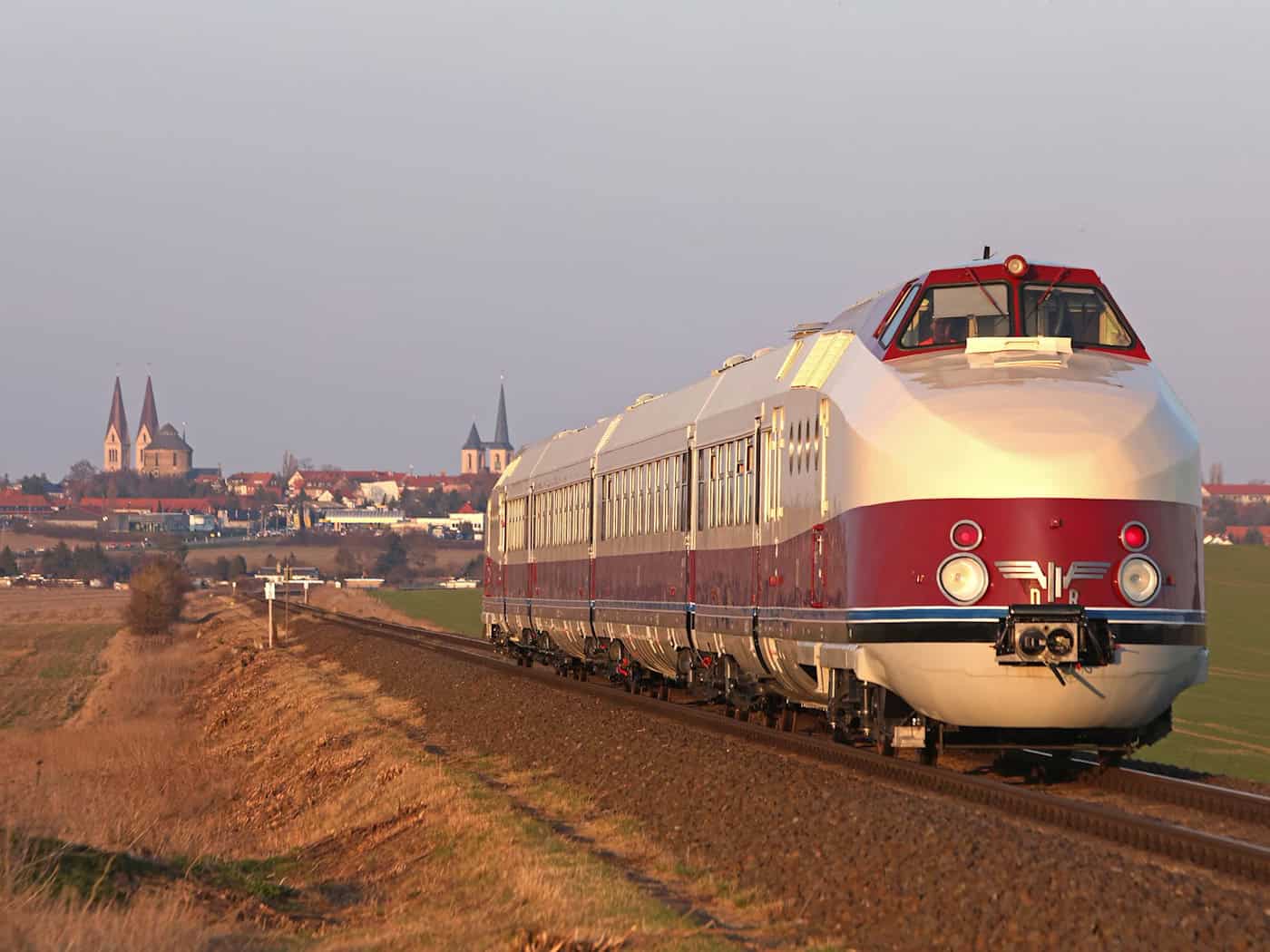
After problems with the electrics and braking system last year, a restored GDR high-speed railcar of the type SVT Görlitz has been on a test run again for the first time. "This was the first factory test run," said Gunnar Kloß from SVT Görlitz gGmbH about the test run of the historic train on the railroad line between Halberstadt and Blankenburg. The non-profit company is organizing the project around the express train and has rented it from the German Railway Museum in Nuremberg. The technical refurbishment is currently being carried out at the VIS Verkehrs Industrie Systeme GmbH plant in Halberstadt. The four-car train could be seen at Wernigerode station after its journey on Tuesday. Kloß explained that the railcar had already been moved around the factory premises in Halberstadt for some time for testing purposes. Further steps are now pending. "We are now continuing with test runs, acceptance runs and training runs," said Kloß. The aim is to carry passengers again for the first time in the second quarter. The project is backed by an initiative of around 80 volunteers. They collect donations and funding and also contribute their own work to the restoration. The train was dismantled into thousands of individual parts in Halberstadt and extensively refurbished - from engines and radiator units to windows, historic lights and newly woven curtains. The SVT Görlitz was once regarded as the prestige train of the Deutsche Reichsbahn in international transport. With its streamlined front and distinctive nose, it was a technical novelty at the time of construction. Eight trains of this type were built between 1963 and 1968, only three are still preserved in parts today. The high-speed railcar was approved for a maximum speed of 160 kilometers per hour. However, a speed limit of 120 kilometers per hour usually applied on the Reichsbahn lines. The train once connected Berlin with Prague and Vienna, among other places. Once the work has been completed, the historic railcar will be used for special trips. The plan is for it to run around 40 to 50 times a year in future and to be booked for charter trips. The income is also intended to finance future maintenance and general inspections in the long term. Copyright 2026, dpa (www.dpa.de). All rights reservedFirst tests after lengthy restoration
GDR prestige train for international transport
Special trips planned after completion of the work


