

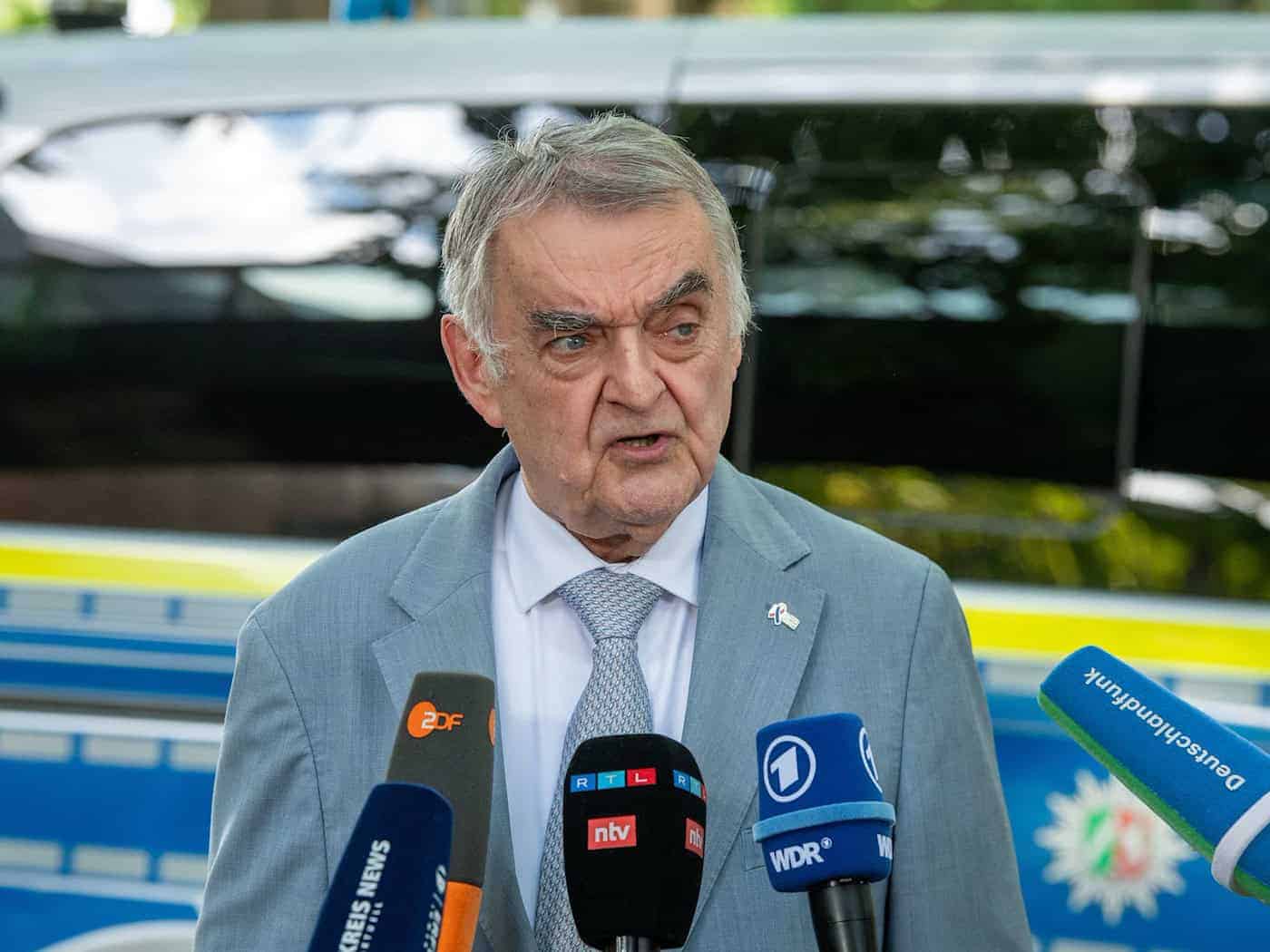
A notebook containing handwritten notes on more than 160 past and potential future sabotage targets was discovered in the motorhome of the suspected power grid saboteur. This was reported by North Rhine-Westphalia Interior Minister Herbert Reul (CDU) to the state parliament’s Interior Committee. “We have not only apprehended the suspected perpetrator of the attacks, but may also have prevented further attacks as a result.” Reul said the 48-year-old also named seven additional locations to the magistrate that he had used as storage sites. The police have already made discoveries at three of these locations. They are currently investigating these leads. The suspect is currently guiding officers to the various locations in a patrol car. More than 1,700 police officers from North Rhine-Westphalia were involved in the operation—the investigation and the search for the 48-year-old. Two highway patrol officers finally tracked down the man on Tuesday morning after noticing trampled grass that led 200 meters from a dirt road into some bushes near Weisweiler. “They weren’t actually involved in the manhunt, but they showed exactly the right instinct,” said Reul. The man had been hiding there in a well-camouflaged tent that was invisible from the police helicopter. The suspect did not resist arrest. Two arrest warrants have since been issued against the suspect. The Federal Prosecutor’s Office is still considering taking over the investigation. In one of his letters claiming responsibility, the suspect cited the fight against electricity generation from fossil fuels as his motive. “The attacker’s plan: He apparently wanted to deliberately target the stability of the power grid—and thereby essentially cause a blackout,” said Reul. However, there wasn’t even a power outage affecting the general public. In North Rhine-Westphalia, more than 40 rocket launchers have been discovered so far. “They all appeared to be quite professionally constructed,” said Reul. Additional launchers were found in Brandenburg and Saxony, among other places. During a search of his registered address in Gevelsberg, substances used to build explosive devices were also seized. There was no prior intelligence regarding the suspect that was relevant to national security. So far, there is also no evidence of accomplices or direction by foreign powers. “Our critical infrastructure must be better protected,” Reul demanded. Operators need clear and greater rights. “A fence from the ’90s doesn’t protect 21st-century networks.” The umbrella law for critical infrastructure must be implemented through numerous regulations without further delay. Copyright 2026, dpa (www.dpa.de). All rights reservedWell-camouflaged tent
Calls for Better Protection


