


Lynxes Lotta and Luca are released into the wild in the Ore Mountains
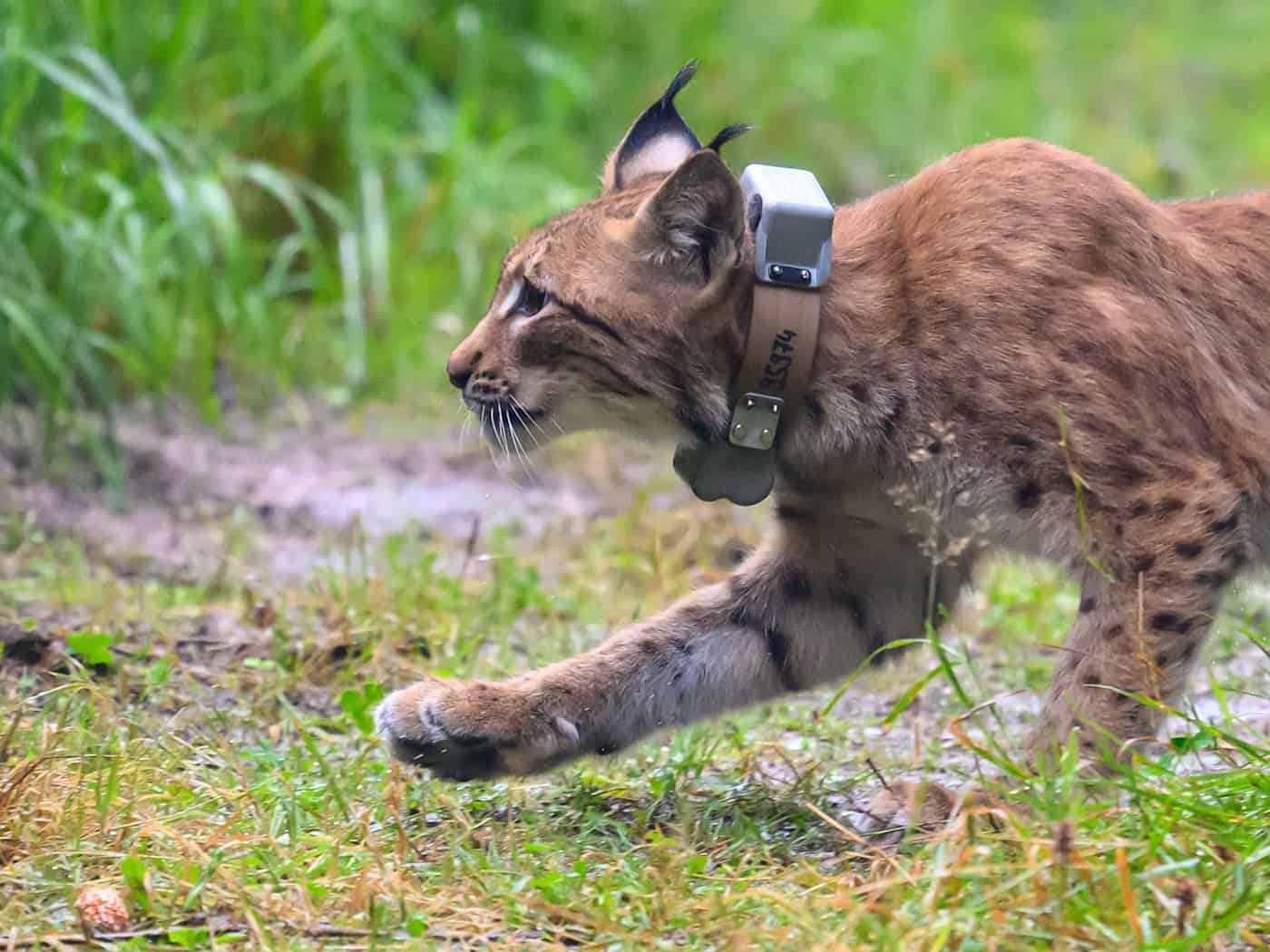
Perhaps the heavy rain is hiding a tear or two of joy—or even a tear of farewell—on the faces of those present. It’s a moving moment when the two lynxes, Lotta and Luca, leave their transport crate and leap into the wild. The male, Luca, disappears into the bushes on the right after a short sprint; the female, Lotta, quickly cuts a corner and is out of sight within two seconds. Catriona Blum-Rérat, coordinator of the Saxon lynx program, admits that a release into the wild is emotional every time. “Days like today are the absolute highlights,” says the wildlife biologist. The team works hand in hand on this and has to organize a lot in advance. And then it all comes down to a very brief moment. Since Luca and Lotta will wear transmitters for about a year, Blum-Rérat and her colleagues will be keeping an eye on the two lynx for quite some time. The collars emit a signal every four hours; later, they’re supposed to fall off on their own. “We can now closely monitor what they’re doing. It’s entirely possible that they’ll meet.” We know this from previous releases as well. “When lynxes realize there are other lynxes in an area, they tend to stay.” Lotta is a offspring from the Chemnitz wildlife enclosure. The breeding pair there successfully raised a litter for the fourth time this year, thereby contributing to the conservation of the species. Luca comes from a Belgian zoo and is a brother of the lynx Anton, who was released into the wild in Eibenstock in late summer 2024 but was struck by a truck and killed just a few months later. Nothing is left to chance when preparing for reintroduction. After being separated from their mother, the two breeding animals moved to the Hütscheroda Wildcat Village in Thuringia. There, reintroductions are coordinated, and lynxes are prepared for their new lives largely away from human contact. They are fed only wild game and must learn to tear open a carcass on their own. They’ll need this skill later on. Lotta and Luca passed all behavioral and health tests. Only then was the green light given for a life in the wild. Before the trip to their new home, the lynxes were anesthetized and fitted with GPS collars. When they arrive in the Eibenstock forest, they are alert again. A growl can be heard from the transport crates, as if the lynxes were eagerly awaiting their leap into freedom. A short time later, amid pouring rain, the moment has arrived. Mathias Wagner, director of the Oberrabenstein Wildlife Enclosure, where Lotta was born two years ago, is also there to witness the moment. He is one of four handlers carrying the transport crate across a clearing to a designated spot. Later, he describes it as a spine-tingling experience. Lotta had been excited. “A situation like this is stressful for animals, too.” For Wagner, lynx are fascinating not only because they are the largest native cats. “They’re animals with distinct personalities. Every animal has its own personality—that’s what makes it so exciting.” Lotta, just like her sister, had been a curious young cat—yet always thoughtful and reserved.” He is confident that Lotta will thrive in the wild. On the day of the release, the State Office for the Environment, Agriculture, and Geology announced yet another success story. Alva, the female lynx released in the spring of 2024, has had her second litter. With the help of wildlife cameras, two cubs were confirmed in July. The footage shows the young lynx playing and exploring their surroundings. “The siblings from last year are now largely independent and continue to reside in the project area. This repeated reproduction is a significant success for the lynx in Saxony and also a sign that the female lynx feels at home here,” the agency states. Catriona Blum-Rérat calls this a milestone for the lynx program, which operates under the name “RELynx Saxony.” The animals intended for release into the wild are part of the European conservation breeding program for the Carpathian lynx. The offspring are distributed through the expert network Linking Lynx. The goal is to connect the various populations in Germany and beyond and to establish a viable “lynx metapopulation.” It is intended to extend from the Carpathians through the German low mountain ranges to the Jura and the Western Alps. A total of 20 lynx are to be released into the wild in Saxony—with Lotta and Luca, the total now stands at nine. With each additional lynx released, the gene pool also grows. In the Ore Mountains, a so-called stepping-stone population is to be established—which will lead to connectivity with lynx populations in Thuringia, the Czech Republic, and Bavaria. Blum-Rérat attests to the project’s success. “We have reproduction, we have settled animals, and we have immigration from other populations. All of this is cause for celebration.” Andreas Pommer, the Eibenstock district manager, has been involved in the reintroduction program—which began in 2024—from the very start. Initially, there were concerns among the public and reservations among hunters. But those have since been dispelled. Locals also ranked the suggestions to name the two new arrivals, Lotta and Luca. There were 160 suggestions. There will be no shortage of names for future Saxon lynxes. Copyright 2026, dpa (www.dpa.de). All rights reservedThe animals will wear transmitters for about a year
Preparations for reintroduction are carefully planned
Every animal has its own personality
There were already cubs last year
European Breeding Program for the Carpathian Lynx
160 Name Suggestions for the Lynxes

