

When people hear the word “pantomime,” they might picture a man with white makeup feeling his way along an invisible wall with outstretched hands. This image isn’t wrong, but it reveals about as much about the genre’s possibilities as a single chord does about a symphony. For pantomime has long since evolved. It intersects with dance, puppet and object theater, clowning, and physical theater. You can experience the full breadth of this spectrum from November 11 to 15 at the 41st International Pantomime Theater Festival in Dresden.
The program at the Theaterhaus Rudi features five evening performances and a family program. The artists come from Denmark, Austria, France, Brazil, Canada, the Czech Republic, and Germany. They tell stories of human relationships, transformations, and fantastical encounters—without having to rely on spoken language. That is precisely what makes it so special: What takes shape on stage through movement, facial expressions, and gestures comes together in the audience’s minds to form a story of their own. Language barriers play no role.
Classics of International Clowning
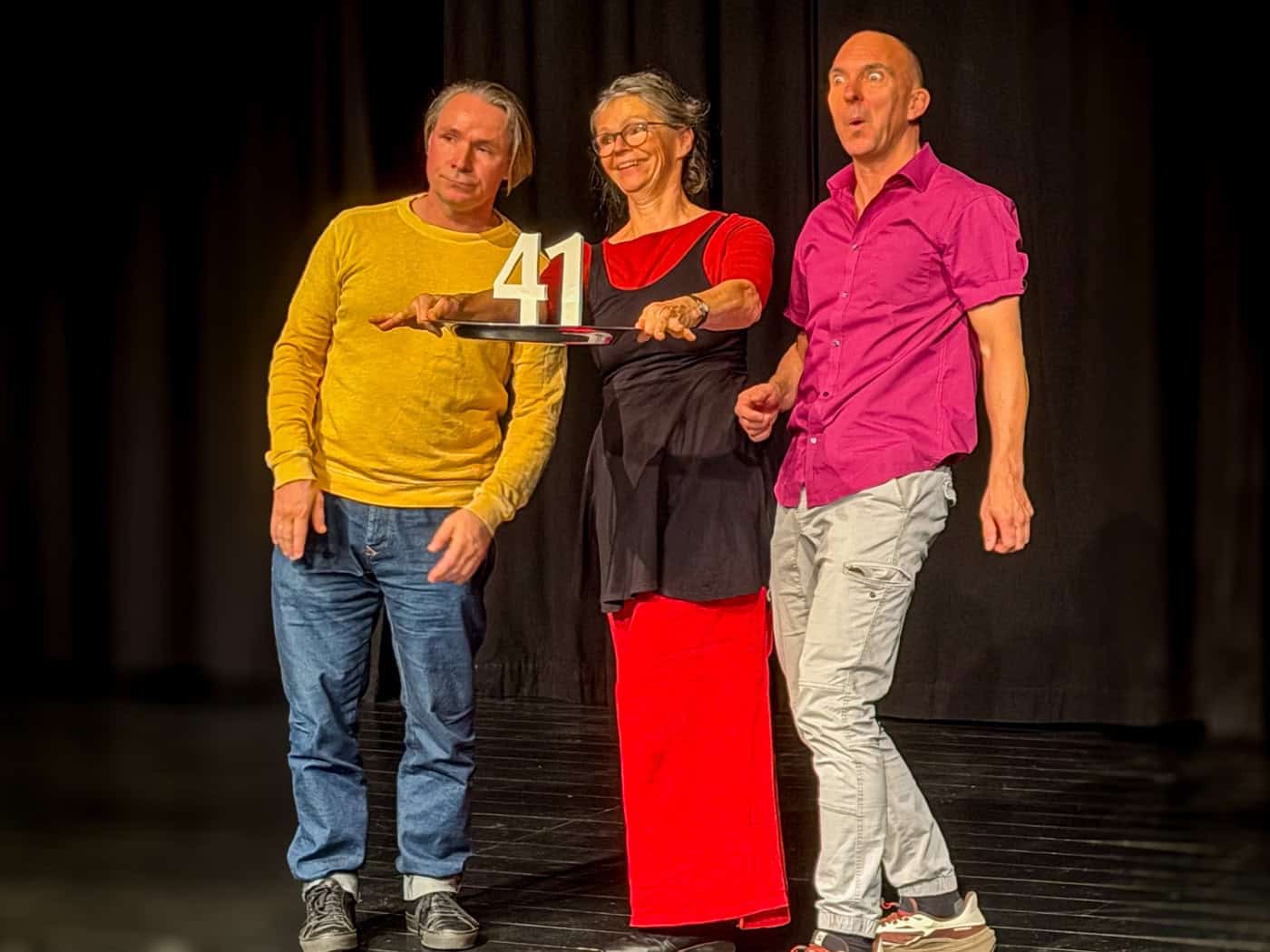
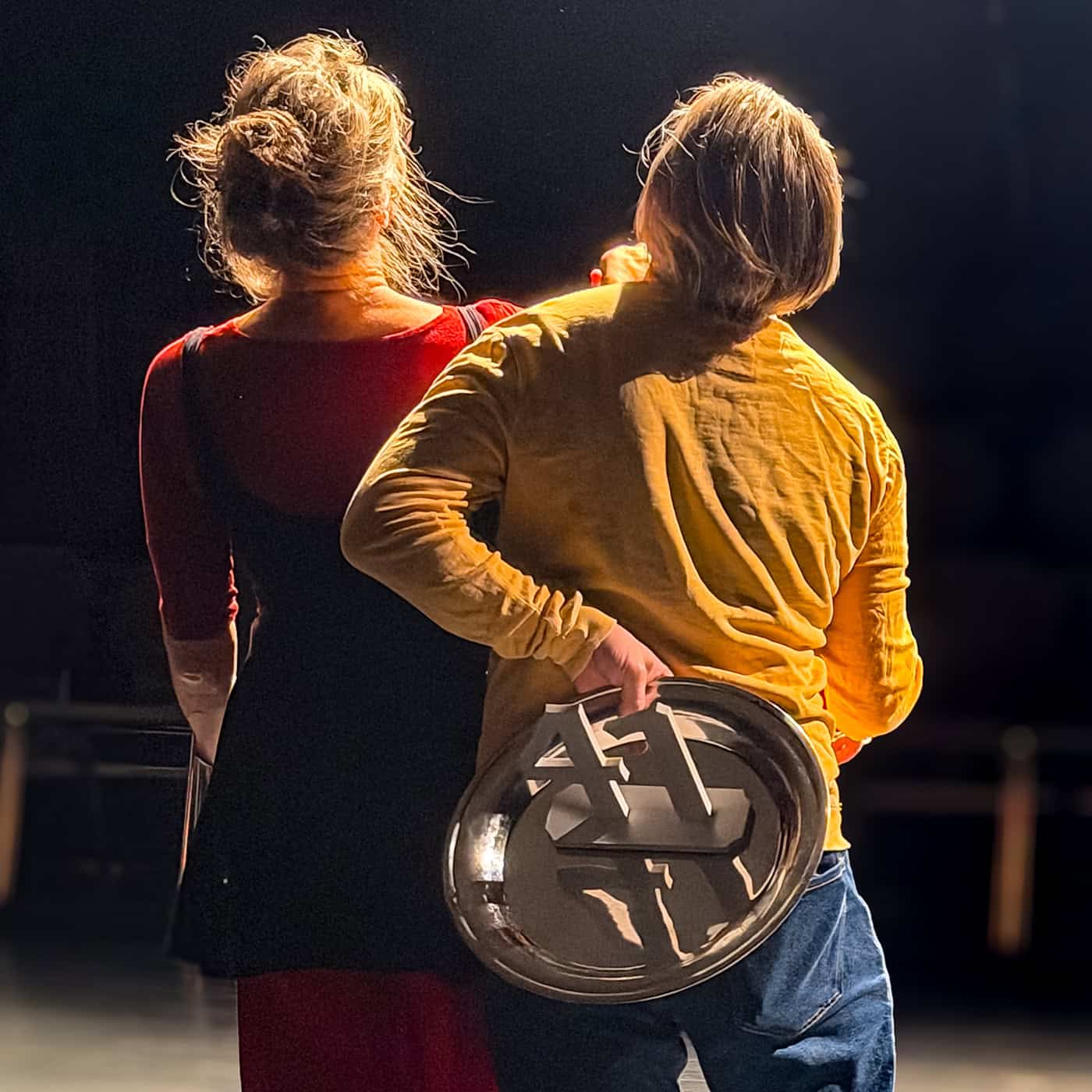
The festival kicks off on Wednesday, November 11, with the opening gala. The event is hosted by the performers of Mimenstudio Dresden e.V., who have developed scenes from the world of gastronomy in collaboration with Dresden-based mime artist Tim Schreiber. “The Table Is Set” is the title of the roughly ten-minute piece, which offers a glimpse behind the scenes of a restaurant and a bar. Things certainly get lively: After all, the world of the food and beverage industry offers plenty of material for physical theater. Following the performance, international festival guests will offer a first glimpse into their productions. Participants from a previous workshop will also take the stage. The gala is thus more than just an opening—it’s a small cross-section of what will be on display in the days to come.
On Thursday, the French DIRTZ Theatre presents “Short Stories.” Jolanda Löllmann and Charlie Denat combine pantomime, contemporary dance, and puppetry into three standalone episodes. The focus is on transformations, family ties, and relationships between people. The ensemble has performed in Dresden before; this time, audiences will have the opportunity to experience the work that wasn’t shown in its entirety during that previous visit.
On Friday, the Czech Divadlo Continuo offers a completely different approach. “Sensus Communis” leads into a world of sounds, objects, and sensory impressions. Sound poetry, sound puppetry, and object theater combine to create an unusual production. Two enigmatic beings explore objects whose original functions have long since been forgotten. The result is a journey into a bygone world that is as mysterious as it is whimsical. The ensemble also draws on a Czech theatrical tradition that deliberately sets itself apart from classical pantomime, which is heavily influenced by Marcel Marceau.
Saturday belongs to Paolo Nani. With “The Letter,” the Danish artist brings a show to Dresden that has long been considered a classic of international clowning. Since its premiere in 1992, it has been performed more than 1,600 times in over 40 countries. The opening scene is always the same: a man sits at a table writing a letter. But Nani tells this little story in 15 different variations—as a Western, a horror film, a silent film, or a circus act, played in reverse and with ever-changing surprises. Precise timing, slapstick, and dark humor turn it into a visual comedy that gets by without words.
On Sunday at 11 a.m., Nani can be seen once again in “Jekyll on Ice.” This family-friendly performance is recommended for children ages five and up. Nani takes on the role of a somewhat eccentric ice cream vendor who surprises his customers with a penchant for rock music and all sorts of mishaps. Balloons, ice cream, and a healthy dose of chaos are all part of the show. It’s expressly encouraged that the audience not just watch, but become part of the action. An ice cream party wraps up the show.
The final festival event on Sunday evening once again draws a connection to classical pantomime. Silent Rocco, originally from Großröhrsdorf in Saxony and now living in Austria, presents “Untold Stories.” Without elaborate props, stage sets, or white face paint, he brings stories to life using only his body. The evening is complemented by Canadian artist Joylyn Secunda, who will also present a short piece. Both demonstrate just how much expressive power lies in the precise mastery of movement and body language.
However, the festival is not merely a series of international guest performances. Since its founding in 1982—back then still known as the “Pantomime Workshop Days”—exchange among artists has been part of its concept. Ralf Herzog, considered the founder of Dresden’s pantomime scene, and Rainer Petrovski sought even back then to bring together artists from different countries and promote the development of the art form. Mimenstudio Dresden e.V. continues this tradition. Workshops and collaborative projects are therefore an essential part of the program.
On November 7 and 8, Denise Namura from Brazil and Michael Bugdahn from Germany, members of the Paris-based Compagnie À Fleur de Peau, will lead a workshop titled “Beyond Words—Dynamics and Qualities of Movement.” Participants will develop their own scenic structures, which will be presented at the opening gala. On November 14, Joylyn Secunda will also offer a two-hour master class focusing on movement techniques and physical expression.
The fact that such a festival has existed in Dresden for 41 years is by no means a given. It is organized by volunteers, and funding remains a challenge. This year, just under 19,800 euros in grants stand against a total budget of around 32,800 euros. The association must cover the remaining portion through ticket sales, membership dues, and its own funds, among other sources. This makes it all the more remarkable that this international gathering succeeds year after year.
And Dresden’s own pantomime scene is also thriving. Under the direction of Tim Schreiber, interested participants meet every Tuesday for practice. The group is intergenerational, with participants ranging in age from their early 20s to 70. New members are welcome. After all, pantomime is not an art form that takes place only on a stage. It begins with the ability to understand one’s own body as a means of expression—and thus to tell stories that can be understood anywhere.
Information:
The 41st International Dresden Mime Theater Festival will take place from November 11 to 15, 2026, at the Theaterhaus Rudi. Tickets are available through SAX-Ticket, Reservix, and affiliated ticket outlets. The festival pass for all performances costs 60 euros; individual tickets are 20 euros, with a reduced rate of 15 euros (plus booking fees in each case). For more information: www.mimedresden.de.