

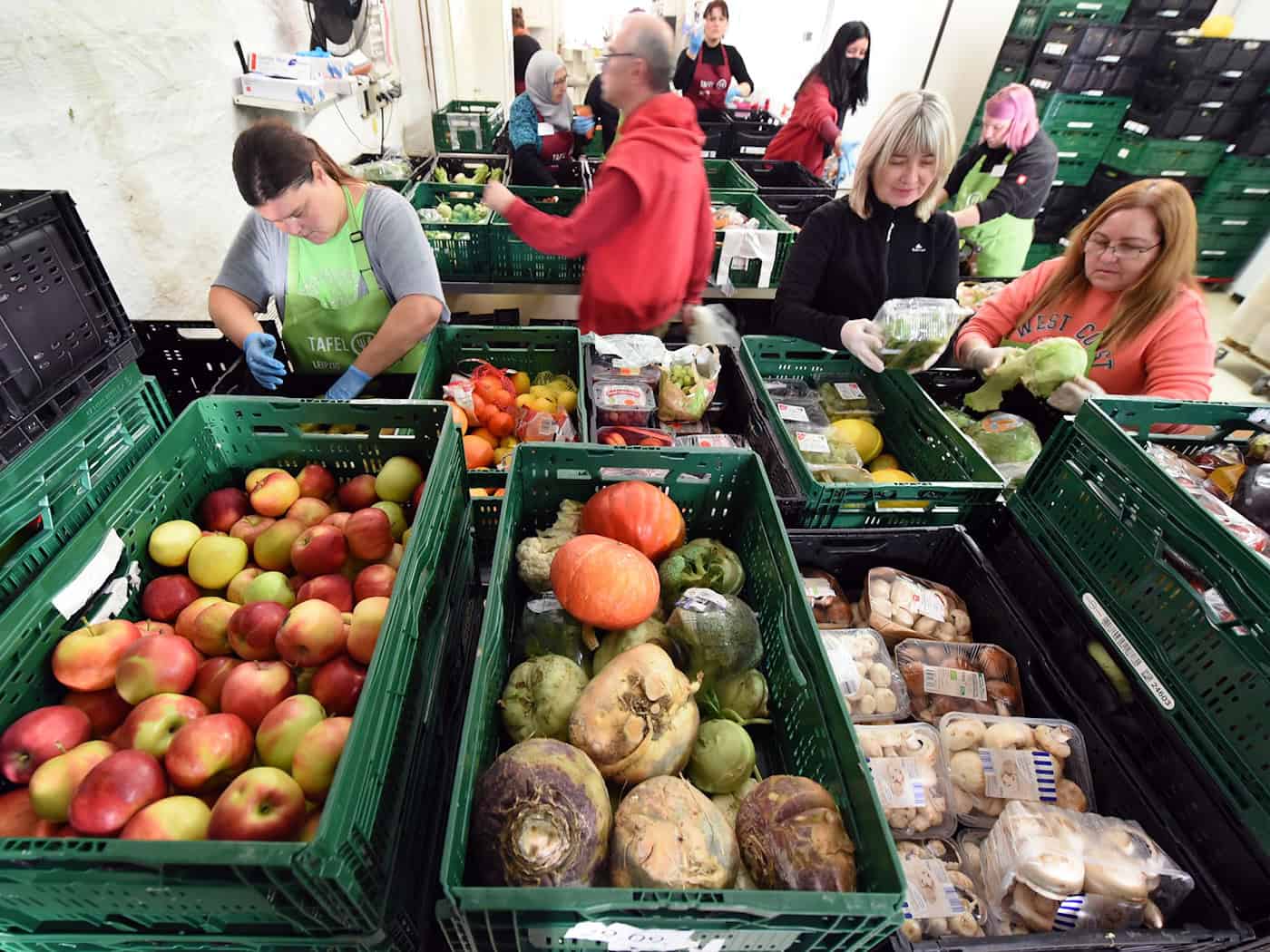
Food banks in Saxony are desperately seeking more drivers to pick up food. “I don’t know of a single food bank that doesn’t need more volunteers, especially drivers,” said Stephan Trutschler, press spokesperson and deputy director of the food bank in Meissen. Bottlenecks occur especially during the vacation season, as volunteers are also on vacation. In some cases, staffing is so tight that teams have to cut back on food pickups. “If there simply aren’t enough drivers, then we can only make one trip to a market where we normally pick up supplies three times a week.” In Freiberg, the food bank even had to shut down completely for a time. At first, the vehicles themselves were the problem; then there were no more drivers. However, after a change in management, operations there can resume. It’s not easy to recruit new volunteers for the food bank. He feels that when it comes to volunteering, many people’s motto is: “It’s fine if others do it, but I don’t have to.” Yet just two or three hours of help per week would be enough—for example, helping with food distribution or washing vegetables. In Meissen, Trutschler has therefore launched a campaign with flyers. They’re available at doctors’ offices and city hall, among other places. The flyers carry an urgent plea: “Get in touch!” Rising fuel and electricity prices are also causing increasing concern for food banks. “This is a disaster,” says Trutschler. Now, they have to carefully consider whether a pickup is really worth it if the quantity isn’t large enough. This particularly affects food banks outside major cities, which often have to travel long distances both to pick up donations and to deliver them to distribution centers. “If someone in the Ore Mountains drives 160 kilometers and then picks up goods worth 30 euros, that’s a problem,” says Trutschler. Added to this are higher energy costs: Since the food bank in Dresden had to relocate its cold storage facility to a different location about two years ago, the electricity bill has tripled to 3,000 euros. The increased costs could soon become noticeable for the food banks’ clients as well. In Meissen, the board has just discussed a price increase. A basket of goods there could then cost 5 euros instead of the previous 4 euros. Compared to the supermarket, it would still be worth it: According to Trutschler, a basket of goods typically contains food worth 25 to 40 euros. For years, the state association has therefore been calling on the government to make a portion of the annual 400,000 euros in subsidies available for unrestricted use. The money could then also be used for operating expenses. Until that happens, Trutschler is relying on creative solutions to plug the biggest financial gaps. For example, he gives talks in exchange for donations, which then cover the cost of his next tank of gas. A trend that food banks have been lamenting for some time now continues: Because supermarkets are relying on artificial intelligence (AI) to make their purchasing more efficient, fewer donations are coming in. In principle, the food banks would welcome the fact that this leads to less food waste, according to Trutschler. “But of course, it’s coming back to bite us.” In the meantime, however, a nationwide distribution system has provided some relief. The Federal Association of Food Banks is working hard to secure large donations, and the goods are then distributed and exchanged across regions. Smaller food banks benefit from this in particular. “For example, we have huge problems in Niesky because there aren’t that many grocery stores and bakeries there,” explains Trutschler. The Torgau food bank, for instance, has good connections in the Upper Palatinate, where a company donates up to two metric tons of meat products—such as ham ends or Leberkäse—once or twice a month. “The Torgau team then drives down to Bavaria in a van and delivers to several food banks on the way back,” says Trutschler. There’s also an exchange of goods with colleagues in the Czech Republic: “We’ve had an arrangement there for years, and it’s working very well.” The state-run food bank there receives dozens of metric tons of beverages each month through an agreement with a manufacturer. Saxony, on the other hand, has a “fantastic donor” in the form of a large dairy; in addition, a company from Bavaria regularly donates surplus dairy products that are in short supply on the Czech side of the Ore Mountains. According to the state association, there are 45 food bank facilities in the Free State of Saxony, operating approximately 110 permanent and mobile distribution points. Over 1,000 volunteers help there with collecting, sorting, and distributing food. Last year, they recorded around 900,000 pickups, and a total of nearly 1,200 metric tons of goods were distributed. Copyright 2026, dpa (www.dpa.de). All rights reservedWhen there aren’t enough drivers, food goes to waste
The Freiberg food bank had to close
High fuel and electricity costs are straining food banks
Electricity Costs in Dresden Have Tripled
Creative Ideas to Combat Empty Coffers
AI Leads to Fewer Donations from Supermarkets
Nationwide Network Helps Smaller Food Banks
Saxon dairy products in exchange for beverages from the Czech Republic


