

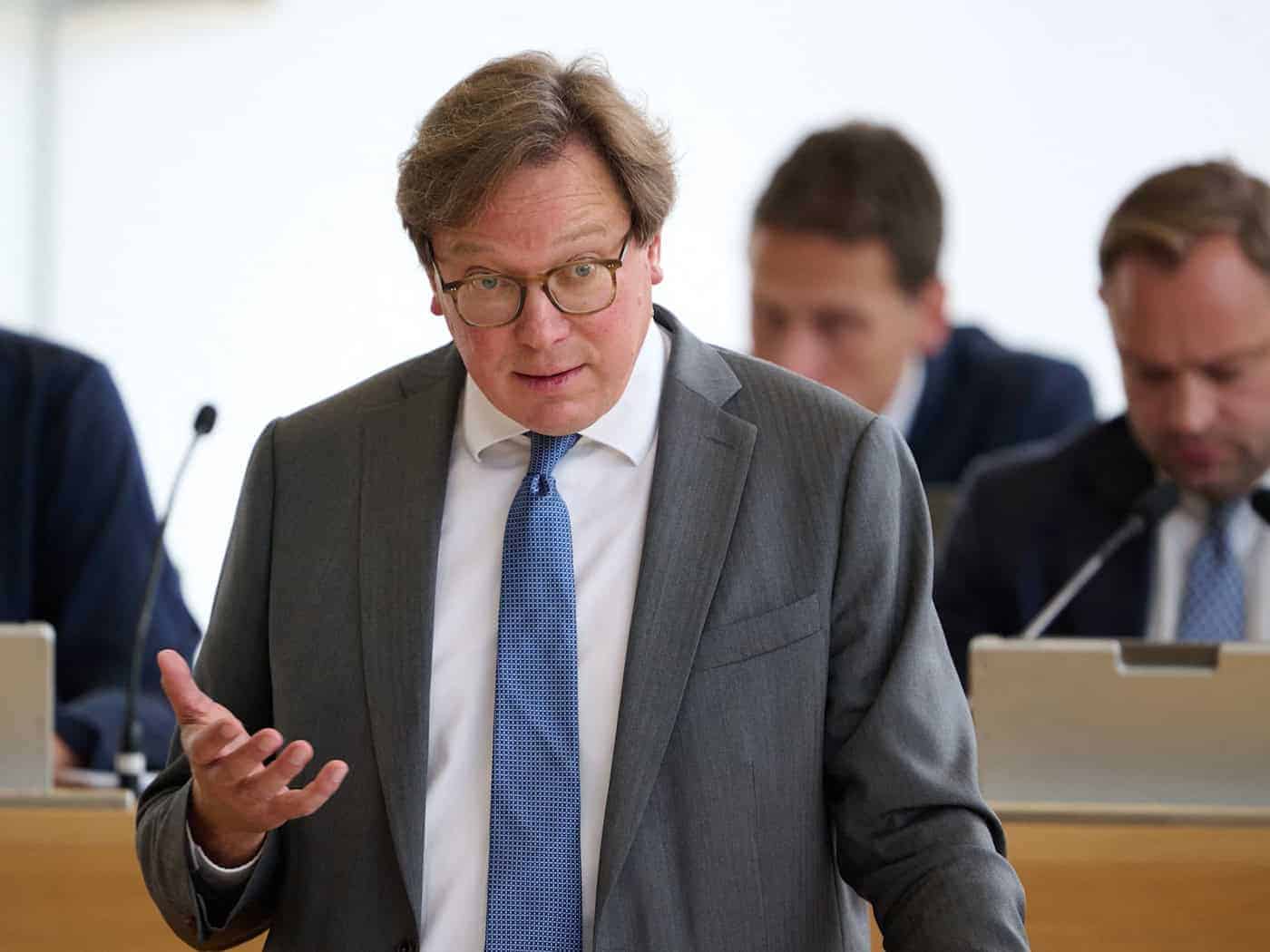
Saxony intends to prioritize cooperation over confrontation when it comes to nature conservation. Species conservation must take into account the realities of life for local residents, said Environment Minister Georg-Ludwig von Breitenbuch (CDU) in the state parliament. “Rigid regulations jeopardize public acceptance in the long run. We need species protection that is scientifically sound, legally reliable, and practically implementable.” Populations of strictly protected species such as the white-tailed eagle, osprey, crane, white stork, and wildcat have recovered. “Saxony’s nature is worth protecting—both by us and from us. The nature in our forests, fields, meadows, floodplains, lakes, and rivers is the very essence of wealth for all people in Saxony,” the minister emphasized right at the start of his policy statement. “We protect what is valuable, and we allow for use where it is responsible. And we want to resolve conflicts appropriately.” It is a matter of striking a balance with a sense of proportion. Only in this way can acceptance be achieved. “We are committed to a form of nature conservation that reaches out to people and views them as partners. We are committed to flexible nature conservation that responds to new challenges and focuses its resources on impact,” said the minister, advocating for a comprehensive reduction in bureaucracy. “Simplify procedures, strengthen regional responsibility, and reduce regulations that are out of touch with reality.” Nature conservation, he said, is a task for generations to come. Von Breitenbuch advocated for pragmatism. He argued that subjecting infrastructure, water management, and land use to a blanket conservation requirement does not create more nature, but rather leads to stagnation. Since the 1960s, nature conservation has been shaped by an increasingly dense network of European and national regulations. “The regulations have become more detailed. Reporting requirements and stricter case law have increased the administrative burden. This system is encountering framework conditions that are fundamentally changing. Climate change is shifting habitats and species distributions.” “Conflicts over land use are on the rise. Some procedures take too long. Some requirements create more effort than actual benefit for nature. That is why we must have the courage to review and question the existing regulatory framework,” said the minister. Saxony is pushing for simplifications in Berlin and Brussels. EU directives force member states to maintain a rigid system—sometimes at considerable expense—even in cases where it no longer makes ecological or economic sense due to climate change. The minister also mentioned animal species that cause conflicts. Beavers, otters, cormorants, and great white egrets incur high costs in the fishing and agricultural sectors. It must be possible—and will be made possible—to relax the strict protections in these cases. “One example of this is the wolf. The shift in policy has been achieved. This approach was successful with the wolf, but it took far too long.” In the future, “active population management” will be possible. Among other things, Von Breitenbuch announced a Saxon beaver ordinance to allow for the easy removal of individual animals in cases of significant damage. “The goal is balanced management of individual animals and populations. We will balance the measures so that living conditions do not deteriorate, while at the same time keeping the viability of entire landscapes and farms in mind.” Copyright 2026, dpa (www.dpa.de). All rights reservedMinister Advocates for Balanced Compromise
Calls for Less Bureaucracy in Nature and Species Conservation
Climate change is shifting habitats and species distributions
Some requirements create more burden than benefit for nature
Minister: Ease Strict Protection in Cases of Significant Damage


