

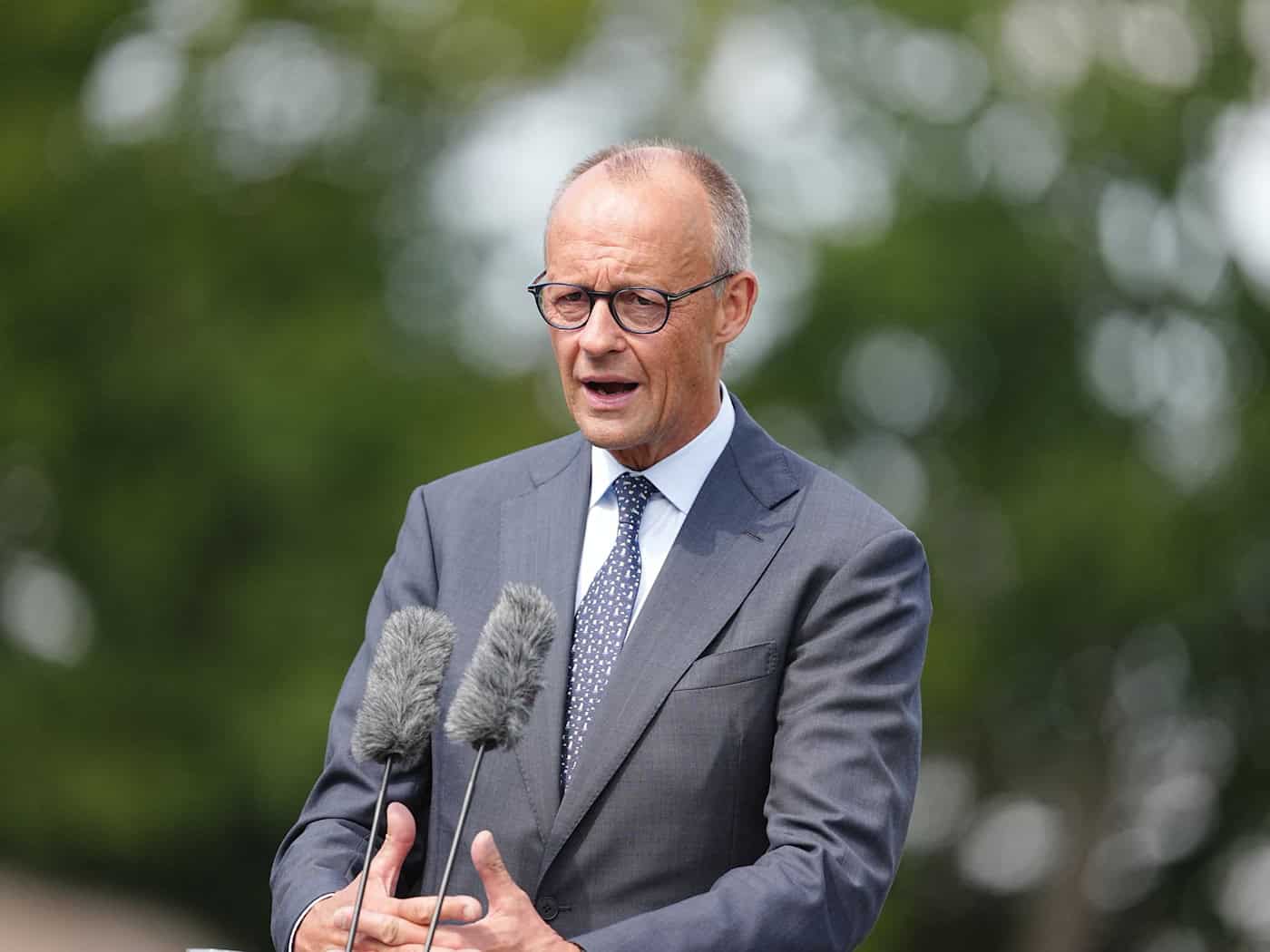
Chancellor Friedrich Merz has rejected the proposal by East German CDU state premiers to maintain early retirement without reductions after 45 years of contributions. Following the two-day cabinet retreat at Neuhardenberg Castle in Brandenburg, the CDU chairman emphasized that the issue of early retirement had been discussed in the coalition committee. “We agree that we must end all incentives for early retirement. And that’s how it must remain. This is a core element of the reform.” Hardship cases must be addressed. The three eastern German CDU state premiers—Sven Schulze (Saxony-Anhalt), Michael Kretschmer (Saxony), and Mario Voigt (Thuringia) have jointly opposed the plans to abolish the full pension after 45 years of contributions. Other SPD state premiers joined them. “I admit I was somewhat surprised by this statement, because I am firmly convinced it was not backed by sufficient factual arguments,” said Merz. The trend toward early retirement in an aging society must be stopped. “I expect that I will also be able to convince the state premiers to follow this path,” said the chancellor. This path is also—and especially—in the interest of the states, not least the states in the east, which have an even smaller labor force than many states in the west. The early retirement pension without reductions after 45 years of contributions was called “Retirement at 63” when it was introduced. However, as the retirement age is being raised gradually, the age of eligibility has also shifted upward depending on the year of birth. The chancellor and Labor Minister Bärbel Bas (SPD) had agreed to regard the proposals of the pension commission appointed by the government as a “comprehensive package” that cannot be altered. A decision on this matter is expected in the fall. Copyright 2026, dpa (www.dpa.de). All rights reserved


