

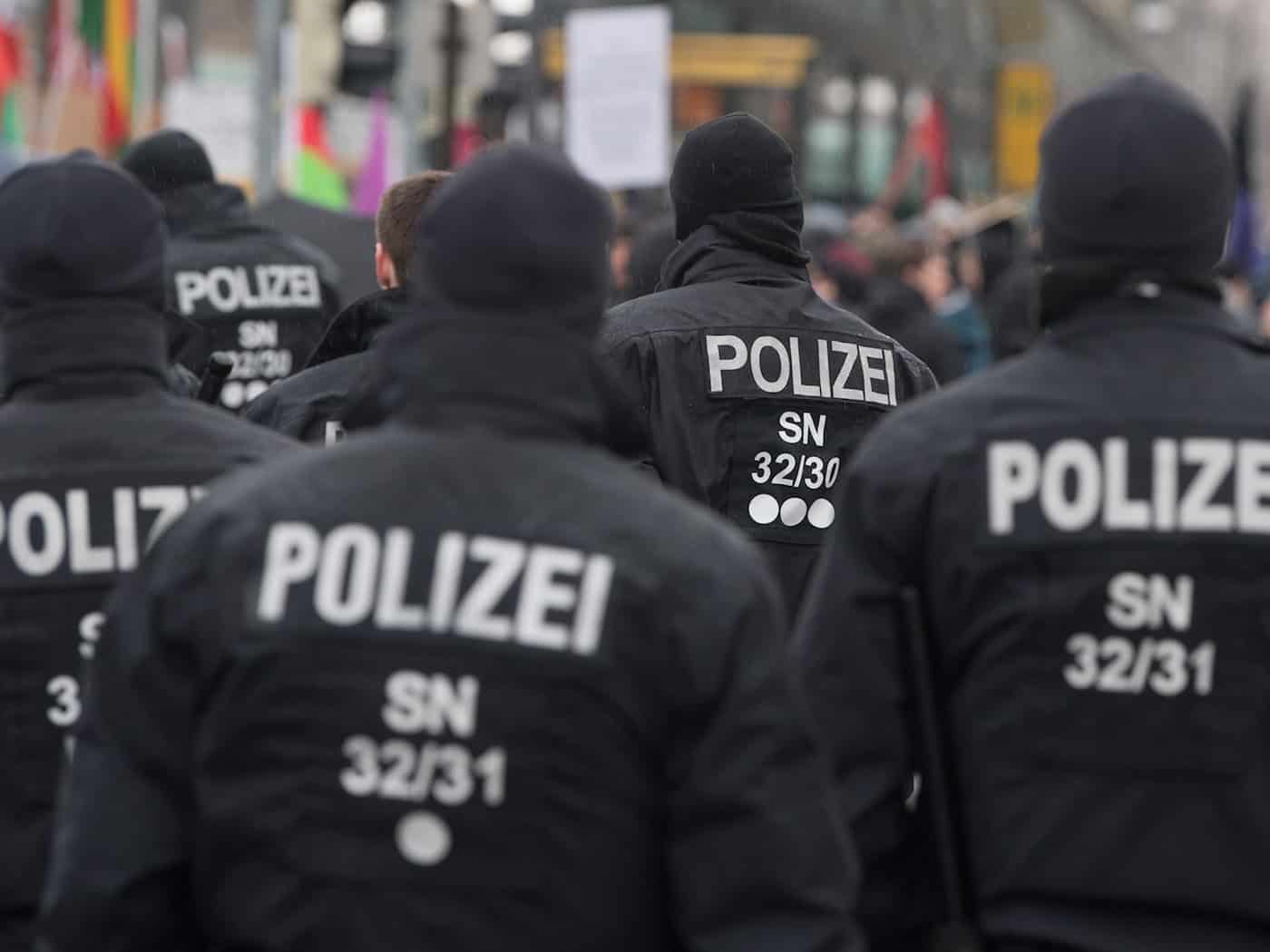
Saxony's minority coalition has reached an agreement with the BSW on the new police law. "This clears the way for a joint decision in the June plenary session," said Ronny Wähner, the CDU parliamentary group's spokesperson for internal affairs. According to the BSW, one of the most important results of the negotiations is the renunciation of the use of the controversial US surveillance software Palantir. "Police work must remain comprehensible, controllable and in line with the rule of law," explained Bernd Rudolph, Parliamentary Director of the BSW parliamentary group, in a statement. "That is why there will be no dependence on a private US company in Saxony." In addition, the use of tasers in Saxony will be reserved for special units. The cabinet presented its draft for a new police law in February. In addition to the use of tasers, it also includes rules for the use of and defense against drones, the covert and automated recognition of car license plates and a legal basis for the introduction of source telecommunication surveillance (source TKÜ). This enables the police to monitor encrypted telecommunications on a case-by-case basis and subject to judicial approval. "For us as the CDU, it was important to create so-called source telecommunications surveillance, especially for the prevention of serious crimes and terrorism," emphasized Wähner. "After all, criminals also use encrypted communication such as WhatsApp & Co. - the police must counter this on an equal footing." Criticism of the agreement came from the Greens. "The BSW has allowed itself to be ripped off for a few fig-leaf amendments," said the parliamentary group's spokesperson on domestic affairs, Valentin Lippmann. The agreement is at the expense of civil rights. Copyright 2026, dpa (www.dpa.de). All rights reservedTasers only for special units


