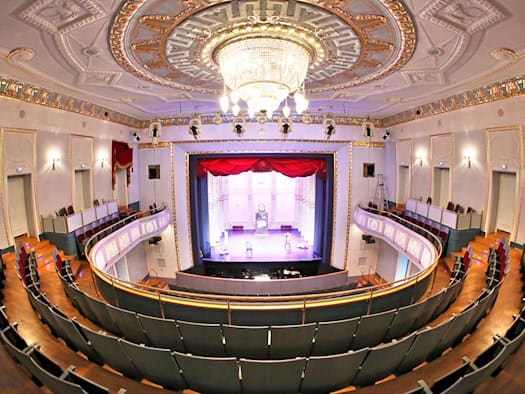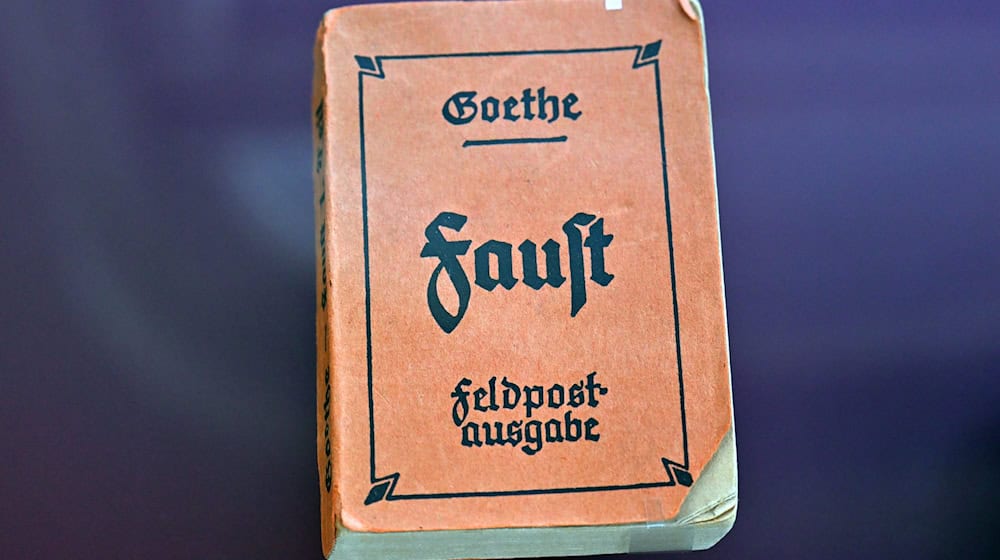
Friday marks the 250th anniversary of Goethe's arrival in Weimar. On November 7, 1775, the then 26-year-old came to the city at the invitation of Duke Carl August of Saxe-Weimar-Eisenach. By then, he had already achieved fame with "The Sorrows of Young Werther". In Weimar, he eventually went from literary pop star to phenomenon - his new adopted home became a city of culture. But are Goethe and his most famous Weimar work "Faust" still relevant? Goethe's relevance for his adopted home of Weimar is undisputed, according to Ulrike Lorenz, President of the Klassik-Stiftung Weimar. Without Goethe, Weimar Classicism would probably never have existed. Weimar would have retained the "character of a small residential town", says the art historian, "without the intellectual splendor of the late Enlightenment and humanism." Numerous sites of Goethe's work are now UNESCO World Heritage Sites, including the Goethe House and palace, the Duchess Anna Amalia Library, the Goethe and Schiller Archive and the Park on the Ilm. "Goethe gave Weimar a soul and the global significance it still has today," says Lorenz. However, Goethe now seems to be less relevant in German classrooms. As early as 2022, a survey by Deutsche Presse-Agentur revealed that "Faust" is now only compulsory reading in schools in a few German states. The German Stage Association notes that the play is being performed less and less. In the 2022/23 season, eight productions were recorded, compared to 20 before coronavirus. "I use Faust as a medium to teach pupils knowledge that is slowly being lost," says Philipp Restitzki. The German scholar is a German teacher at Landau-Gymnasium in Weißwasser, Saxony, and is also doing his doctorate on the subject of Faust. In Saxony, the work is still part of the compulsory curriculum. According to the expert, the work contains central aspects of cultural education, for example on the subject of Greek mythology or religion. "Especially when Mephisto rails against religion, you also need to know what's in the Bible," says Restitzki. Restitzki believes that because Goethe's work is now more than 200 years old and people's language and cultural background have changed, Faust is increasingly perceived as difficult to understand. Goethe and Schiller together form the identity of the German-speaking cultural area. "And gradually erasing that means forgetting our cultural roots to a certain extent". The enthusiasm for Goethe among visitors to Weimar in the Faust-themed year seems unbroken: the Klassik-Stiftung Weimar draws a positive interim conclusion. As of September, around 510,000 people have visited the foundation's museums in the city of culture. This means that the number of visitors is slightly higher than in the same period last year (509,889). The main exhibition of the theme year "Faust - an exhibition" at the Schiller Museum, which has been running since May, has been seen by 38,000 visitors to date. The most visited cultural institution is still the Goethe National Museum. Copyright 2025, dpa (www.dpa.de). All rights reserved"Faust" increasingly less important in German schools?
Expert: "Goethe is identity-forming"