

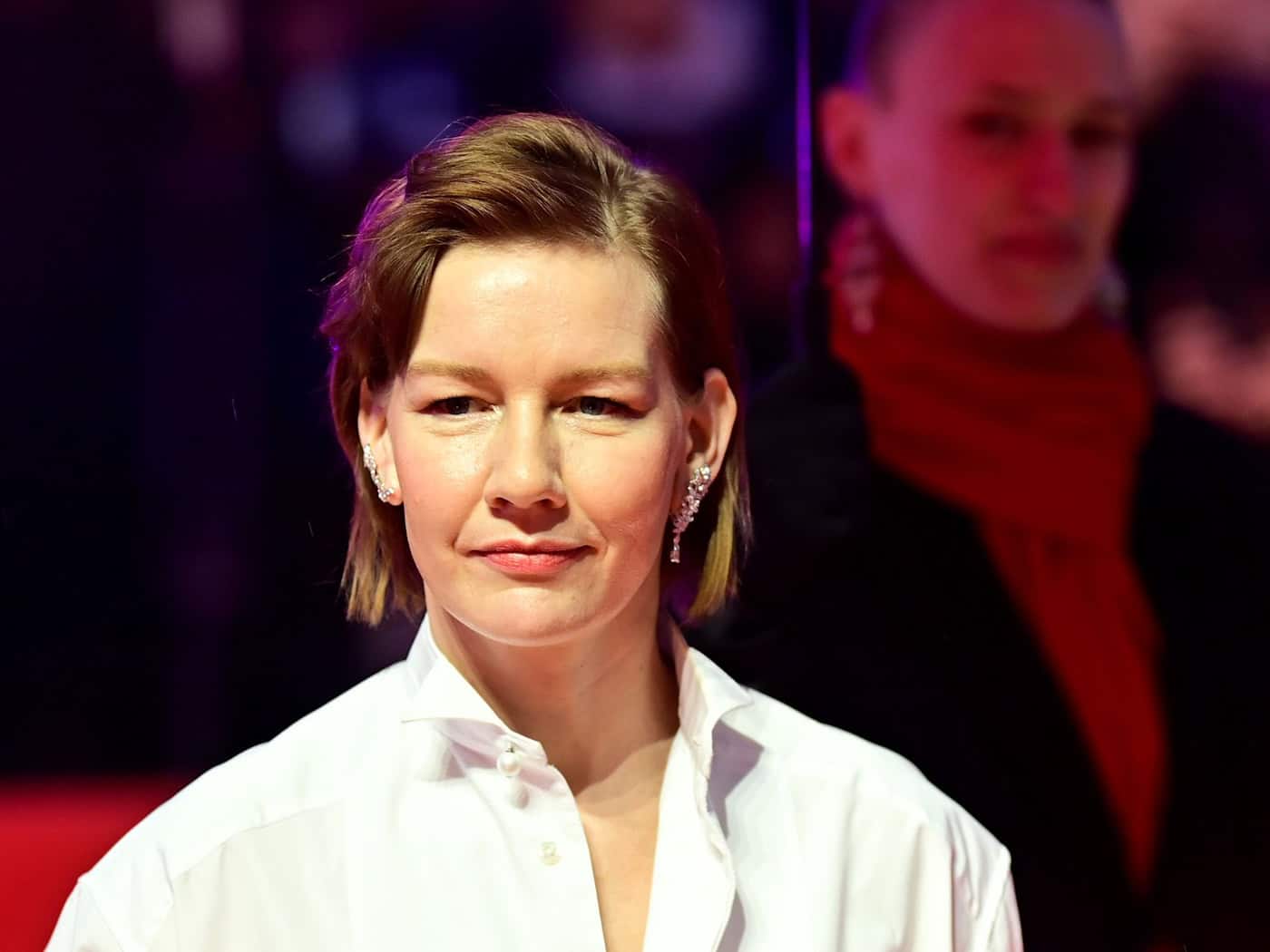
Sandra Hüller sees herself first and foremost as a Thuringian and a European. “Personally, I don’t identify as German. I would say I see myself as a Thuringian European or a European Thuringian. But I believe: If you’re born in this country, that comes with a responsibility. You can’t just ignore it,” the actress said in an interview with the *Süddeutsche*. But this responsibility also has its limits. “I can’t justify myself every time for Thuringia and whatever election decisions are made,” said Hüller. When asked if she felt there was a shadow cast over Thuringia, she replied: “I’m there often because parts of my family live there. I refuse to acknowledge that there’s a shadow over it. I believe Thuringia is capable of more than that.” The internationally sought-after actress (“Vaterland,” “Project Hail Mary”) explained that she is repeatedly confronted with her German identity when interacting with people from other countries. “Many conversations revolve around German politics, both past and present.” In the interview, Hüller also spoke about her memories of the GDR. Born in Suhl, Thuringia, in 1978 and raised near Rudolstadt, the actress responded to the question of whether she ever felt she could come home by saying, “That’s not possible; the country doesn’t exist anymore.” Alluding to a scene featuring a children’s choir in the film “Vaterland” (directed by Pawel Pawlikowski), the Oscar-nominated actress also recalls singing the GDR national anthem “Auferstanden aus Ruinen”: “We all took part in those political rituals. When the GDR ceased to exist, I was at an age where I couldn’t reflect on it.” She says she couldn’t distance herself from those rituals back then; as a child, she wasn’t capable of doing so. She was moved that director Pawlikowski managed to “capture that euphoria, that enthusiasm of a new beginning. “I think that comes pretty close to how a child feels.” Copyright 2026, dpa (www.dpa.de). All rights reservedLack of a Sense of Coming Home


