

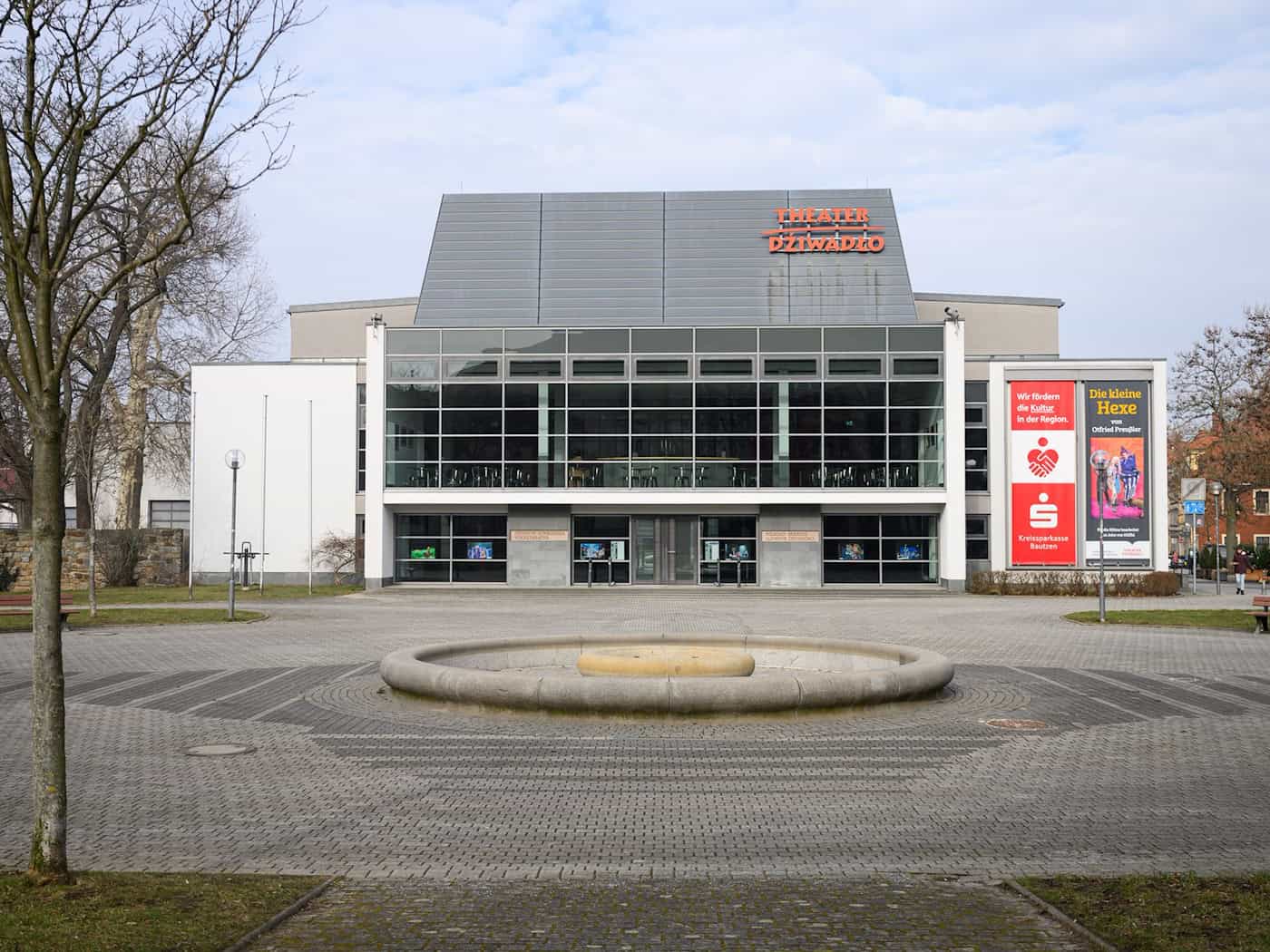
Theaters in Saxony continue to perform, but pressure is growing behind the scenes. Rising costs and tight public budgets are increasingly pushing many theaters to their limits. "They are sometimes in a very bad way," says Lutz Hillmann, Managing Director of the German Stage Association in Saxony. Many theaters are struggling with "extreme financial difficulties". Pay rises are putting increasing pressure on theater budgets. "This could be the death knell for some theaters." According to Hillmann, who is the artistic director of the Deutsch-Sorbisches Volkstheater in Bautzen, the gap between growing costs and limited financial resources is widening. The situation is particularly tense at the Plauen-Zwickau Theater, among others. Savings in the millions are on the cards there. At the same time, the supporting municipalities are also struggling with their own financial problems. How the situation is to be resolved is currently unclear. In the future, the downturn could also reach crisis-proof theaters. The large opera house in Leipzig, for example, is facing financial difficulties and the threat of insolvency in two to three years. "This shows how blatant the situation is." The Leipzig Opera confirms the financially tense situation. According to Administrative Director Lydia Schubert, the opera house had already closed 2025 with a significant deficit. An annual deficit of around 2.5 million euros is currently expected for the coming years. Reserves to cover the losses have now been used up. Schubert cites increased energy and material costs as well as tariff increases as the main causes. At the same time, the strained budget situation of the city of Leipzig is placing an additional burden on the cultural sector. "Even assuming full capacity utilization, we would remain loss-making in the long term," she says. To counteract this, the theater has introduced internal cost-cutting measures, among other things. These include a budget freeze on major expenditure, restraint in filling vacancies and adjustments to the repertoire. In addition, higher ticket prices are planned for the coming season. However, Schubert emphasizes that the structural deficit cannot be offset by savings alone. "The financial situation is extremely uncertain and the pressure is enormous," says Moritz Gogg, Director of Erzgebirgische Theater- und Orchester GmbH in Annaberg-Buchholz. If wage increases are not taken into account in the future, there is a threat of cuts. "Then we will have to cut staff or a division." Attempts are already being made to temporarily not fill vacant positions. The company is managing with a minimum number of staff, with 15 positions currently vacant. The savings made so far have been "on the backs of the workforce, which is irresponsible and not a sustainable situation", said Gogg. "We are not asking for more money to increase operations, but to save the current situation. And this has already been brutally cut for years." Reliable and adequate funding is therefore crucial. The theater employs around 150 people and attracts around 70,000 visitors a year. "We are currently facing a deficit of around 1.7 million euros," says the director of the Gerhart-Hauptmann-Theater Görlitz-Zittau, Daniel Morgenroth. Savings are being made wherever possible, for example by not immediately filling vacant positions. However, "cutting staff" is absolutely no solution. In view of the financial concerns of many institutions, Morgenroth says it is important and helpful to exchange ideas with one another. From April 21 to 26, his theater is hosting the 13th Saxon Theatertreffen in Görlitz and Zittau. The festival sees itself not only as a showcase, but also as a meeting place to initiate and conduct debates. Morgenroth described it as "audacious" to call for further cuts to theaters. Many theatres, especially in rural areas, have done nothing but make savings in recent years. In Görlitz and Zittau, for example, staff had been reduced by a total of 15 percent since 2010, when the two locations merged. According to the artistic director, the East Saxon theater is dependent on the two cities and the district of Görlitz as its largest shareholder. However, the budget of the financially weakest district in Saxony has a double-digit million deficit, which is why tariff increases can only be absorbed with difficulty. The support for local authorities via the Saxon Cultural Areas Act has been increased by 35 percent since 2000 to around 105 million euros per year. However, this was offset by wage increases of 83 percent over the same period. "The burden has shifted to the municipalities," explained Morgenroth, who is also the state chairman of the Stage Association in Saxony. The situation at Chemnitz Theatre is still stable at the moment, albeit with an uncertain outlook. According to the theater, the budget for the current year is balanced. "However, there is uncertainty and concern for the following years from 2027 onwards," says General Director Christoph Dittrich. This is due to pending budget decisions at state and municipal level. Although there is currently no deficit, the financial leeway is "extremely tight". The main challenges remain rising personnel costs due to pay rises, which can hardly be compensated for by additional income in the cultural sector. In the future, the number of jobs could also become a topic of discussion. The Capital of Culture year 2025 is currently providing additional momentum: visitor numbers and income have developed positively and the trend is continuing. With a view to the international "Theater der Welt" festival in summer 2026, the theater is also counting on further impetus. Copyright 2026, dpa (www.dpa.de). All rights reservedIncreased energy and material costs
Staff cuts
Calls for further cuts "audacious"
Cultural capital cautiously optimistic


