

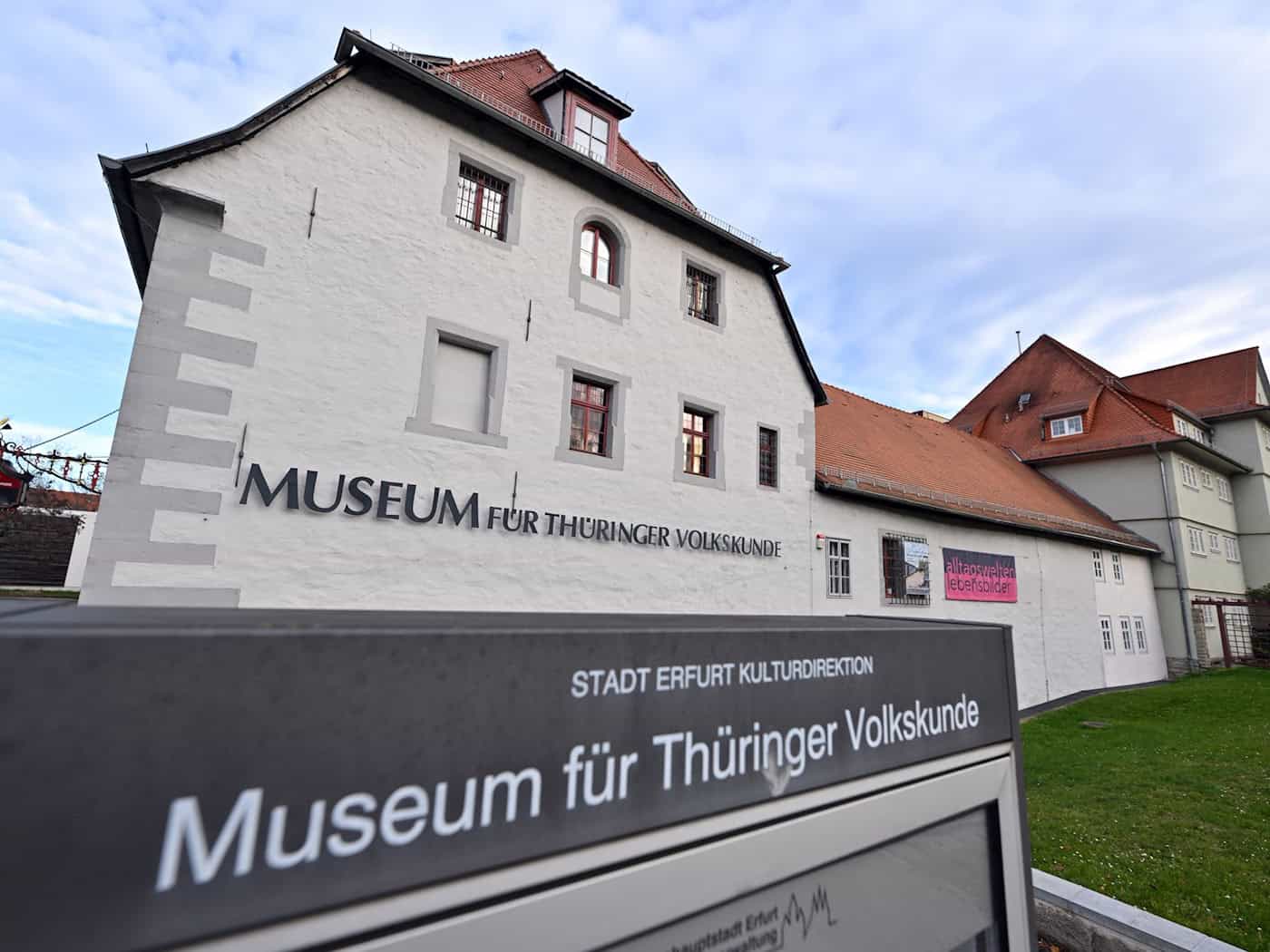
Adult stores in a time of upheaval: A new exhibition in Erfurt sheds light on the world of the adult retail industry in provincial East Germany. “The topic may seem quirky, but of course it’s steeped in contemporary history,” explains Uta Bretschneider, a cultural anthropologist and director of the Future Center for German Unity and European Transformation in Halle (Saale). Together with historian Jens Schöne, she has published a book on the adult entertainment industry in East Germany since the years of upheaval beginning in 1989. The special exhibition of the same name, “Provinzlust. Erotic Shops in East Germany,” opens Thursday at the Museum of Thuringian Folklore and features photographs by Karen Weinert and Thomas Bachler. These were taken during the research and are characterized by their “documentary yet painterly beauty,” said Bretschneider. The exhibition will be on view in Thuringia’s capital until October 25. “Above all, they offer insights into ways of life that one might not expect, and into career paths that may be quite surprising,” says Bretschneider. The exhibition also turns its attention to the provinces beyond the major cities. Bretschneider stumbled upon the topic by chance. During the COVID-19 pandemic, she was driving through southern Brandenburg in a rental car—and suddenly spotted a sex shop on her GPS, as she recounts. Following initial research, this curious discovery led to the joint book project with the historian. Schöne is the deputy Berlin commissioner for coming to terms with the SED dictatorship. His work has focused, for example, on rural areas and agriculture in the GDR. For the book project, they visited the remaining adult stores in rural East Germany and explored the life stories of their owners. “We spent two years of our annual vacation in adult stores in rural East Germany,” says the cultural anthropologist. Her goal had been to travel throughout the entire eastern part of the country. However, that proved to be more difficult than expected. For example, the only shop still in business in Mecklenburg-Western Pomerania was in the process of closing at the time. Ultimately, they conducted ten interviews with owners of adult stores in rural areas. The stories of these people and their retail spaces were captured in the works of the two photographers. The topic is so interesting because, according to Bretschneider, the adult stores serve as a lens through which to examine developments after the fall of the Berlin Wall. The end of the GDR marked a major upheaval for many people—particularly with regard to their professional lives. “And this industry represented, so to speak, an opportunity to continue one’s professional life as a self-employed person.” But the influence of globalization and digitalization is also evident in this example. The heyday of these small, owner-operated shops was in the early 1990s. “It was a huge market,” she says. In the GDR, pornography and the sale of pornographic material had been banned. After reunification, there was therefore a great deal of pent-up demand. “This so-called ‘catch-up consumption’ existed in many areas, where people from the GDR simply thought, ‘Great, now we can buy whatever we want,’” she says. It is not known exactly how many of these stores there were, according to Bretschneider. The figure of 2,000 is often cited, but it is not substantiated. The only certainty is that even in small towns there were several stores—for example, three in Aschersleben and two on a single street in Oschatz, Saxony. Starting in the mid-1990s, many of the small stores came under pressure from adult retail chains. With the advent of the internet and online retail in the 2000s, many were ultimately unable to keep up. “So there are really just a handful of stores left,” says Bretschneider. These may still exist because they’re located in their own buildings and the owners themselves are largely the ones working behind the counter. Anyone who doesn’t want to buy adult products online will likely have to travel into town more often in the future. “Provincial lust in the provinces” probably won’t last forever, says the cultural anthropologist. Copyright 2026, dpa (www.dpa.de). All rights reserved“Annual Vacation in Sex Shops in the East German Provinces”
Exemplary of the Post-GDR Era
Sometimes several stores in one town
How long will this “provincial lust” last?


