

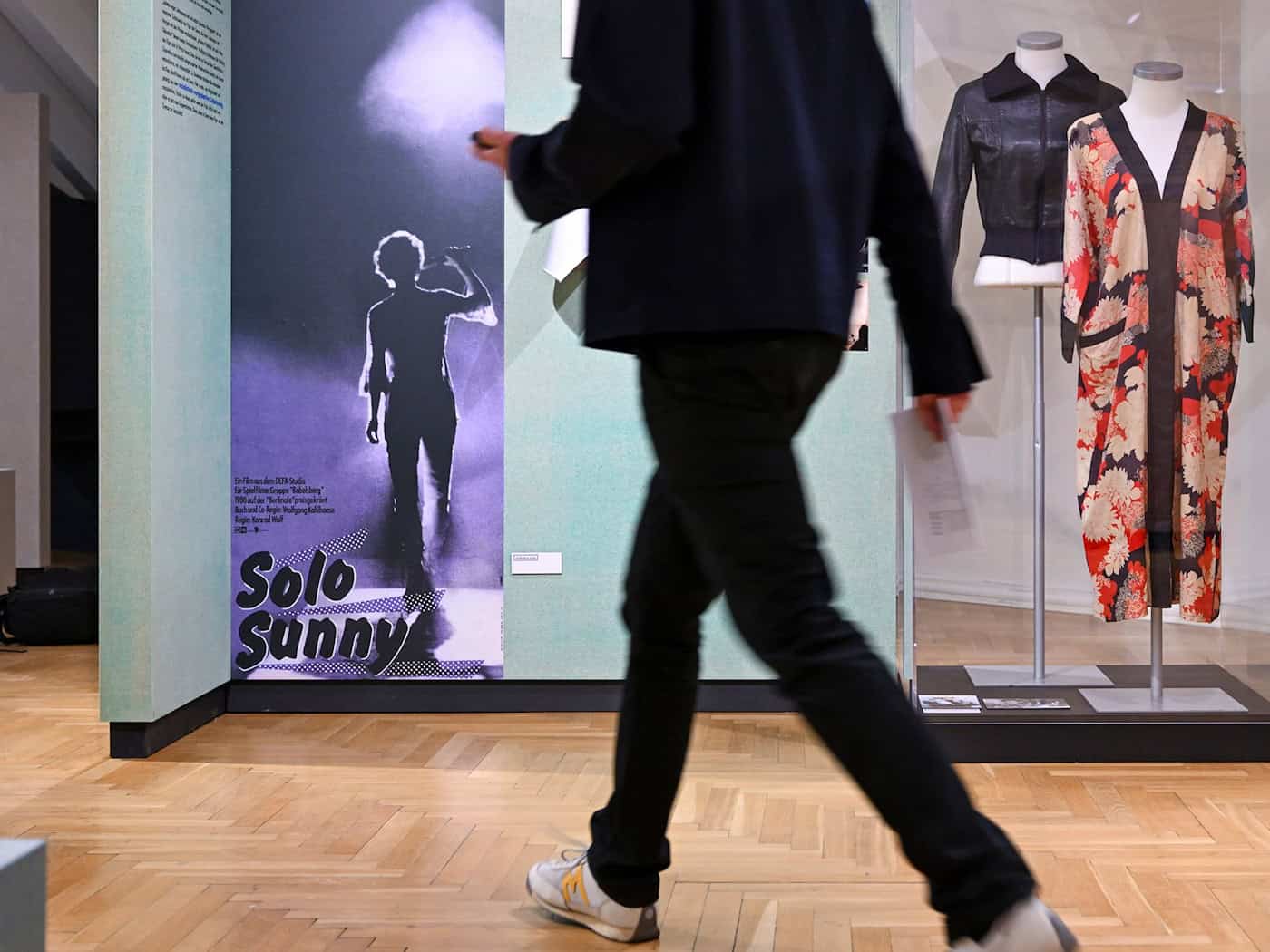
A legendary line from a legendary film: “No breakfast. No discussion either.” With these words, the singer Solo Sunny kicks her lover out in the 1980 DEFA film of the same name, starring Renate Krößner. These words grace the title of a new exhibition on 80 years of DEFA films. It’s not just about Sunny: From July 24 through May 2, 2027, a total of 40 well-known and lesser-known films will be on display at the Potsdam Film Museum. Visitors can also view posters, props, and photos. “Our aim with this exhibition is not to celebrate the GDR,” said curator Guido Altendorf. “But we certainly want to celebrate the people who lived, worked, and—here and there—found joy in the GDR, in that complex and tense environment.” The curator added: “The GDR was much more diverse, much less monolithic, than is often claimed.” The films also offer a glimpse into the spirit of the times. The selected films in the exhibition “Without Breakfast. No Discussion. 80 Years of DEFA Films,” along with their photos, props, and costumes, provide an overview of 40 years of everyday life in the GDR. They are organized into eleven different chapters, including “Rebellion and Retreat,” “Freedom and Wanderlust,” and “Sex and Love.” From the film “Solo Sunny,” visitors can see not only a poster, a leather jacket, and a dress, but also internal notes from the shoot: “Please prepare hot water for showering!” or “Please provide a heating source for Sunny.” Other films include “Der Mann, der nach der Oma kam” (1971) starring Winfried Glatzeder, which explores gender roles; “Einer trage des anderen Last” (1988), about tolerance; and “Coming out” (1989), about a gay teacher. Children’s films such as “Moritz in the Advertising Column” (1983) are also included. The organizers of the exhibition want to appeal not only to existing fans but also to younger visitors. “People who are just now becoming interested in the DEFA film legacy usually don’t yet have such a strong emotional connection to the films,” said Philip Zengel of the DEFA Foundation. “By exploring such universal themes as fashion, freedom, love, religion, and cuisine (...), I believe we can inspire future generations to take an interest in these films.” Those who wish can also experience the exhibition’s accompanying program: Classics such as “Coming Out” (November 12), “A Roof Over Your Head” (January 24), and “Jakob the Liar” will be screened at the Film Museum. Some screenings will feature special guests, and others will include an introductory talk. Actress Jutta Wachowiak is also expected to attend the exhibition’s opening on Thursday. Defa (Deutsche Film AG) was founded in 1946 in Potsdam-Babelsberg. It was the first postwar German film company and later became the state-run film production company of the GDR. In 1992, Defa was dissolved, and the Treuhandanstalt sold the film studio in Potsdam-Babelsberg. That same year, the DEFA Foundation took over the film archive to preserve it as part of the national cultural heritage. Copyright 2026, dpa (www.dpa.de). All rights reservedFrom rebellion and withdrawal to sex and love
New DEFA Fans Wanted
The History of Defa


