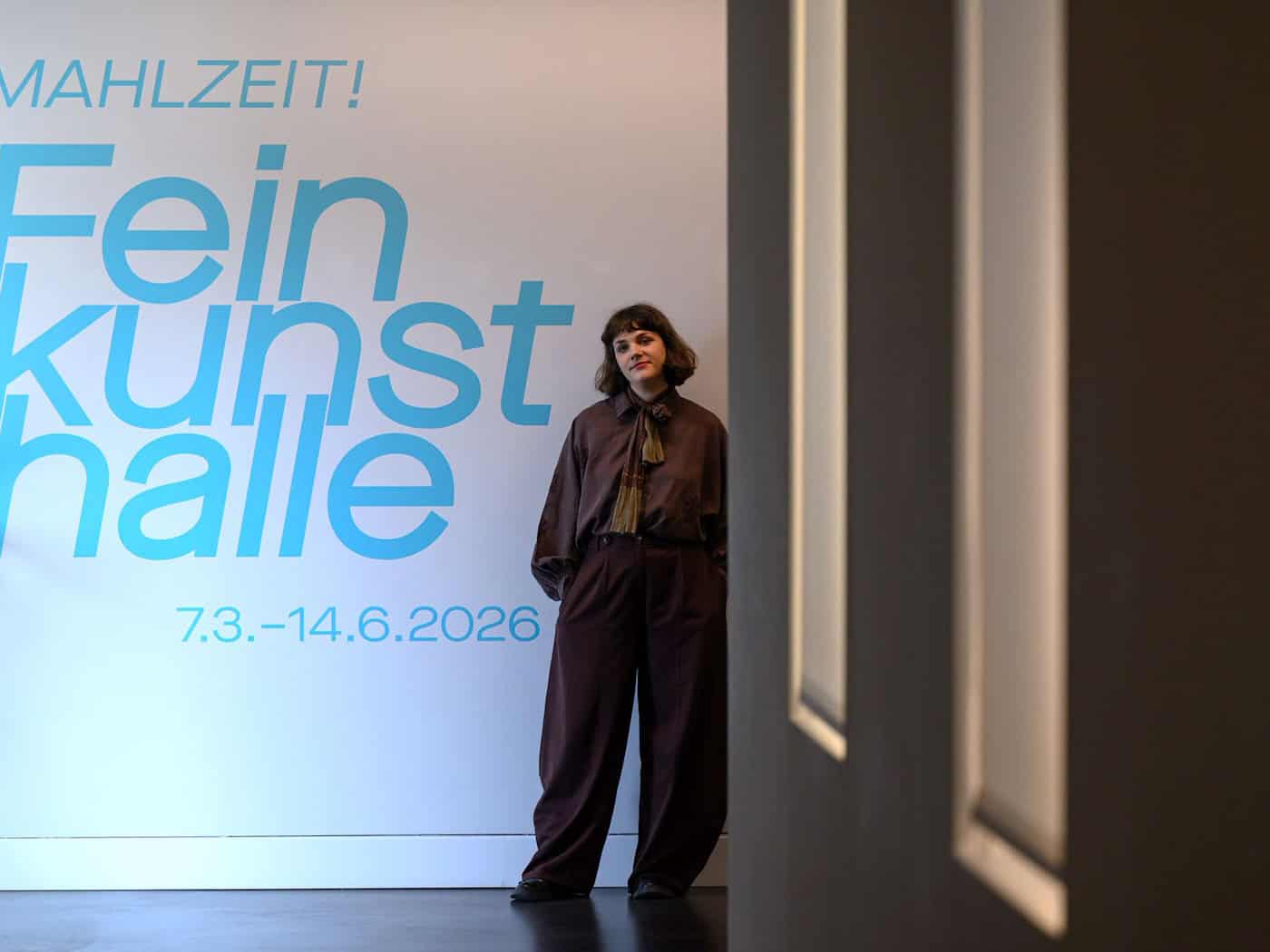
White cabbage, tomatoes, mushrooms, apples and pears: the fruit and vegetable section at the Gunzenhauser Art Museum in Chemnitz is well stocked. For the "Feinkunsthalle" exhibition, curator Pauline Tigges was able to draw from a large pool of still lifes and selected works by Alexej von Jawlensky, Paula Modersohn-Becker, Karl Schmidt-Rottluff and Otto Dix, among others. "This year, everything revolves around the theme of food," explains museum director Anja Richter. The first part of the "Mahlzeit" exhibition trilogy will be on display from March 7 to June 14. For the presentation of the art, the exhibition organizers took their inspiration from an everyday place: the supermarket. "The supermarket is the main access point to food for most people today," explains curator Tigges. The works of art in the exhibition are arranged accordingly: Baked goods and cheese can be found here as well as fish, meat and sausage products, but also alcoholic beverages and chewing gum at the exit. For the works of art on display, the exhibition organizers draw from the Chemnitz art collections, supplemented by a number of loans - more than 60 works in total. The show offers a cross-epochal view of the theme of food: from 19th century still lifes and genre painting to works of classical modernism and contemporary artists. For example, reverse glass paintings by Jan Kummer are on display, as is a video work by Marie Lynn Speckert in which a lobster is dissected and eaten. For an installation, Sophie Schmidt has enlarged packets of chewing gum tenfold and exhibited them in the tradition of pop art. Meanwhile, Osmar Osten's gaudy works with slogans such as "Eiersallat tut gut!" and "is DOCH BOCKWURST!" are reminiscent of slogans from advertising posters. The exhibition aims to show the diversity of food depictions in art history and explore the representation of the consumer and cultural history of food in art. It offers low-threshold access to the topic. Visitors can also get active themselves and try their hand at drawing a still life in a hands-on room or exchange recipes on a bulletin board. Omitted from the "Feinkunsthalle", however, is Eat Art, the art movement founded in the 1960s in which artists such as Daniel Spoerri, Dieter Roth and Roy Lichtenstein used food such as sausage, chocolate and spices as material for works of art. When asked, curator Tigges and museum director Richter regret that the Chemnitz Art Collections do not have any such works. They are also difficult to obtain on loan for conservation reasons. The Gunzenhauser Museum is planning two further exhibitions on the subject of food this year. The second part of the "Mahlzeit" series will focus on gender roles and food, Richter announced. The third part will then examine food as a communal phenomenon. Copyright 2026, dpa (www.dpa.de). All rights reserved"is DOCH BOCKWURST!" - Positions of contemporary artists
Start of the exhibition series "Mahlzeit"