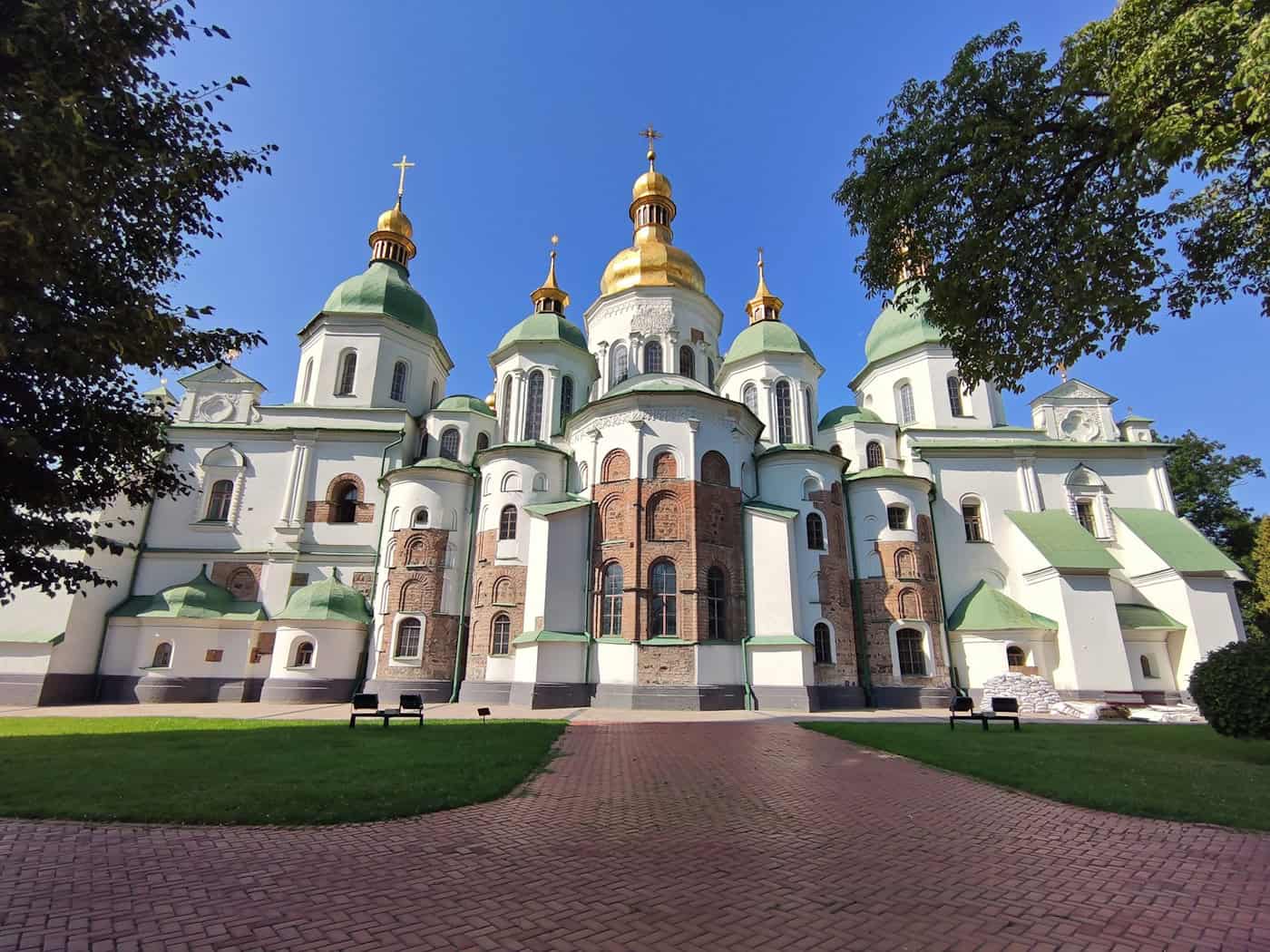
The dome of St. Sophia Cathedral gleams golden. The magnificent 11th-century structure soars above Kyiv. This is what St. Sophia Cathedral, a UNESCO World Heritage Site, looks like in photos. But it is under threat. At Europe’s leading trade fair for historic preservation, Since Russia’s invasion of Ukraine, many of the country’s works of art have been destroyed or damaged. According to UNESCO, the UN cultural organization, 567 cultural sites had been damaged by the war as of the end of October. Ukrainian officials report that more than 2,000 sites have been affected. Johannes Nathan, chairman of the Ukraine Art Aid Center, has been working with his team since the start of the war to help cultural sites in Ukraine bring their treasures to safety. On Friday, he will speak in Leipzig with experts from Poland and Ukraine about how cultural assets can be protected in times of crisis. According to the Ukraine Art Aid Center, its team has so far supported more than 1,200 cultural institutions in Ukraine; for example, by sending dehumidifiers and packing materials so that works of art can be stored in otherwise damp rooms such as basements. The aid workers have also delivered vacuum tables to Ukraine. These create a vacuum, which helps in the restoration of works of art, as art historian Nathan explained. But the Ukraine Art Aid Center also supplies seemingly mundane items like shelves so that museums can store their cultural treasures more efficiently. However, not everything can be protected. In June, the Kiev Caves Monastery caught fire as a result of the war. For many people in Ukraine, this was “like a stab in the heart,” said Nathan. Some artists are open about the damage. The Ukrainian painter Petro Antyp, for example, has decided against restoring his artwork “Cosmogony,” which was damaged by the war, at the Korsak Museum in Lutsk. Large structures, on the other hand, are nearly impossible to protect, said expert Nathan. St. Sophia Cathedral, an “11th-century complex of extraordinary sacred significance,” has, however, been largely spared by the war so far. Nevertheless, damage has already occurred due to vibrations and a shock wave. The aforementioned cave monastery in Kyiv, on the other hand, has been struck multiple times throughout its history—and rebuilt each time. The cathedral, for example, was destroyed in 1941 during World War II and wasn’t rebuilt until the late 1990s. Today, the Ukraine Art Aid Center is collaborating with “Skeiron,” a team from Lviv that documents endangered architectural and cultural monuments. Using laser scanning and photogrammetry, the structures are digitally captured, as the fair’s organizers explain in a press release. St. Sophia Cathedral was already scanned in 2022, Yurii Prepodobnyi, one of the founders of “Skeiron,” stated in response to an inquiry. It took only about a week to digitally capture the building using laser technology. The murals inside, however, are still being digitized. In the worst-case scenario, data such as that from St. Sophia Cathedral could be used for the reconstruction of destroyed cultural monuments, according to a press release from the Leipzig Monument Fair. But these projects are also valuable in peacetime. Through 3D models, cultural monuments could be made accessible to the blind through tactile exploration. Copyright 2026, dpa (www.dpa.de). All rights reserved
restoration, and renovation of historic buildings in Leipzig (November 5–7), visitors will learn how countries can preserve their culture even in the event of war. Protecting Artworks with Vacuum Tables and Dehumidifiers
Destroyed culture “like a stab in the heart”
Enabling Reconstruction Through Digital Technology