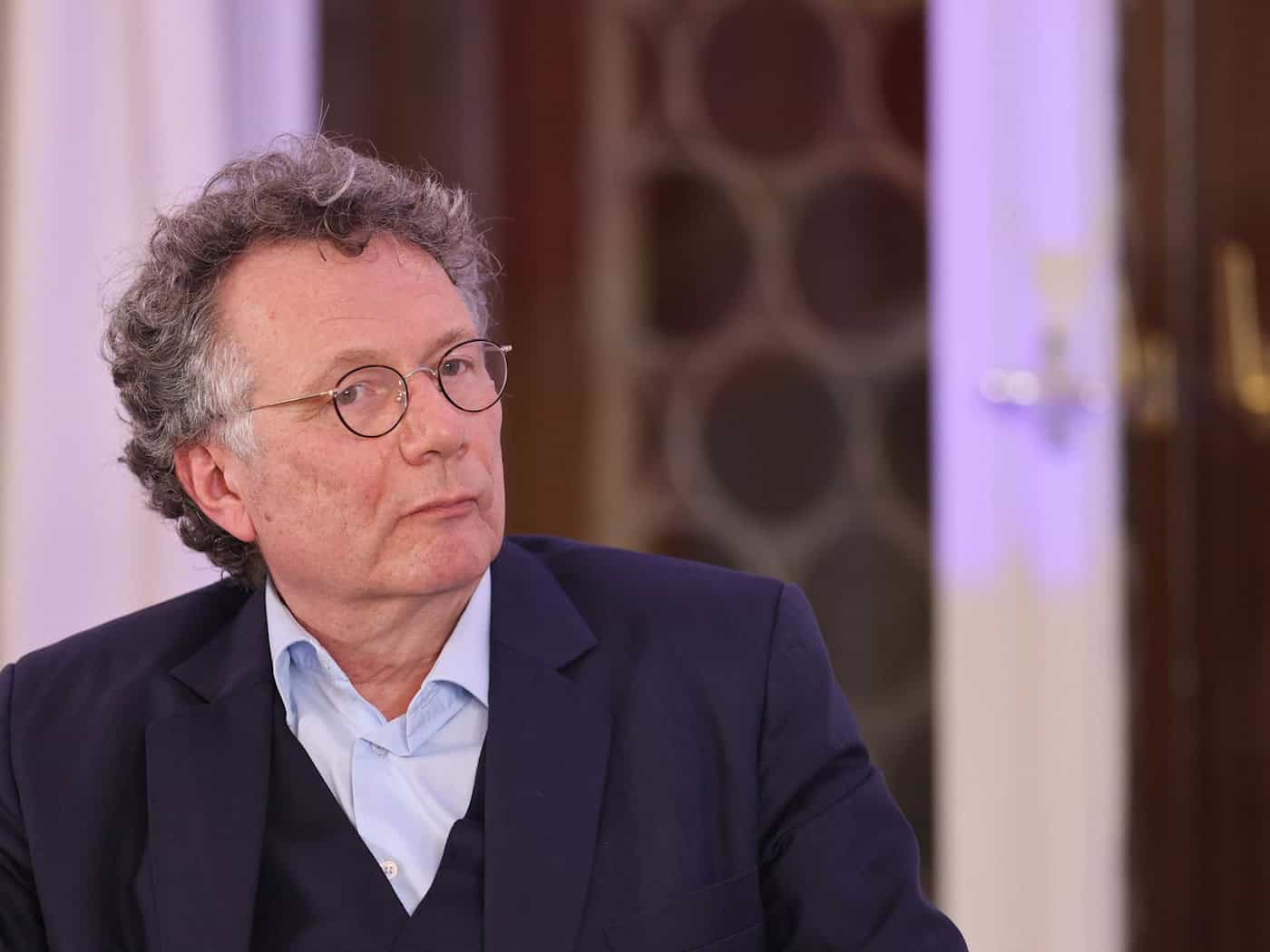
Author Ingo Schulze, whose new novel *Das Wasser im August* is on the longlist for the German Book Prize, is puzzled by the growing nostalgia for the East. “I can’t imagine anyone wanting to live in 1988 again,” Schulze tells *stern*. “That seems so unreal to me.” *Das Wasser im August* is set in the summer of 1979 in the GDR. Schulze explains this longing for the past as follows: “Perhaps this desire stems from the fact that there was a sense that people could change things for themselves. The upheaval of 1989 set a tremendous wave of activity in motion. People not only flocked to demonstrations but also formed roundtables even in the villages.” The goal had been to reform the GDR. “When that was unfortunately off the table, the shock came later,” says the 63-year-old. For decades, the Dresden-born writer has explored his homeland and German history in his works. Thematically, he focuses primarily on the era of the GDR, the period of reunification, and the post-reunification era. Schulze has received numerous awards for his literary work, including the 2021 Dresden Art Prize, the 2021 Prize of the Literature Houses, and the 2026 Uwe Johnson Prize for his novel *Das Wasser im August*. The jury of the Dresden Art Prize honored him as a “seismograph of recent German history and the present.” According to Schulze, the novel “Das Wasser im August” tells the story of a 16-year-old “who is in the process of discovering love and the wonders of the world: what there is to read, to see, to hear.” Schulze, who has been president of the German Academy for Language and Literature since 2023, says he himself was 16 years old in the summer of 1979. When asked why many people in the eastern German states long for the return of an authoritarian system, he says: “I’m aware of polls where more than 90 percent support democracy—just a different kind than the one we have now. But there is a significant percentage who pin their hopes on the AfD: ‘Now let’s decide for ourselves what culture is, what education is, what history is, what art is, what science is.’” Schulze emphasizes: “That would end rather miserably, but it would cause a great deal of harm along the way.” Referring to many AfD voters, including those in Baden-Württemberg and Bavaria, Schulze said he believes it’s largely about protest and that “about half are also xenophobic.” “To express their discontent, many are willing—knowingly or unknowingly—to vote against their own economic interests,” says the writer. “The protest is not directed against economic conditions, but instead channels this discontent toward issues such as gender equality or Christopher Street Day, toward museums or schools, toward liberal politics and media coverage—as if these were the main reasons for fears of loss or insecurity.” Copyright 2026, dpa (www.dpa.de). All rights reserved“A Seismograph of Recent German History”
Schulze: For a large portion of AfD voters, it’s about protest