

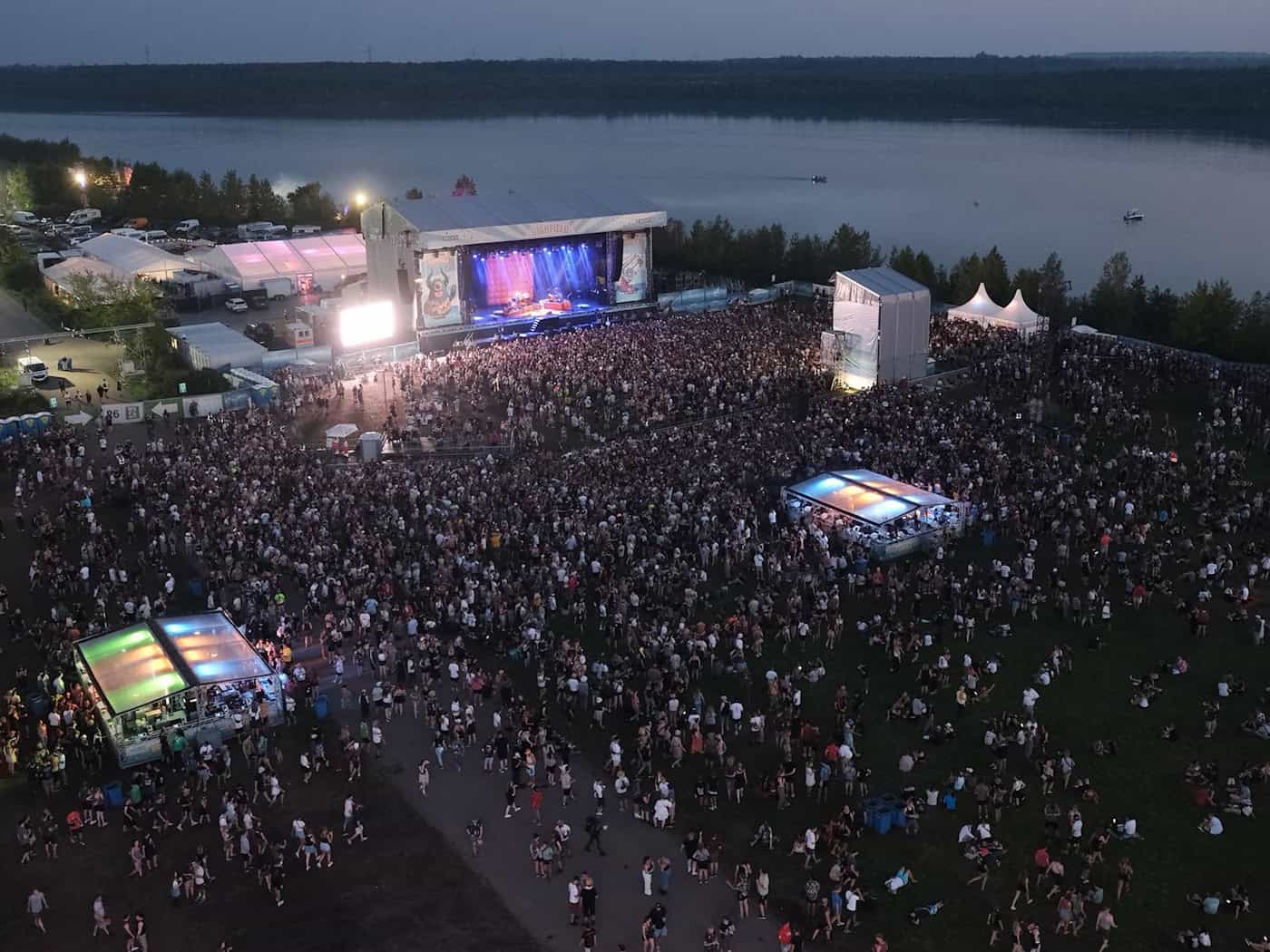
The heyday of music festivals seems to be over: In Saxony, Highfield, the largest rock festival, is inviting fans to “One Last Dance” from August 13 to 16 at Störmtahler See near Leipzig and is taking a break—at least for the coming year—while other events, such as the Dixieland Festival in Dresden, are cutting beloved program items for financial reasons. However, there are also festivals like the Wave-Gotik-Treffen in Leipzig that are on solid footing. “I’m not worried about the industry, but there is certainly cause for concern because many organizers are under enormous economic pressure,” said Johannes Everke, managing director of the Federal Association of the Concert and Event Industry. Production costs have skyrocketed since the pandemic. In addition, the bands’ fee demands have risen dramatically, in some cases even tripling. This is partly understandable, Everke explained, because artists mostly make their living from live performances. On average, revenue from record sales accounts for only 5.2 percent, he said. The organizers, Semmel Concerts and FKP Scorpio, had announced that Highfield was no longer economically viable in its current form. Compared to the pre-COVID era, costs for staff, materials, performance fees, and energy have risen by about 45 percent. At the same time, demand has fallen due to the increased cost of living. “The Highfield, as its fans know and love it, is no longer possible in its current form.” Most recently, around 28,000 people attended the festival; in its heyday, attendance reached 35,000. “Concerts and festivals are highly sought-after events because of the quality of the experience,” Everke emphasized. For visitors, it’s not just about the music, but also about the shared experience. “For many, a multi-day festival is like a pilgrimage with like-minded people.” At the same time, visitors’ expectations regarding comfort have risen. Many travel in a van or RV or take advantage of the numerous upgrade options available. For example, the three-day VIP Platinum add-on at Highfield costs 699 euros. This includes backstage tours, after-show parties, food and drinks in designated areas, private restroom facilities, and a spot right in front of the stage. This is in addition to the festival ticket, which costs 159 euros. Anyone who also wants a special sleeping spot in a tent with a bed and mattress pays even more. “These offers are popular, but they come at a price,” Everke explained. So it’s not surprising that guests usually choose to attend only one festival a year, rather than three or four as they did a few years ago. It’s therefore important to build a unique festival atmosphere and community. This is how the annual Wave-Gotik-Treffen has established itself over Pentecost in Leipzig. For years, the WGT has attracted around 20,000 guests and is on solid financial footing. “But we also benefit from our large core audience, which has remained loyal to us for years,” explained organizer Cornelius Brach. Most guests mark the date on their calendars well in advance, and it’s like a family reunion. However, the character of the WGT is unique and cannot be reduced to just the music. “We have an extensive cultural program featuring exhibitions, readings, concerts in unusual venues, and the medieval-themed Pagan Village,” explained Brach. Although the WGT must also cope with rising costs, efforts are being made to cut expenses in some areas to keep ticket prices reasonably stable. While headliners are important for the music program, guests are also open-minded and curious about smaller, as-yet-unknown bands. In contrast, the Dixieland Festival in Dresden—which attracts several hundred thousand people to the streets and squares of the city on the Elbe every year with its open-air concerts—has already had to accept restrictions at least twice. Due to strict security requirements, the organizers would have had to spend an additional 120,000 euros last year to meet the regulations. As a result, the Jazz Mile on Prager Straße was scaled back. This year, the popular closing parade—the highlight for many fans—was canceled. The reason for the financial difficulties is the security measures required of the organizers due to concerns about terrorist attacks. “Counterterrorism is a national responsibility. Neither associations nor cultural event organizers can permanently bear the immense costs of counterterrorism on their own,” the festival had repeatedly argued, citing the state’s monopoly on the use of force. The organizers of Highfield regret the decision to close this chapter for the time being, as Dieter Semmelmann, managing director of Semmel Concerts Entertainment GmbH, emphasized. “At the same time, we are looking ahead and hope to be able to develop a new concept in the coming months that is economically viable and secures the future of the festival.” Copyright 2026, dpa (www.dpa.de). All rights reservedProduction costs have risen—especially artist fees
Decline in Attendance at Highfield
Festivals are generally in demand—but guests also want more comfort
WGT benefits from regular attendees and a program beyond music
Security requirements also weigh on organizers


