

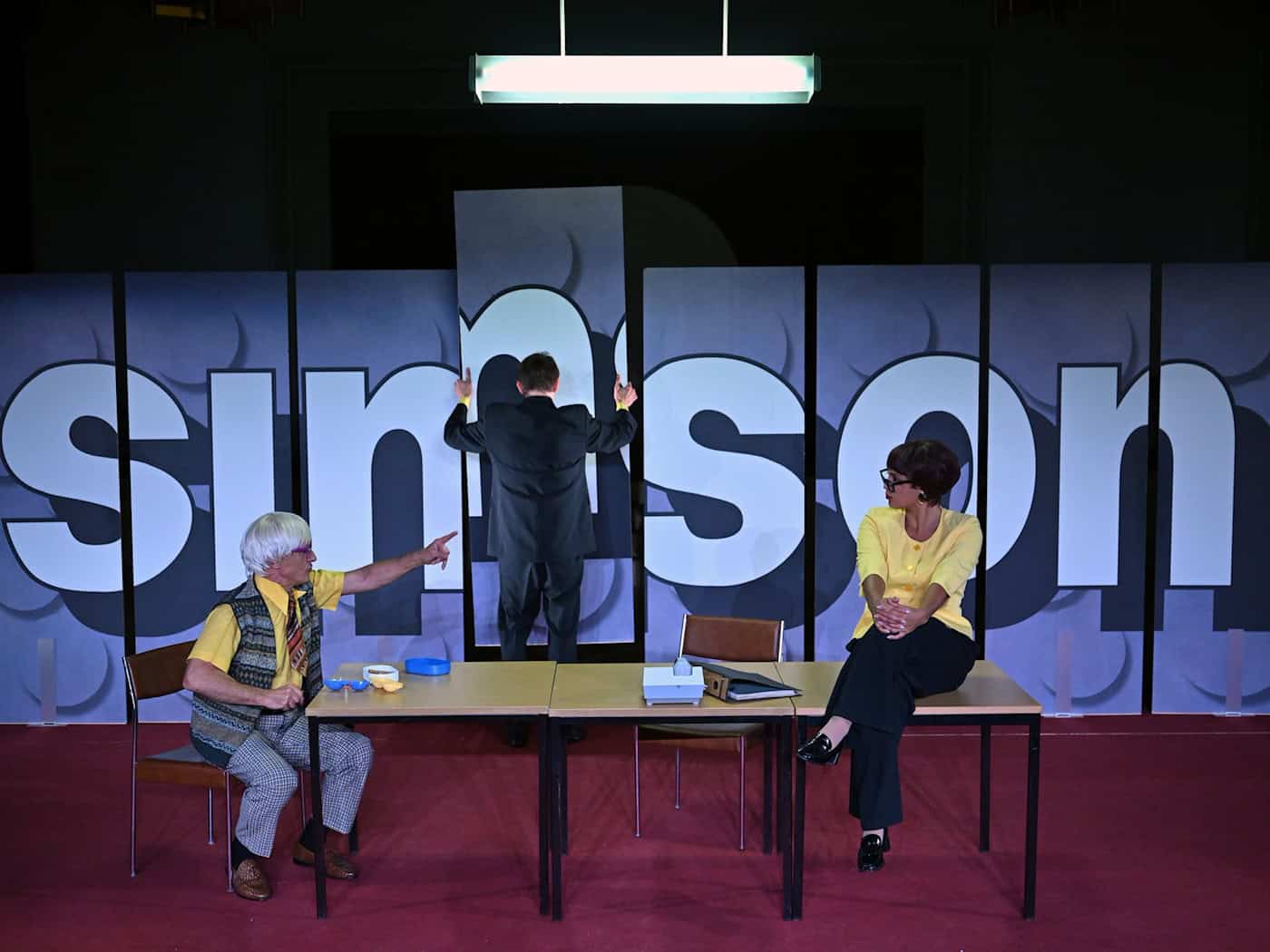
Even the characteristic rattling sound of Simson mopeds evokes feelings and memories in many people. But the “Simme” has long been more than just a nostalgic symbol of the former GDR. A theater project in Suhl is now exploring the Simson phenomenon. The play “Freedom: Simson” premieres this Friday at the Simson Industrial Park. Mopeds were once built on this site—at the state-owned enterprise (VEB) “Ernst Thälmann” Vehicle and Hunting Weapons Factory. Hundreds of thousands of Simson mopeds rolled off the assembly line there. The company’s origins, however, go back much further: In 1856, the Jewish brothers Löb and Moses Simson founded a company in Suhl that produced firearms and, later, bicycles and cars. In 1935, the Nazis expropriated the Simson family’s property and continued operations at the production site under a different name. Managing Director Alfred Simson fled to Switzerland and emigrated to the United States in 1937. Director Janek Liebetruth, born and raised in the Harz Mountains in the GDR in 1980, has his own childhood memories of the bicycle: “When I was 16, I owned a Sahara-yellow Simson myself and rode it to school.” It wasn’t until much later that he realized there was a Jewish family history behind the brand. And this has to do with his former roommate, Aaron Boks. He’s also from Wernigerode, is an author—and met with Simson heir Dennis Baum in New York while conducting research. When he returned, the story wouldn’t let the two of them rest, and they developed “Freiheit: Simson.” With their team, they searched for eyewitnesses who had worked at the factory. But they also spoke with young people who today cruise across the country in their “Simmen,” tinker with them, and keep the vehicles alive as cult objects. “We conducted interviews with 140 people,” reports Liebetruth. The theater troupe organized storytelling cafés and commemorative walks on the former factory grounds. The conversations and quotes from the eyewitnesses form the basis for the two-and-a-half-hour play. “It would have felt wrong to make up characters and stories,” says Liebetruth. However, they did allow themselves some artistic license. “One scene takes place at a food stand in 1995—there, we have characters meet who, in reality, wouldn’t necessarily have crossed paths.” The voices of the interviewees can also be heard elsewhere in the play: in a chorus of citizens. “For the most part, the eyewitnesses shared almost romantically positive memories with us about their time at the factory,” says Liebetruth. They did speak of difficult situations involving outdated machinery. “But people felt well taken care of at the factory and felt like part of a community.” There were, however, a few critical voices: for example, from schoolgirls at the time who were forced to help out in production once a week. “And there was a punk who had done his apprenticeship there and who kept butting heads with people—naturally, he doesn’t have fond memories of that time,” says Liebetruth. The play is performed in the building that once housed the factory’s training center. The theater director sees many reasons why the Simson still resonates with so many people. One of them is quite pragmatic: Thanks to a special regulation, the mopeds—which were still registered in the GDR—are allowed to travel up to 60 kilometers per hour, whereas other mopeds are limited to a maximum of 45 kilometers per hour. And then there’s politics: AfD politicians such as Ulrich Siegmund in Saxony-Anhalt and Björn Höcke in Thuringia used the two-wheelers in their election campaigns. But Thuringia’s Minister President Mario Voigt (CDU) is also a self-proclaimed fan of the Schwalbe and other Simson models. For example, he lobbied to extend the special speed regulation to reimported Simson mopeds. But the Left is also getting in on the action: Former Thuringian Minister-President Bodo Ramelow, for example, posted a photo on Instagram wearing a T-shirt with the slogan “Antifascist Simson Riders.” “It’s interesting to politicians because it serves as a symbol of an almost lost East German identity,” Liebetruth speculates regarding the focus on the Simson. He sees the mopeds as a way to discuss the everyday culture of the GDR that goes beyond the dictatorship. “People had their personal stories, their everyday lives—after reunification, they would have liked to feel that this was acknowledged and taken seriously.” The heirs of the Simson family are following certain developments with concern: They have made it clear that they do not want their name co-opted, especially by the AfD. “Keep the Simson name out of politics,” demanded family spokesperson Dennis Baum at a protest rally against the AfD’s federal party convention in Erfurt in July. His family, he said, remains Jewish to this day. “That would never be compatible with the AfD’s platform,” said Baum, who lives in the U.S. He and other family members are also expected to attend Friday’s sold-out premiere in Suhl, Liebetruth said. Tickets are still available for additional performances in Suhl. The producers hope to send the play on tour to other locations next year. Copyright 2026, dpa (www.dpa.de). All rights reservedThe director himself rode a “Simme” as a teenager
Quotes from eyewitnesses in the docu-theater
Politicians, too, are banking on the Simson’s symbolic power
Simson Heirs: Protest Against AfD Co-Optation


