


Luise Puhlmann is the new Saxon Wine Queen
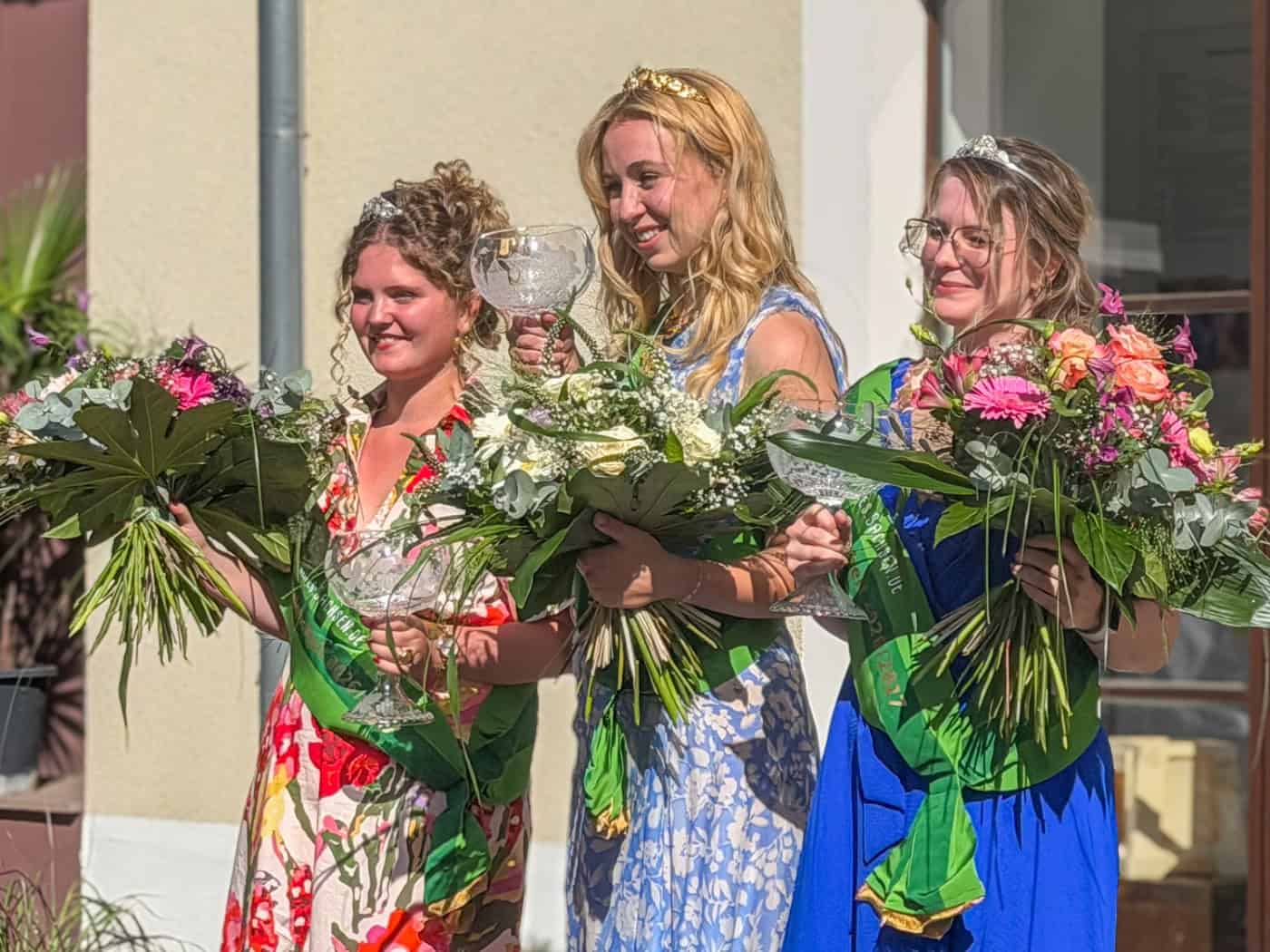
Sometimes it takes hitting rock bottom for things to get even better afterward: after several years of rather low interest among candidates for the Saxon Wine Queen title, the year 25/26 can be considered the low point: after much back-and-forth and squabbling, no election took place at all. The wine royalty-free period is over: as of yesterday, Saxony once again has a Wine Queen and two Wine Princesses. The new Wine Queen is Luise Puhlmann—she was the youngest of the six female candidates and the only male candidate—a first—for the title. The two Wine Princesses are Josephine Sander and Jessica Löffner.
The selection took place at the Meissen Winegrowers’ Cooperative and was not open to the public. The seven candidates had been preparing for the role since June. The program included, among other things, a viticulture seminar, sensory training, and public speaking lessons. During the actual selection process, candidates were evaluated not only on their technical knowledge but also on their demeanor, communication skills, and spontaneity. The assessment included technical questions on viticulture and tourism, the sensory description of a wine, and an impromptu welcome speech.
Luise Puhlmann brings practical experience in viticulture to the role. “My grandpa gave me my own grapevine as a gift when I started school,” she recalls. Even as a child, she helped with the grape harvest in the family vineyard; she assists at the family-owned wine tavern Haselbusch; and—looking from the past toward the future—she will begin an internship at the Henke Winery in Sörnewitz in August. Long-term goal: to study in Geisenheim and eventually become a sommelier.
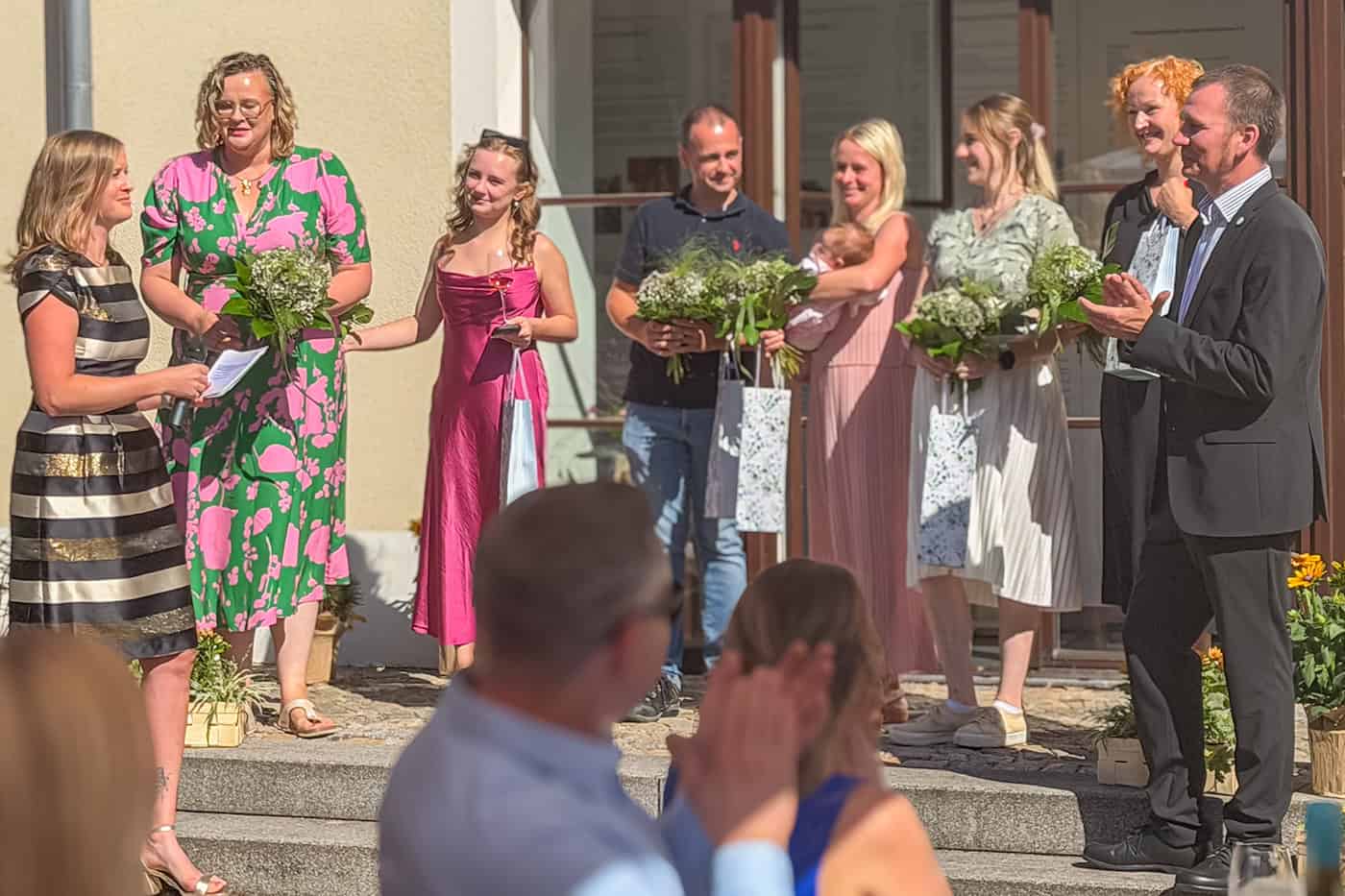
The fact that so many women applied this year—and that, for the first time, a man, 47-year-old Radebeul restaurateur Marco Stelter, also sought the position—is a wonderful success for the efforts of former wine queens. They were not at all pleased with how things went last year and the fact that there was no representative for Saxon wine. Officially established as a working group of the Winegrowers’ Association, with Maria Lehmann (Wine Queen 17/18) serving as the liaison to the board. Sabine Leonhardt (Wine Princess 22/23 and 23/24) will now take over coordination—she, too, was part of the working group. Alona Chesnok (Wine Queen 23/24) will focus primarily on social media, a task also handled by Sabrina Schreiber (Wine Queen 22/23) and her husband Sebastian. Lisa Leinemann (Wine Queen 18/19) was not only the emcee at the coronation ceremony but also provided support behind the scenes—just like Ann-Kathrin Schatzl-Pocher (Wine Princess 18–21). What the team (which also includes other dedicated members not pictured above) demonstrated was, on the one hand, only natural: once you’ve been a Wine Queen, you remain loyal to the idea of being a wine ambassador. And the fact that there were seven applicants is surely also a result of how much things have modernized without forgetting tradition: the rules were revised, marketing was revitalized, and the competition was opened up to men.

