Logo Die Sachsen News
News / Economy

Trabi, Simson and Co: Do the GDR oldies have eternal life?

Trabi, Simson and Co: Do the GDR oldies have eternal life?
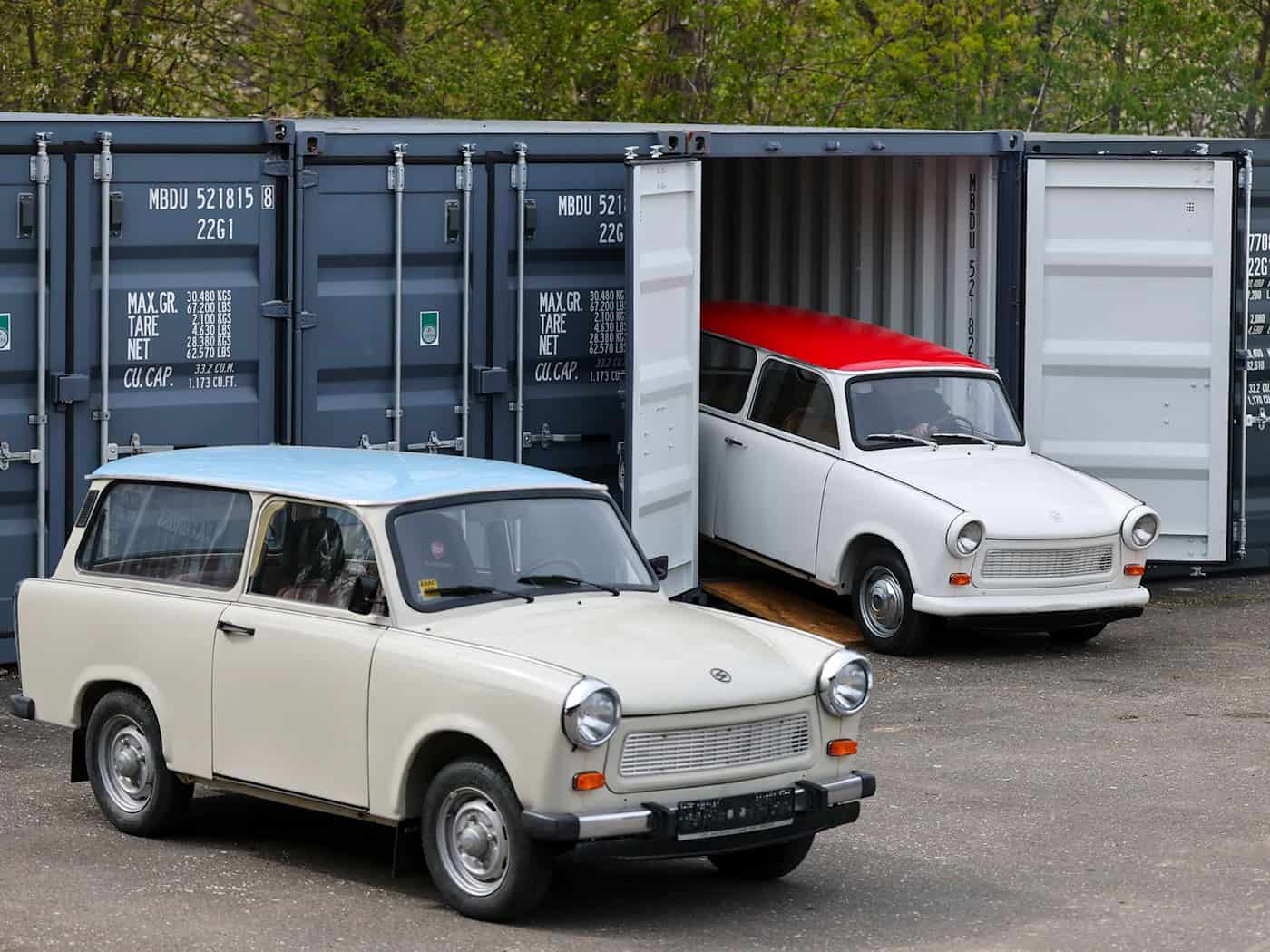
After a low of 32,311 Trabants in 2014, the population has recovered significantly / Photo: Jan Woitas/dpa
From: DieSachsen News
Long scorned, now cult: Tens of thousands of GDR vintage cars like the Trabant, whose production ended on April 30, 1991, are still on the road - but where do the spare parts for the oldies come from?

They roll and roll and roll - even decades after they went out of production: the GDR vintage cars Wartburg and Trabant, whose production was stopped 35 years ago on April 10 and 30. The nimble Simson two-wheelers, which finally came to an end in 2002, are also eye-catchers on the roads today.

According to the Federal Motor Transport Authority, tens of thousands of these old cars are currently registered - with a slight upward trend in recent years. Experts estimate that the number of Simson mopeds, which are particularly popular with young people, is in the hundreds of thousands. But what and who keeps these oldies running?

More from this category

Repair instructions included with the purchase

Enrico Martin, Director of the Automobile World Foundation Eisenach and himself a passionate Wartburg driver, cites practical reasons for their long life in addition to the emotional attachment of many East German families to their "mobile base". "GDR vehicles came with repair instructions when they were sold. And an extremely large number of spare parts were produced," says Martin. This means that car and two-wheeler fans can still draw on a reservoir of spare parts today.

Some of the parts are even identical for different vehicles - Martin cites windscreen wiper switches as an example. In the GDR, spare parts for Wartburg, Trabant or Simson mopeds were often stored away according to the motto "having is better than needing". Many parts are still being rediscovered today in basements, garages or barns. "There's still a lot there. And where there's a problem, someone can be found relatively quickly to produce it."

This means that GDR vintage cars are also an economic factor - and not just due to a flourishing trade with sharply rising prices. Time and again, "barn finds" or new builds come onto the market, attracting not only the large community of "mechanics", but also workshops and specialist dealers. A permanent dealer scene has established itself with many online stores, but also large suppliers.

This is the situation with spare parts for Trabants

"We can supply almost any part. If something is broken, it will be repaired," says Frank Hofmann, head of Trabantwelt Zwickau. His company is one of the larger suppliers. He buys Trabi spare parts from original stocks, but parts production plays the bigger role.

There is now a large network of manufacturers "who produce for us". However, his company also manufactures parts itself. According to Hofmann, who says he has been running his company in the Trabi town of Zwickau for 23 years, he is delighted that the number of registrations is increasing.

According to the Federal Motor Transport Authority, 41,862 cars built by Sachsenring in Zwickau up to 1991 were registered at the beginning of the year. After a low of 32,311 Trabants in 2014, the number has recovered significantly. Hofmann believes the reasons for this trend are a dash of nostalgia for the East and the relatively simple technology of the vehicles, "which almost anyone can repair".

Some Trabant owners now also value exclusivity - for example with a roof tent or storage space for an old leather suitcase. There is also a large tuning scene. According to estimates by the owner of Trabantwelt, thousands of Trabants are still slumbering in garages or warehouses without registration.

Simson: Eastern lifestyle and a bastion for mechanics

According to estimates, up to one million Simson mopeds from Suhl are still rattling along the roads, especially in East Germany. There are currently no official figures because not all of the vehicles are subject to registration.

Mopeds with names such as Schwalbe, Star, Sperber or S50/51 have cult status, especially among young people - partly because of a special provision in the Unification Treaty: unlike other mopeds, the two-strokes were allowed to travel at 60 km/h and not just 45 km/h if they were registered in the GDR. According to the Thuringian Ministry of Transport, almost six million Simson two-wheelers were built in Suhl.

A huge potential for spare parts dealers such as Meyer-Zweiradtechnik GmbH (MZA), based in Meiningen, Thuringia. Owner Falko Meyer was already focusing on the spare parts business in the 199Os, when newly built Simson two-wheelers were difficult to sell.

At the beginning of the 2000s, he took over stock, tools and equipment from the Simson insolvency administrator - and became a licensee of the brand. In recent years, a new location for spare parts supply has been built in Meiningen - "we have invested more than 30 million euros since 2018", says the company boss.

MZA now also operates an online store and no longer only supplies specialist dealers. The company, which employs around 170 people, is thus following a market trend: "Young people do a lot of things themselves, they tinker and screw things together and want individuality," says Meyer. Workshops have lost market share.

His company has more than 10,000 spare parts in its range - mainly for Simson, but also for other GDR two-wheelers such as the MZ motorcycle, says the native Saxon. He speaks of fierce competition. "There is no bottleneck. You can practically assemble a moped from parts. Basically, these mopeds are immortal," says Meyer.

Wartburg drives in a niche

In the opinion of the director of Automobilen Welt Eisenach, this also applies to GDR cars. Even if the Wartburg, with around 9,100 examples, is more of a niche model, the supply of spare parts is secure. Registration figures for the former GDR mid-range car from the former Eisenach car factory have been rising since 2015 - slowly but steadily.

Martin hopes that 16-year-olds today will start with the "Simme", as the mopeds are colloquially known, and end up with Wartburgs or Trabants as adults. According to his estimates, more well-restored GDR vintage cars will come back onto the market in the next few years because their owners are parting with them for reasons of age.

Copyright 2026, dpa (www.dpa.de). All rights reserved

The translations are automated with the help of AI. We look forward to your feedback and your help in improving our multilingual service. Write to us at: language@diesachsen.com.
Sachsen News
Article from

Sachsen News

Sachsen News is responsible for the content itself. The platform's code of conduct applies. The platform checks and treats content in accordance with the legal requirements, in particular the NetzDG.

Social Media