

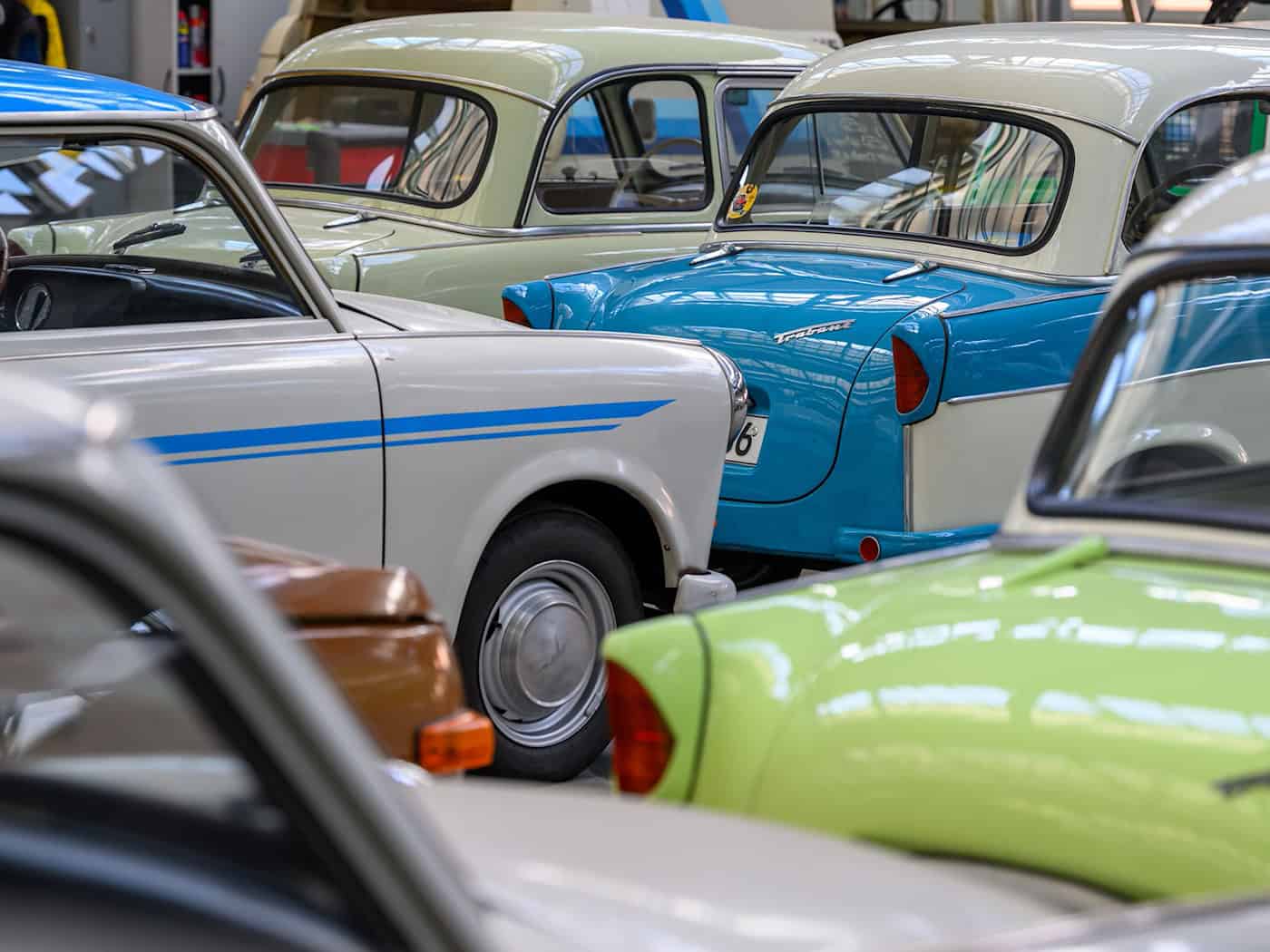
It was a familiar sight on the streets of East Germany, but with the fall of the GDR, its fate was sealed: the Trabi. Today, this small car made of thermoset plastic has achieved cult status and is lovingly maintained by many fans, not only in eastern Germany. The Trabi’s legacy remains a particular focus in its former home of Zwickau. There, the International Trabant Register (Intertrab) will celebrate its 30th anniversary on Saturday. As early as 1994, enthusiasts organized the first Zwickau Trabi meet with more than 600 vehicles, as Wolfgang Kießling recounts. The 71-year-old competed in Trabi rallies during the GDR era and has been chairman of Intertrab for many years. On the one hand, after reunification, East German cars like the Trabant and Wartburg were scrapped in large numbers and had to make way for Western models such as the VW Golf and Opel Kadett. On the other hand, Kießling explains, the desire to preserve the history and fascination of these vehicles and to create a central hub for Trabi fans has grown over the years. To this end, the International Trabant Register was founded in 1996. Today, the association not only has a large collection of promotional items and posters, but also tools from the Sachsenring Automobilwerke. It also has its own fleet of more than 20 different Trabant models—ranging from the P 50 and a camping version with a roof tent to an army-green “Kübelwagen” and the four-stroke model, which was used toward the end of the GDR to try to catch up technologically. One rarity is a white-and-green police Trabant with a blue light. That’s because Trabants were never officially used as police cars, says Kießling. What is likely the only police Trabant served the Chemnitz law enforcement officers for promotional purposes from 1998 to 2013. And the association holds another treasure: trademark rights related to the iconic car, such as the distinctive Trabant lettering and the curved “S” logo of the manufacturer Sachsenring. Anyone who wants to use them on T-shirts, keychains, or toys has to go through Intertrab. “We’re mainly active in the toy sector and make sure the Trabant lettering isn’t sold off cheaply,” says Kießling. He refuses to disclose publicly how much revenue these trademark rights bring in for the association. This revenue goes toward the restoration of vehicles, Kießling explains. The most recent example is the restoration of a Trabant with a Wankel engine. Sachsenring worked on the development of such a rotary engine in the 1960s, explains the head of Intertrab. The association was able to track down one such prototype vehicle, which had later been converted to a standard two-stroke engine. With great effort, the car has not only been repainted in its original color over the past few years but also equipped with a Wankel engine. The vehicle is currently on display in a small special exhibition at the August Horch Museum in Zwickau. Numerous other vehicles will be on display Saturday at Intertrab’s anniversary celebration. To mark the occasion, a “Trabant Avenue” will be set up to showcase the compact car’s evolution from the original Trabi to the four-stroke model, explains Kießling. Copyright 2026, dpa (www.dpa.de). All rights reservedA fleet of more than 20 different Trabi models
From the Original Trabi to the Four-Stroke—Anniversary Celebration in Zwickau


