

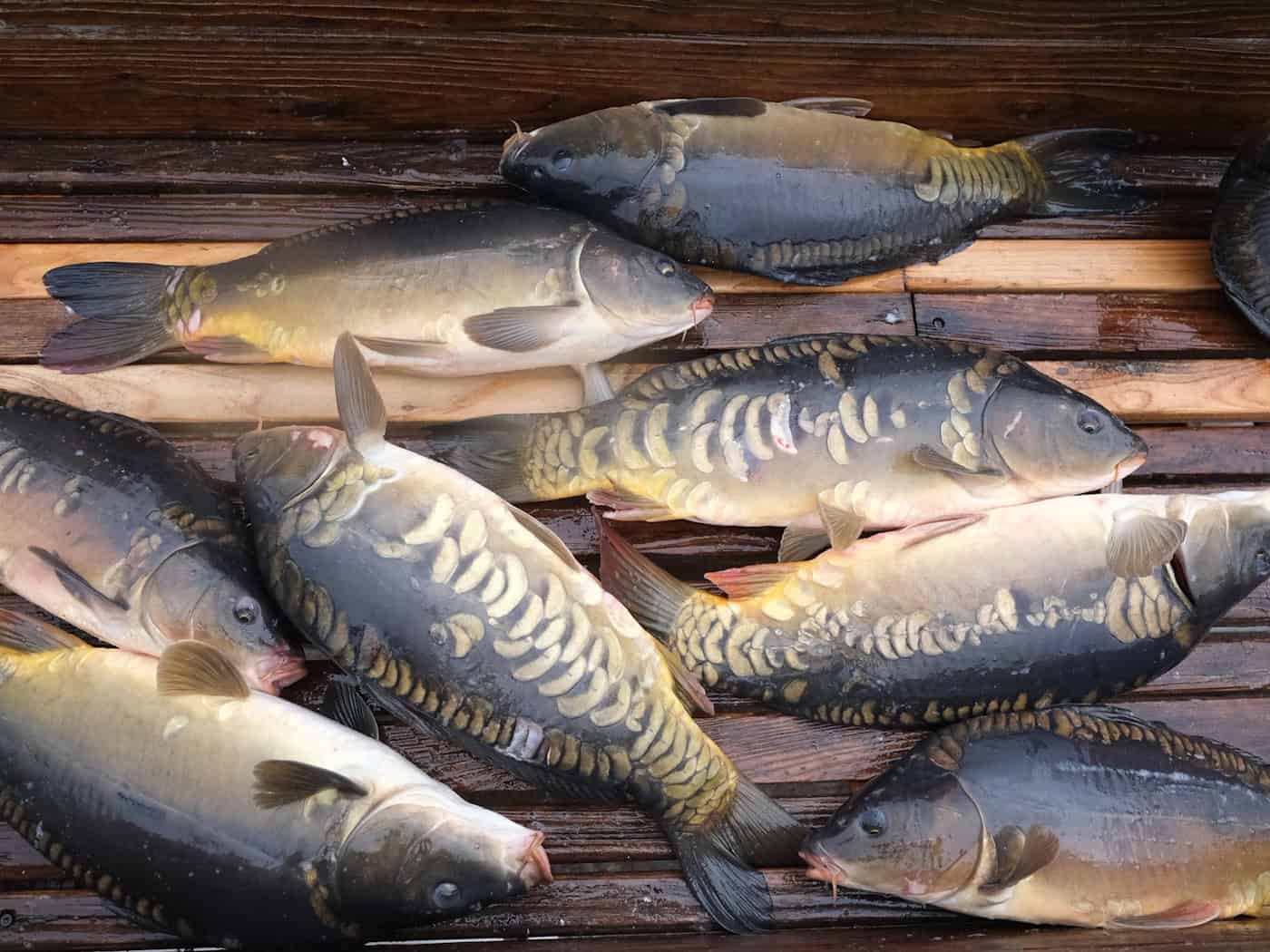
Saxony’s fish farmers see carp as anything but an old-fashioned dish and want to better market the fish’s meat. “We need to experiment more and convince a younger audience what a great and sustainable product this is,” Kevin Kretschmar, managing director of the State Fisheries Association, told the German Press Agency. That’s why they’ll be adjusting their social media presence. He didn’t rule out the possibility of “carp influencers” either. In addition, the fish could eventually be available in various forms from vending machines 24 hours a day, seven days a week. Kretschmar promotes the idea, noting that such vending machines for regional products are already well-received in other German regions and in Austria. Even outside the fishing season, seasoned fillets, fish sticks, or fish patties for grilling could be offered this way. “We can show that there’s much more you can do with carp besides the classic preparation.” In fact, carp is healthy. It is rich in omega-3 fatty acids, and its meat contains vitamins and easily digestible proteins. Retailers are increasingly offering carp fillets because many consumers are put off by the bones. Smoked carp and carp ham are now also available. The fish is also suitable for grilling. Carp season officially begins in Saxony this Saturday. That’s when the Lusatian Fish Weeks will open in Rietschen (Görlitz district). They mark the start of a season during which many fish ponds across the Free State will be harvested in the coming weeks—typically, these harvests are organized as folk festivals. Kretschmar expects an average catch of about 1,500 to 1,600 metric tons this year. A hot, dry summer has slowed the growth of the carp. Nevertheless, there will be enough fish to put on the table. At the same time, the State Fisheries Association asked consumers for their understanding. Due to the water shortage this summer and the resulting poor food intake, the carp this season are significantly smaller than last year. Prices are expected to rise to 10 euros per kilogram—since major producers such as Poland and the Czech Republic were also affected by the unfavorable weather. Last year, carp cost an average of around 7.50 euros per kilogram. In addition to carp, Saxony’s pond farms also produce about 300 metric tons of so-called bycatch, such as tench, zander, and pike. They no longer come close to the volumes seen during the GDR era. Back then, around 8,000 metric tons were caught; by the mid-1990s, that figure had dropped to about 3,000. According to industry representatives, the sector is plagued not only by bureaucratic requirements but above all by significant losses due to fish predators such as cormorants and otters. Even beavers, which do not feed on fish, are a problem for fish farmers. Their dam-building activities repeatedly cause damage to the ponds. According to the managing director, some pond farmers lose about 80 percent of their young carp to predators. However, these losses cannot be “factored in” by stocking more fish. According to Kretschmar, a large portion of the operations take advantage of a subsidy program for pond farmers. This subsidy is tied to nature conservation and stipulates that fish stocking is capped at 400 kilograms per hectare. Fortunately, however, there is a growing understanding within the Ministry of Agriculture of the need to continue supporting the traditional management of the old ponds. Otherwise, the industry would not be able to survive. Currently, the association still has 35 full-time operations and another 25 part-time operations. Copyright 2026, dpa (www.dpa.de). All rights reservedCarp products available around the clock from vending machines in the future?
Carp meat is considered rich in vitamins and easy to digest
Carp Smaller This Season Due to Summer Heat
Predators Cause Losses


