

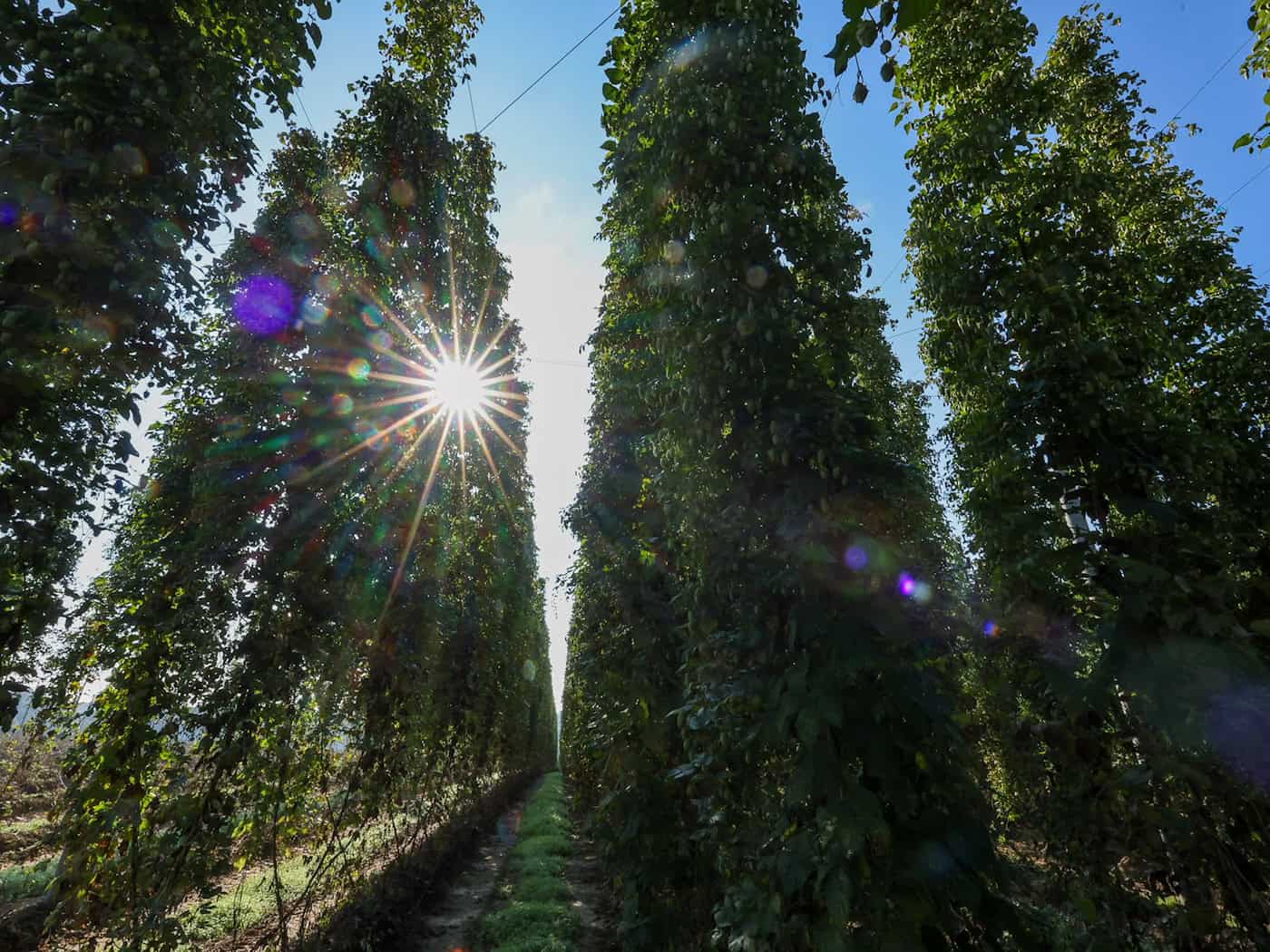
The heat and drought have damaged the hops in the Elbe-Saale growing region. “We will certainly have a below-average harvest,” said Andreas Kunze, managing director of the Elbe-Saale Hop Growers’ Association. In his view, this affects not only the association’s growing region in Saxony, Saxony-Anhalt, and Thuringia, but all of Germany. Due to the hot and dry conditions, the plants’ cones remained too small. At the same time, there were still night frosts in May, which is bad for the hops. According to Kunze, budbreak took a very long time this spring. For late-maturing hop varieties, such as the one called Herkules, Kunze is hoping for plenty of rain in the coming weeks, which could help boost the yield. According to him, this year’s hop harvest will not begin before September 7 and, given the expected smaller crop, will last about three weeks. However, according to Kunze, the poor conditions could affect not only the harvest volume but also the hop’s composition—particularly the alpha acid levels, which determine the hops’ bitterness. According to Kunze, the Elbe-Saale Hop Growers’ Association covers a total area of nearly 1,700 hectares. The area under hop cultivation decreased by 180 hectares in 2026 compared to the previous year, he said. The region is the second-largest hop-growing area in Germany. The largest in Germany and worldwide is the Hallertau region in Bavaria, where 17,000 hectares were planted with hops in 2024. According to the Federal Agency for Agriculture and Food, hops are an essential component of beer, alongside water, malt, and yeast. They give the beverage its characteristic aroma and flavor, promote foam formation, and help preserve the beer. Copyright 2026, dpa (www.dpa.de). All rights reservedHop Harvest Begins in September
Hops Essential for Beer Production


