

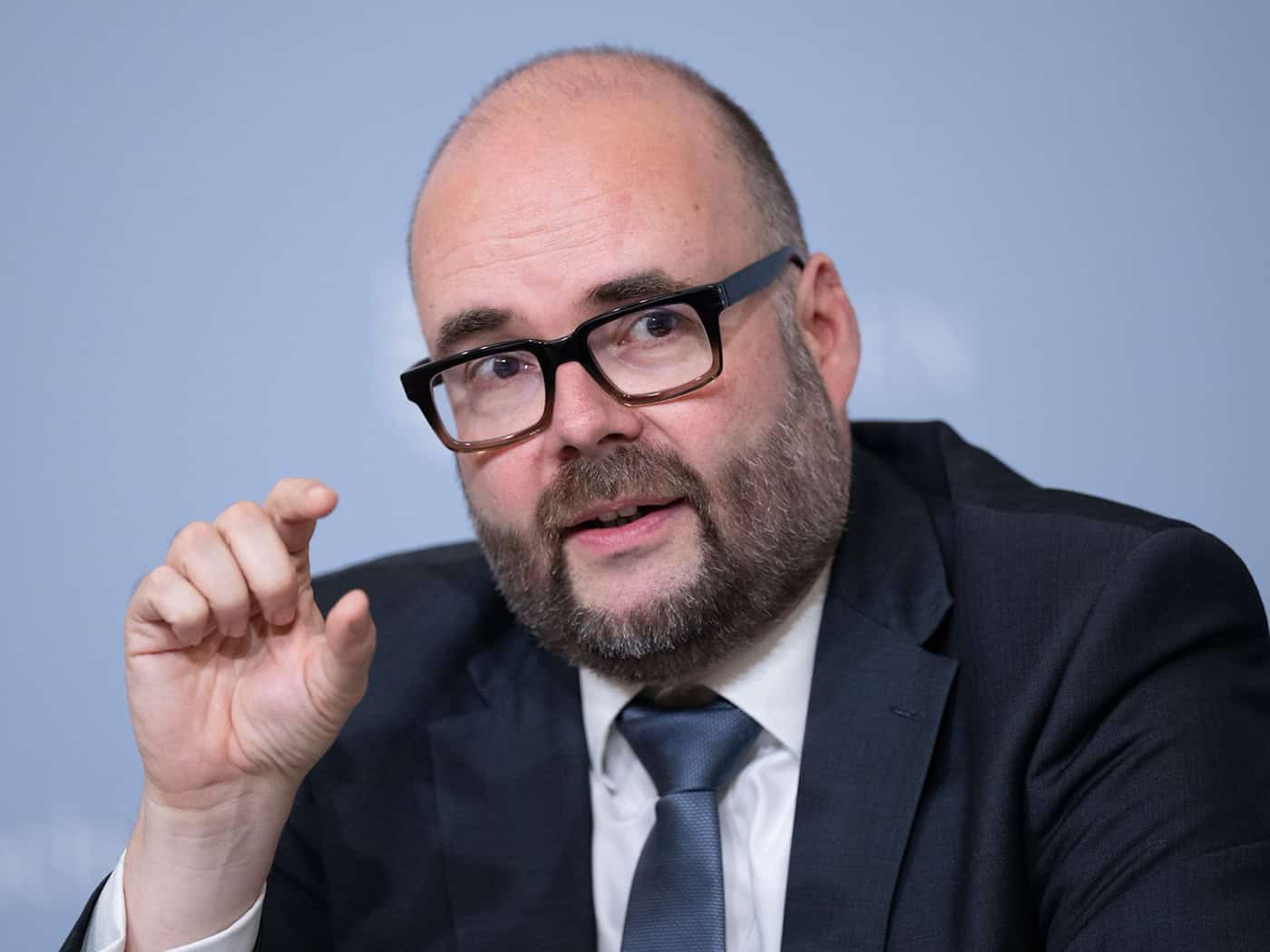
The Saxon government plans to spend approximately 53.5 billion euros over the next two years. This makes the total budget larger than ever before. However, Finance Minister Christian Piwarz (CDU) deliberately avoided referring to it as a record budget. Despite the large figures, this budget will also include cuts and reductions, the minister said. The government’s draft for the two-year budget calls for expenditures of 26.5 billion euros in 2027, with 27 billion euros planned for the following year. The cabinet approved the draft on Friday and forwarded it to the state parliament. We are trying to strike a balance between what is necessary for the state and the required fiscal consolidation, explained Piwarz (CDU), calling it a good compromise. “This is a balanced budget draft that strikes a balance between fiscal consolidation and necessary investments. However, I won’t hide the fact that I would have liked to see more savings,” said Piwarz. More funds are being allocated for investments, and the reform projects aimed at modernizing the state are also being financed. Digitalization, in particular, costs money initially before it leads to cost savings. This partly explains the increase compared to the current budget. In the current two-year budget, expenditures total just over 50 billion euros. In addition, the state government approved a temporary borrowing of just under 1.5 billion euros for both fiscal years. About half of the total is to go to the municipalities. An amendment to the Basic Law allowed the states to take on new debt amounting to 0.35 percent of gross domestic product. For Saxony, that amounts to about 728 million euros per year. Piwarz made it clear that taking on new debt must not become a permanent situation. With the draft budget, the planned job cuts are set to gain momentum, officials said. A total of 523 positions are to be eliminated over the next two fiscal years. By 2040, the total reduction is expected to reach 8,721 positions. The job cuts will not result in job losses, as approximately 37,000 employees of the Free State of Saxony are set to retire by 2038. Nevertheless, personnel expenses will continue to rise over the next two years due to wage increases. They account for a good quarter of the total budget. 3.21 billion euros are earmarked for investments next year and 3.25 billion euros the following year (2026: 3.18) Added to this are investment funds from the federal government’s special fund for infrastructure and climate protection, which are pooled in the Saxony Fund. For 2027 and 2028, this amounts to approximately 403 million euros each year—assuming an even distribution over the fund’s term. This brings the investment ratio to 13.5 percent in 2027 and 13.4 percent in 2028. In the finalized 2025 budget, it was 11.9 percent. This placed Saxony in fifth place among the larger federal states, according to reports. Spending on education and research will rise from 8.1 billion euros this year to 8.6 and 8.7 billion euros, respectively, in the following two years. This accounts for about one-third of the state budget. “Even though funds are tight, we can maintain our broad-based scientific landscape, including universities and research institutions, and strengthen key areas,” emphasized Science Minister Sebastian Gemkow (CDU). Allocations to municipalities will increase from the current level of around 8.1 billion euros to nearly 9 billion euros in each of the next two years. Of the 403 million euros allocated annually from the special fund for infrastructure and climate protection, 256 million euros will go to Saxony’s municipalities each year. Copyright 2026, dpa (www.dpa.de). All rights reservedBalancing Necessities and Consolidation
The path to fiscal consolidation is set to continue
Free State Takes on Debt Within Permitted Limits
Job Cuts Set to Gain Momentum
More Money for Investments
Investment Ratio Rises


