

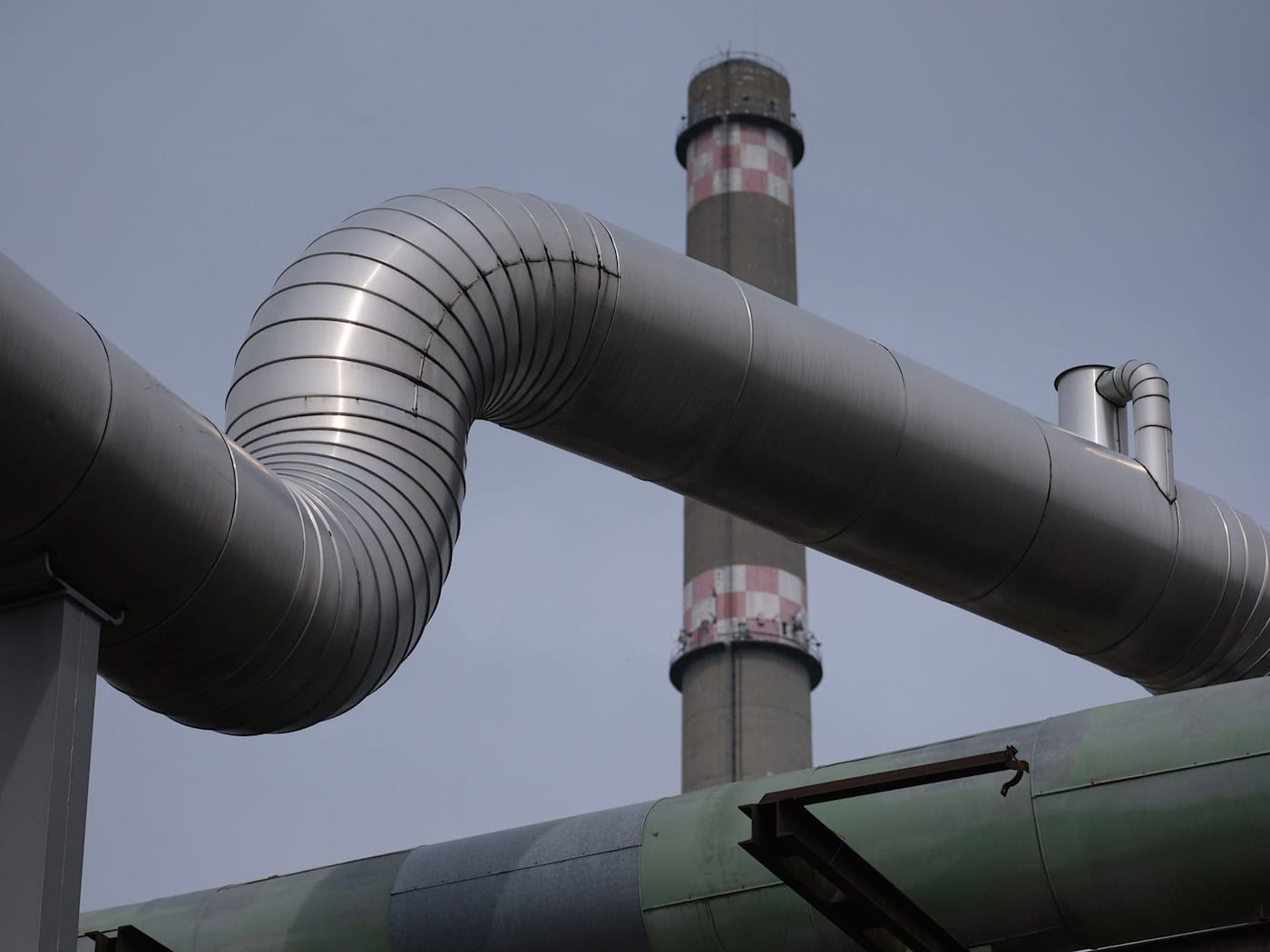
Planned relaxation of the Energy Efficiency Act could affect the heat supply of households in eastern Germany in the long term. Essentially, it is about fewer state requirements for energy saving - with possible consequences for the use of industrial waste heat. However, a cabinet decision on the planned bill is still pending. A draft bill from the Federal Ministry of Economics envisages significantly relaxing existing requirements and aligning them more closely with European minimum standards. This means that Germany would apply less stringent rules on energy saving in some areas than before. Reporting obligations are to be reduced and requirements for companies simplified. The topic is relevant for consumers because waste heat is considered a comparatively cheap and climate-friendly source of energy - for district heating, for example. It is generated in industrial plants and has so far only been partially utilized. According to the Ministry of Energy in Saxony-Anhalt, industrial waste heat is "a strategically relevant component of the heat transition because it makes continuously available, existing energy usable". Saxony's Ministry of Economic Affairs and Energy also emphasizes its importance and sees "great potential for Saxony's heat supply". A key example of the use of such waste heat in the east is a transnational project: in future, heat from the Leuna Chemical Park in Saxony-Anhalt is to be supplied to Leipzig in Saxony. This could supply around 100,000 homes. Construction of the approximately 19-kilometre-long district heating line began last year and the heat is expected to start flowing in 2028. But what do the planned changes mean for such a project? According to the Ministry of Energy in Saxony-Anhalt, ongoing major projects such as the one in Leipzig are not at risk for the time being. "Ongoing flagship projects are unlikely to be stopped as a result," the ministry said in response to a query. Stadtwerke Leipzig also assumes that this will be the case: "We do not expect the economic viability of projects that are already planned to deteriorate as a result." Projects that are already planned are therefore unlikely to be jeopardized. However, the situation could be different for future projects. The draft bill provides for companies to be less obliged to record and report their waste heat. Instead of clear specifications, the main focus in future will be on checking whether the use is economically viable. This would have consequences for planning in particular: if there is less data on available waste heat, local authorities and municipal utilities often do not know where projects could be worthwhile. This could make it more difficult to find customers and get new projects off the ground - even though the potential is there in principle. According to the Ministry of Energy in Saxony-Anhalt, this poses risks. "The initiation of new projects could become more difficult because municipalities, municipal utilities and potential customers could receive less reliable and standardized data," the ministry stated. Saxony-Anhalt's Energy Minister Armin Willingmann (SPD) also declared: "The Federal Ministry of Economics would be well advised to make adjustments to the Energy Efficiency Act." Reducing bureaucracy to strengthen the business location makes sense, but must be done with a sense of proportion. "Sensible efforts such as the use of industrial waste heat should not be undermined by this," said Willingmann. The Saxon Ministry of Economic Affairs and Energy also sees a similar effect. The draft would bring "considerable relief for companies" and thus "contribute significantly to reducing bureaucracy". At the same time, however, key requirements could be dropped: "Regulations on avoiding waste heat and reducing waste heat to a technically unavoidable level are to be completely removed." As a result, there is a risk that existing waste heat potential will not be fully captured in the future. However, Stadtwerke Leipzig continues to rely on the technology and sees Leuna as a key source: "The results of the potential analysis as part of municipal heat planning clearly show that the large Leuna site has the highest priority due to its considerable waste heat potential, which is constant throughout the year." The chemical park operator InfraLeuna also points to the great potential of industrial waste heat. Further volumes could be tapped into in the future through additional investments and new technologies. "However, planning security, technical feasibility and economic framework conditions are crucial for investment decisions in this area," it said. The draft law is currently being coordinated within the federal government and is currently being consulted with the federal states and associations. Comments can be submitted until mid-April. It remains to be seen what impact the planned changes will actually have on the heat supply, particularly in eastern Germany. Copyright 2026, dpa (www.dpa.de). All rights reservedLess requirements for energy saving
Waste heat as an opportunity for cheap heat
Example Leuna-Leipzig
Less data will make new projects more difficult
Criticism: risks for new projects
Companies continue to rely on waste heat
Law still in the process


