

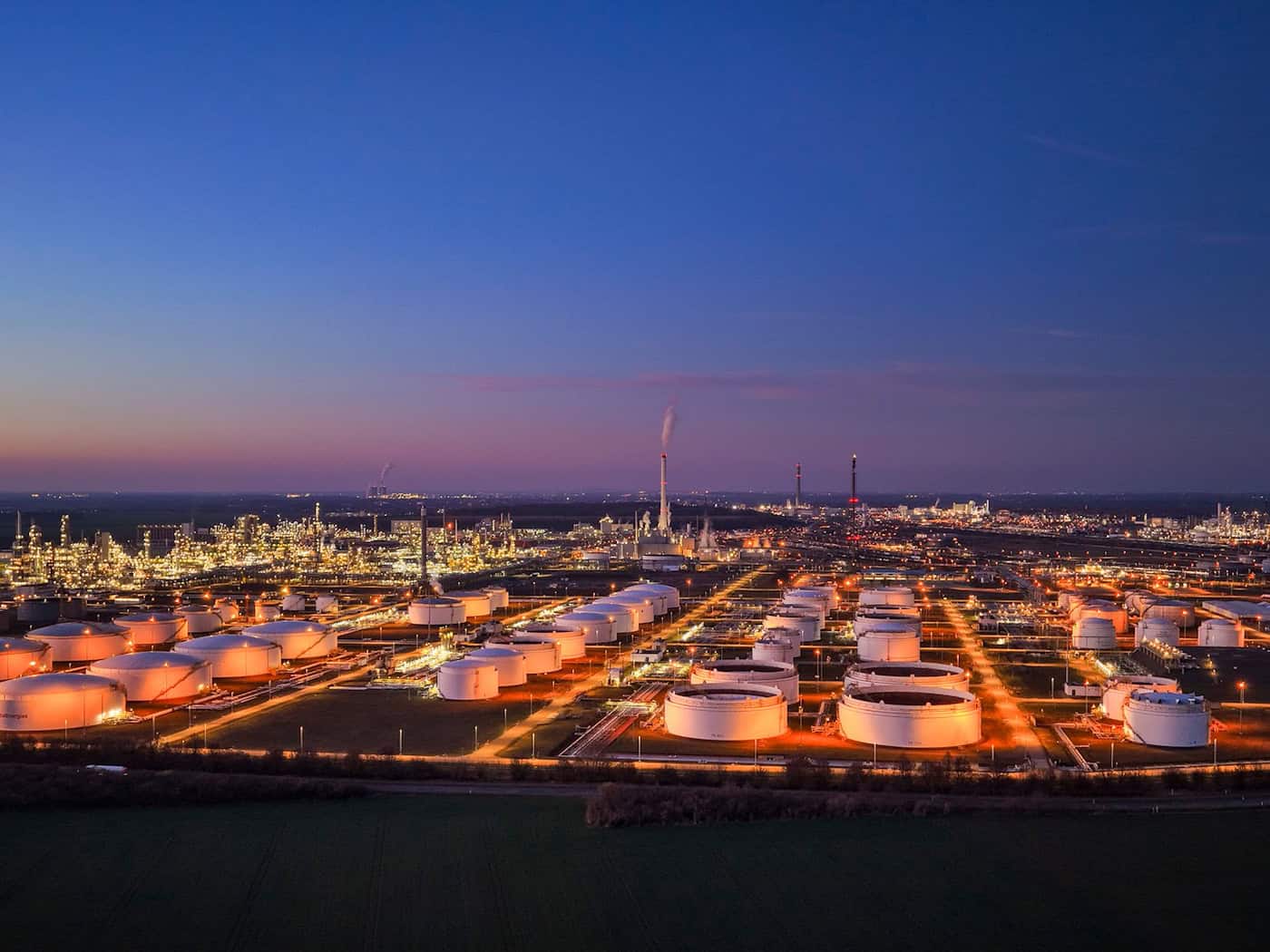
In view of the state elections in eastern Germany, the chemical industry is warning of political risks for the location. The industry sees the coming years as crucial for the future of key branches of industry. In addition to Saxony-Anhalt, elections will also be held in Mecklenburg-Western Pomerania and Berlin in September. The state elections in Saxony-Anhalt are scheduled for September 6. In current polls, the AfD is ahead of the CDU there. The AfD is also leading in polls in Mecklenburg-Western Pomerania, where elections are scheduled for September 20. "What I see in our companies is a certain amount of concern about the outcome of the election," says Nora Schmidt-Kesseler, Managing Director of the Northeast Chemicals Associations. The companies are already under pressure - due to high energy and raw material costs, weak demand from important customer industries and geopolitical uncertainties. This can be seen, for example, in the announced shutdowns of large plants such as at the US company Dow or crisis cases such as the now rescued company Domo in Leuna. According to the information provided, there is currently no exchange with the AfD. From the industry's perspective, the party does not have sufficient experience in a "very, very difficult and challenging economic situation". At the same time, Schmidt-Kesseler points out the importance of European cooperation for the industry. It is difficult to imagine how such a party would act at European level. The economy is dependent on "certain things being adhered to correctly in Europe". From her point of view, it is still unclear how the election will turn out. Schmidt-Kesseler expects many voters to make their decision at short notice: "It will be a very, very challenging election." In addition to domestic politics, the industry sees growing risks from international developments. Around two thirds of important chemical precursors and active ingredients already come from Asia, says Schmidt-Kesseler, referring to the tensions in the Middle East. If, for example, the Strait of Hormuz as a central trade route is further impaired, there is a risk of bottlenecks for important raw materials such as methanol, ammonia or specialty gases. This could also have consequences for other industries - such as drug production or the semiconductor industry. The industry believes that the case of Domo in Leuna shows just how closely the locations are interlinked. The chemical plant was on the verge of being shut down and was only saved at the last minute by a newly founded rescue company, which is supported by the site operator InfraLeuna and the company Leuna-Harze. More than 400 jobs were saved in this way. The state of Saxony-Anhalt had previously co-financed the continued operation of the plants for safety reasons in order to gain time for a solution. Industry representatives speak of an unusual procedure. Without a solution, there could have been far-reaching consequences for the entire chemical park. Other developments are also causing concern. For example, the US company Dow is under pressure to close parts of its plants in Schkopau and Böhlen by 2027. Observers are warning of possible domino effects for the region. As for the rescue of Domo, Schmidt-Kesseler says, "I think this is an isolated case". Such solutions are associated with considerable financial and organizational effort and cannot be easily transferred to other locations. Despite the tense situation, the industry also sees opportunities in the ongoing restructuring of the industry. According to experts, the chemical industry is undergoing a fundamental transformation - towards more sustainable production processes and new sources of raw materials. For example, the Leuna site is increasingly developing technologies to replace fossil raw materials and close material cycles. One example is the Finnish company UPM's biorefinery, in which wood is processed into chemical raw materials. These can be used for packaging, textiles, cosmetics or even medicines, for example, and partially replace fossil raw materials. At the same time, this change is stalling. Many companies are postponing investments or holding back in view of the uncertain situation, reports Schmidt-Kesseler. Such investments are actually an attempt to make the industry more competitive and climate-friendly in the long term. However, the restructuring requires a lot of resources and is only progressing slowly in light of the current crisis. The situation therefore remains tense for the industry. With a view to the state elections, Schmidt-Kesseler said that it is crucial whether the political framework conditions are set in such a way that investments become possible again. Copyright 2026, dpa (www.dpa.de). All rights reservedNo exchange with AfD
Geopolitics and dependencies exacerbate the situation
Industry closely interlinked - practical examples
Between crisis and new opportunities


