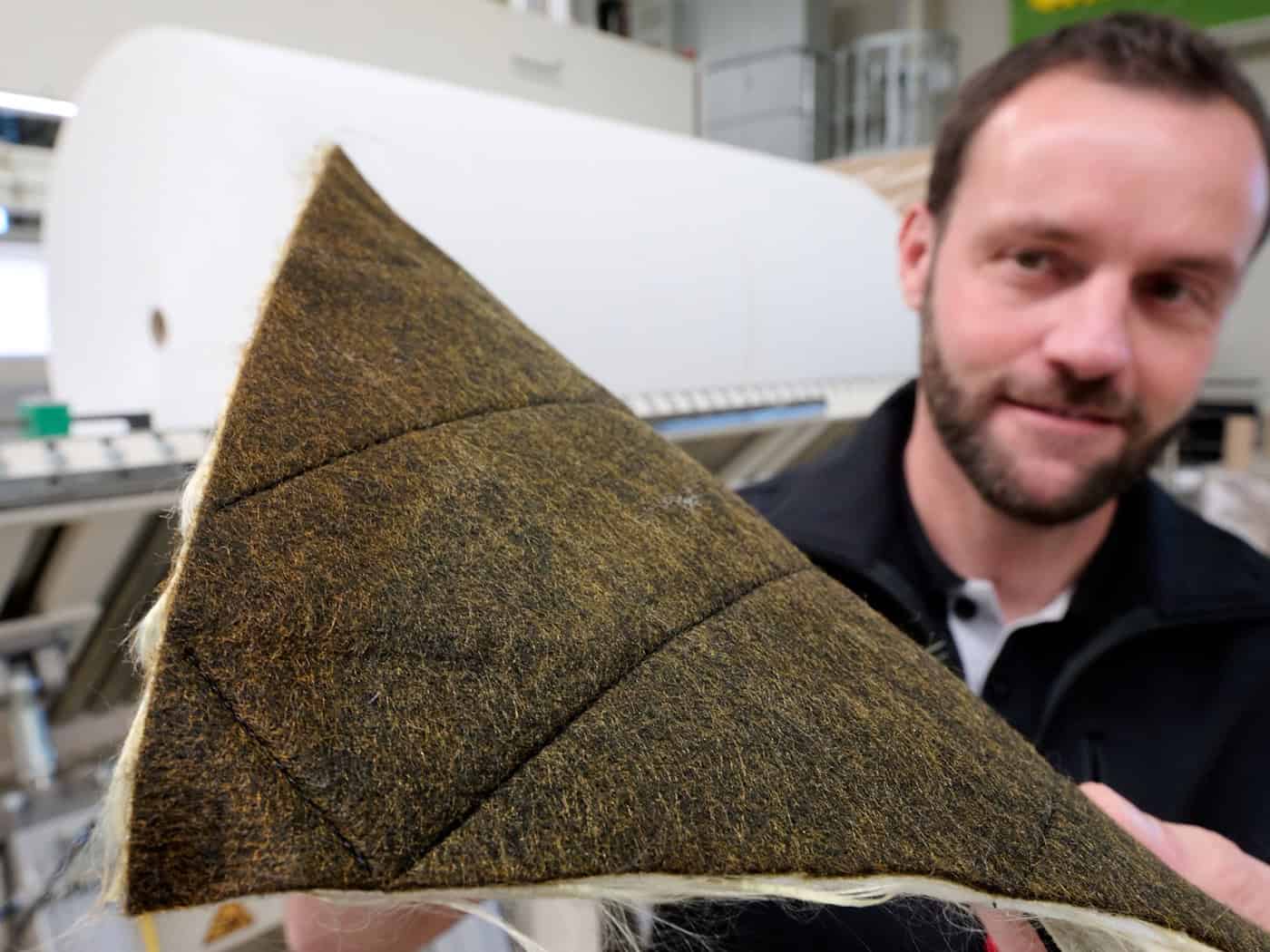
Saxony’s textile companies aim to succeed as suppliers to the German Armed Forces. The industry offers a wide range of products, from clothing to fabrics with special protective properties to technical textiles, emphasizes Thomas Lindner, head of the Association of the Northeast German Textile and Apparel Industry (VTI). So far, however, only about a handful of Saxon companies have done business with the Bundeswehr. “We would be delighted if we could equip our soldiers more extensively.” Defense Minister Boris Pistorius (SPD) has made it his stated goal to make the Bundeswehr “combat-ready.” In addition to more personnel and modern weapons, the soldiers’ personal gear is also crucial. According to the Bundeswehr, this includes more than 100 items: from pocket knives and gloves to specialized underwear, combat jackets, and combat pants. A ministry spokeswoman emphasized upon inquiry that procurement procedures prioritize production in Germany and Europe. The Faser program is intended to procure equipment for approximately 460,000 people. This is because the planned increase in active-duty personnel—from the current level of around 190,000 to at least 260,000 by 2035—will be supplemented by approximately 200,000 reservists, who will also need personal gear. Saxony’s textile companies hope to play a greater role in this effort in the future. “However, the hurdles for companies to gain a foothold here are high,” Lindner laments, referring to the standard tender procedures. He himself runs a hosiery factory in Hohenstein-Ernstthal. The company had already supplied the Bundeswehr and state police forces in the 1990s. “We have state-of-the-art equipment. Meeting the specifications is no problem at all for us.” Possible products for soldiers would include stockings as well as knee and elbow braces, Lindner explains. Other textile companies from Saxony are also looking to do business with the Bundeswehr. To that end, some of them will be presenting their offerings in mid-November at a specialist forum in Bonn on the topic of “Clothing and Personal Equipment for a Combat-Ready Bundeswehr.” Among them is the bedding manufacturer Brändle from Geyer. Also participating are Wattana from Hohenstein-Ernstthal, which offers operational clothing not only for snipers, and Vowalon from Treuen—a specialist in coatings. Another goal is to engage in dialogue with the armed forces about their specific needs, says André Lang, CEO of Norafin. The company has approximately 235 employees at its headquarters in Mildenau in the Ore Mountains, as well as a branch in North Carolina in the U.S. Norafin produces nonwoven fabrics with special properties—such as heat and cold protection or puncture- and cut-resistant interlayers. So far, they have been used primarily in civilian applications, such as protective jackets for firefighters or in airplane and train seats, as Lang explains. Together with partners, he aims to expand the use of his fabrics in military applications in the future, such as jackets, boots, and sleeping bags for soldiers. Specialized textiles could also help the military adapt to new forms of warfare, Lang explains. As an example, he points to the drone war in Ukraine. It is conceivable, he says, to equip the fabric of soldiers’ combat uniforms with new functions that suppress thermal radiation and divert it inward. This could help make soldiers harder to detect by drones’ infrared cameras. Research institutions in Saxony are also focusing on specialized textiles that could better protect soldiers in the field. The STFI Textile Research Institute in Chemnitz plans to present gloves in Bonn that offer particularly high cut resistance and puncture resistance, according to spokeswoman Kareen Pfab. In addition, a protective suit developed in collaboration with scientists from the University of Aachen will be on display. It is designed to protect the wearer from extreme heat, such as that generated during an attack with Molotov cocktails. The Saxon-Thuringian textile industry has a long tradition and is one of the four major textile regions in Germany. According to the VTI, the industry in eastern Germany employs a total of about 13,000 people and has annual sales of approximately 1.8 billion euros—more than half of which comes from technical textiles. It is reported that the association’s region features a nearly complete textile supply chain, ranging from fiber and yarn producers through spinning mills, weaving mills, and textile finishers all the way to fashion and apparel manufacturers. The Saxony textile industry is a good example of how traditional sectors are continuously reinventing themselves and using new innovations to hold their ground in existing markets and tap into new ones, states Thomas Horn, head of the Saxony Economic Development Agency. “The growing demand in the security and defense industries, with their specific requirements, offers particularly good opportunities in this regard.” The goal is not only to showcase the capabilities of the local textile industry but also to engage in dialogue with key players. Copyright 2026, dpa (www.dpa.de). All rights reservedCompanies Complain of High Barriers
Drone Warfare: Can Specialized Textiles Better Protect Soldiers?
The textile industry is constantly reinventing itself