

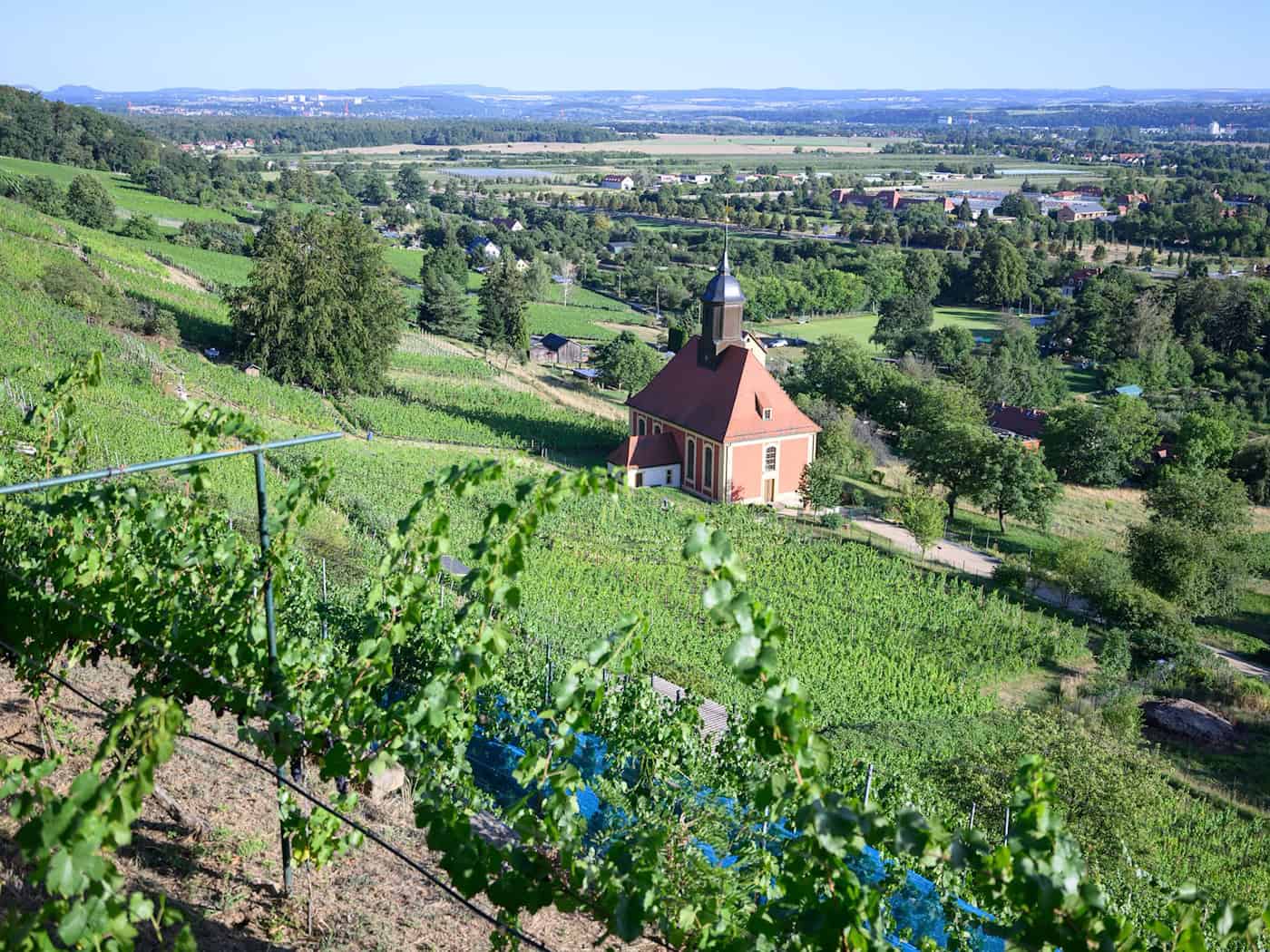
Winemakers in Saxony and Saxony-Anhalt are expecting 2026 to be a good year for wine. The warm weather has been beneficial for the quality of the wines, Hartmut Schreiter, managing director of the Freyburg-Unstrut Winemakers’ Association, told the German Press Agency. “Wine needs warmth. All varieties benefit from it.” The dry conditions have also been beneficial for viticulture so far. “Thanks to the prolonged dry spell, we’ve naturally had very few disease outbreaks. There’s actually no sign of fungal infection anywhere in the vineyards,” said Schreiter. Felix Hößelbarth, chairman of the Saxony Winegrowers’ Association and managing director of the Hoflößnitz organic winery, also views the current weather positively: “Harvesting in dry conditions is always good.” The grapes dried out beautifully. Moisture, on the other hand, leads to rot. “We’re seeing exactly the opposite right now.” According to Hößelbarth, precipitation levels through June were also decent compared to the past ten years and were well distributed. As a result, Saxon winemakers are optimistic about the harvest. As a result, Schreiter—who runs a winery with his wife in Höhnstedt (Saalekreis)—expects “absolute top quality” from the wines. “Overall, I see this as a very, very positive wine year.” The grapes are ripening relatively early this year, Hößelbarth added. He therefore expects the vintage to have good aromatic and flavor maturity. Initial cautious forecasts from the Freyburg-Unstrut Winegrowers’ Association project a harvest volume of 2 to 2.3 million liters this year. On average, the harvest along the Saale, Unstrut, and Salza rivers is expected to be 2.1 million liters. Following a dismal harvest in 2024, last year’s yield was as high as 2.8 million. The situation is similar in Saxony. Although they won’t reach last year’s record harvest of nearly 2.95 million liters, “I’m assuming a 10 percent decrease, which puts us at about 2.6 million liters—still a very solid harvest volume for Saxony,” said Hößelbarth. However, the lack of rain isn’t all positive. “The current drought in July and August is now becoming quite severe,” said Hößelbarth. The grapes are somewhat smaller than in a year with adequate water supply—but that doesn’t necessarily mean the harvest will be smaller. As good as the weather may have been for the wine, there is now a risk of drought stress for the vines, adds Schreiter. So far, the start of the grape harvest in the Saale-Unstrut region is planned for mid-September. In some vineyards, the vines can be irrigated. However, if the quality of the grapes suffers and the vines are damaged, this could lead to an earlier harvest. The harvest starts earlier in Saxony. The Schloss Wackerbarth State Winery will kick things off there this coming Thursday. According to Hößelbarth, the grape harvest is generally expected to begin in the last week of August. Over the past 15 years, the harvest has shifted forward by one to two weeks due to higher temperatures, Hößelbarth explained. One indicator is the earlier start, which now occurs almost every year in the second half of August. “On the other hand, we used to finish the Riesling harvest in late October or early November. Now it’s in the first half of October.” In light of changing conditions, more and more winemakers are turning to new grape varieties, for example because they are more resistant to fungal diseases. Schreiter calls them “varieties of the future.” In Höhnstedt, the head of the winegrowers’ association himself cultivates, for example, the red wine variety Cabaret Noir, which originates from Switzerland—and, according to him, with increasing success. “If we had more of it, we would produce wines of the same quality as in France in the past—that is, what people typically think of as French wines,” believes the managing director. Copyright 2026, dpa (www.dpa.de). All rights reservedDry Conditions Good for the Harvest
Top-Quality Wines Expected
Yields at a Solid Level
Smaller grapes and drought stress due to low rainfall
Harvest Moved Up
Winemakers Adapt with “Varieties of the Future”


