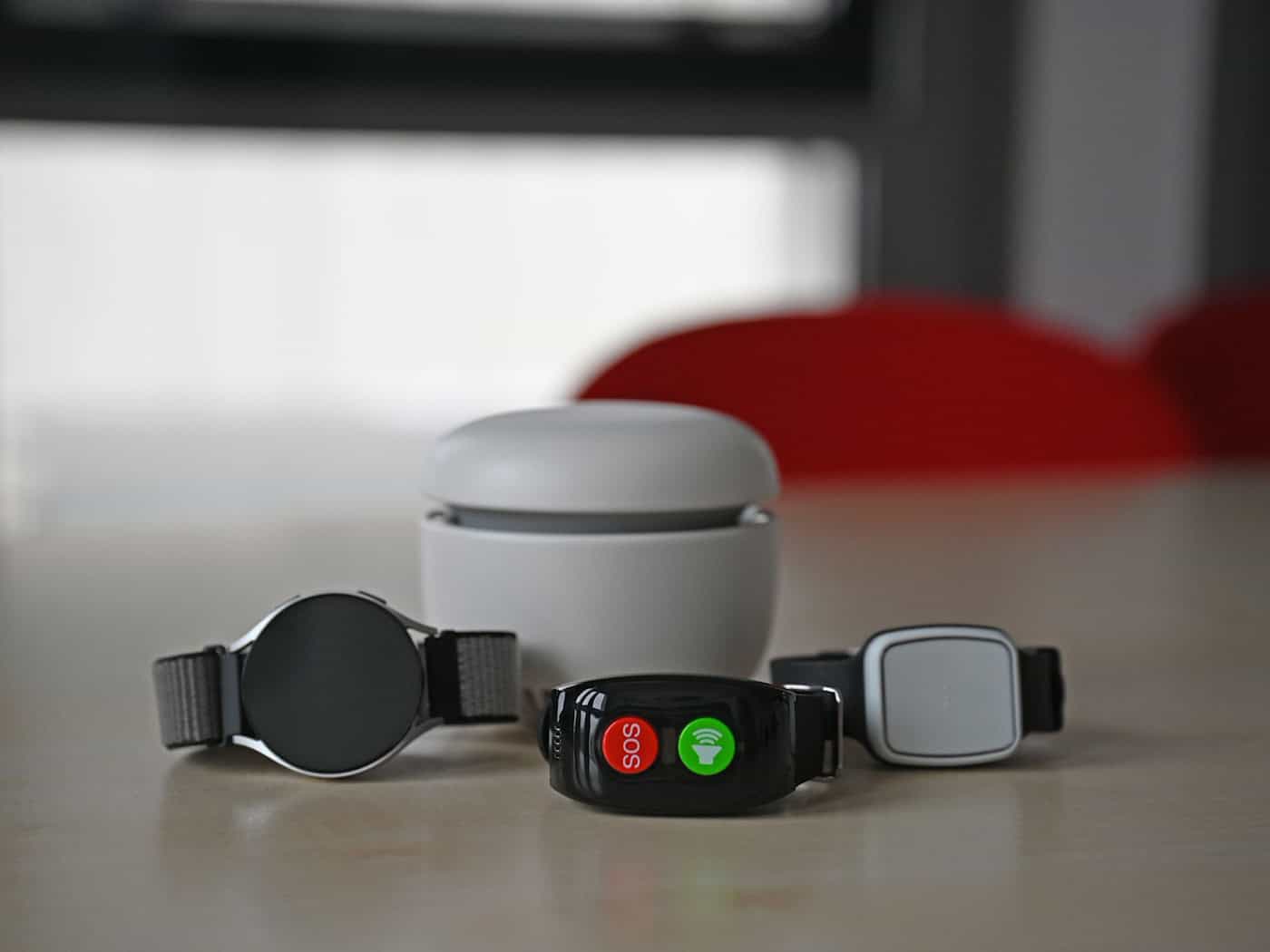
One push of a button, and someone is on the other end of the line. Perhaps an older person has fallen and can’t get back up. Or maybe the alarm was triggered by accident. At the German Red Cross (DRK) home emergency call center in Saxony, all of this is part of everyday life. On average, about 350 emergency alerts are received here every day. Staff members must decide what to do within a very short time. “If they press the button and we don’t hear anything, someone always comes,” says Maxi Küttner, head of the emergency call center at the DRK Home Emergency Call Center in Saxony. After all, a silent emergency call could simply be a harmless false alarm. But it’s also possible that someone is lying unconscious on the floor. The home emergency call system enables older, sick, or people living alone to quickly call for help in an emergency. When the alarm button is pressed, the device automatically connects to the home emergency call center. The first step is to ask crucial questions: Is the person conscious? Are there any visible injuries? Are they in pain? “Ultimately, we ask the standard questions that any dispatch center would ask if you called 112,” explains Küttner. Afterward, the appropriate assistance is organized. This could be a home emergency response worker or the emergency medical services. Not every fall is a case for the emergency medical services. Sometimes someone simply needs help getting back into their chair. It’s important to draw a clear distinction: “We are neither the emergency medical services nor is the emergency medical services a transportation service,” says Küttner. Someone who has had back pain for a week does not automatically need an ambulance. The basic principle has been the same for decades. “Essentially, the home emergency call system started with a red button on a wristband and a device connected to the telephone jack,” explains Knut Eichholz, managing director of DRK Hausruf und Service in Sachsen GmbH. Pressing the button established a connection to an emergency call center, from which help was organized. Many people still associate home emergency call systems with aging and the loss of independence. The device’s image has not changed at the same pace as the technology. “It’s always along the lines of, ‘Well, if I have a home emergency call system, I must be old,’” says Küttner. Yet the selection has grown significantly in the meantime. In addition to classic wristbands, there are discreet emergency necklaces, smartwatches with colorful straps, and mobile devices that are worn on a belt. With these devices, an alarm can be triggered even when the user is outside their own home, reports Eichholz. Some models now even feature voice control. Anyone who is no longer physically able to press a button can simply call out “Help, help,” says Eichholz. These new features are designed to make home emergency response systems more practical for everyday use and help encourage more people to take advantage of the service. For the staff at the call center, the work isn’t always limited to handling alarms. Some participants check in regularly. Names become familiar voices, and brief conversations give rise to small, everyday connections, reports Küttner. But there are also difficult moments. When a long-time participant is hospitalized or passes away, it takes a toll on the staff. What drives the employees is the feedback they receive after successful missions. Relatives or those affected sometimes call the dispatch center again. “I couldn’t do anything anymore; I just kept pressing the button, you came, and I was able to stay alive,” says Küttner, describing such calls. For her and her colleagues, this is an important affirmation of their work. The goal is to answer every emergency call within 30 seconds whenever possible, says Küttner. The German Red Cross (DRK) target is 90 percent. In fact, according to her, staff in Saxony manage to answer more than 94 percent of alerts within that time frame. However, a large portion of the daily alerts are not medical emergencies. “We’re already at 80 percent false alarms and test alarms,” says Küttner. Often, the alarm is triggered accidentally—for example, when putting on a sweater or when an emergency alarm chain is pressed against the body while bending over. Users need not worry about any trouble because of this. On the contrary: the hesitation to press the button should remain as low as possible. Better once too often than once too few. According to the Federal Association of Home Emergency Call Services, more than 1.2 million people in Germany used a home emergency call service in 2024—and the trend is on the rise. With its 50 members, including the German Red Cross (DRK), the association covers about 95 percent of the market. Approximately 11,000 calls are received daily, resulting in about 3,600 on-site responses. In Saxony, the German Red Cross (DRK) serves approximately 18,000 participants, according to Küttner. Demand is growing, says Eichholz. While it is primarily older people who use the home emergency call service, younger people with a care level designation are also turning to it. Many want to live independently in their familiar surroundings for as long as possible. The home emergency call system can provide important support in this regard. Copyright 2026, dpa (www.dpa.de). All rights reservedBetween a false alarm and a medical emergency
From the red button to the discreet emergency watch
When a Name Becomes a Familiar Voice
350 emergency calls a day
Demand is growing