

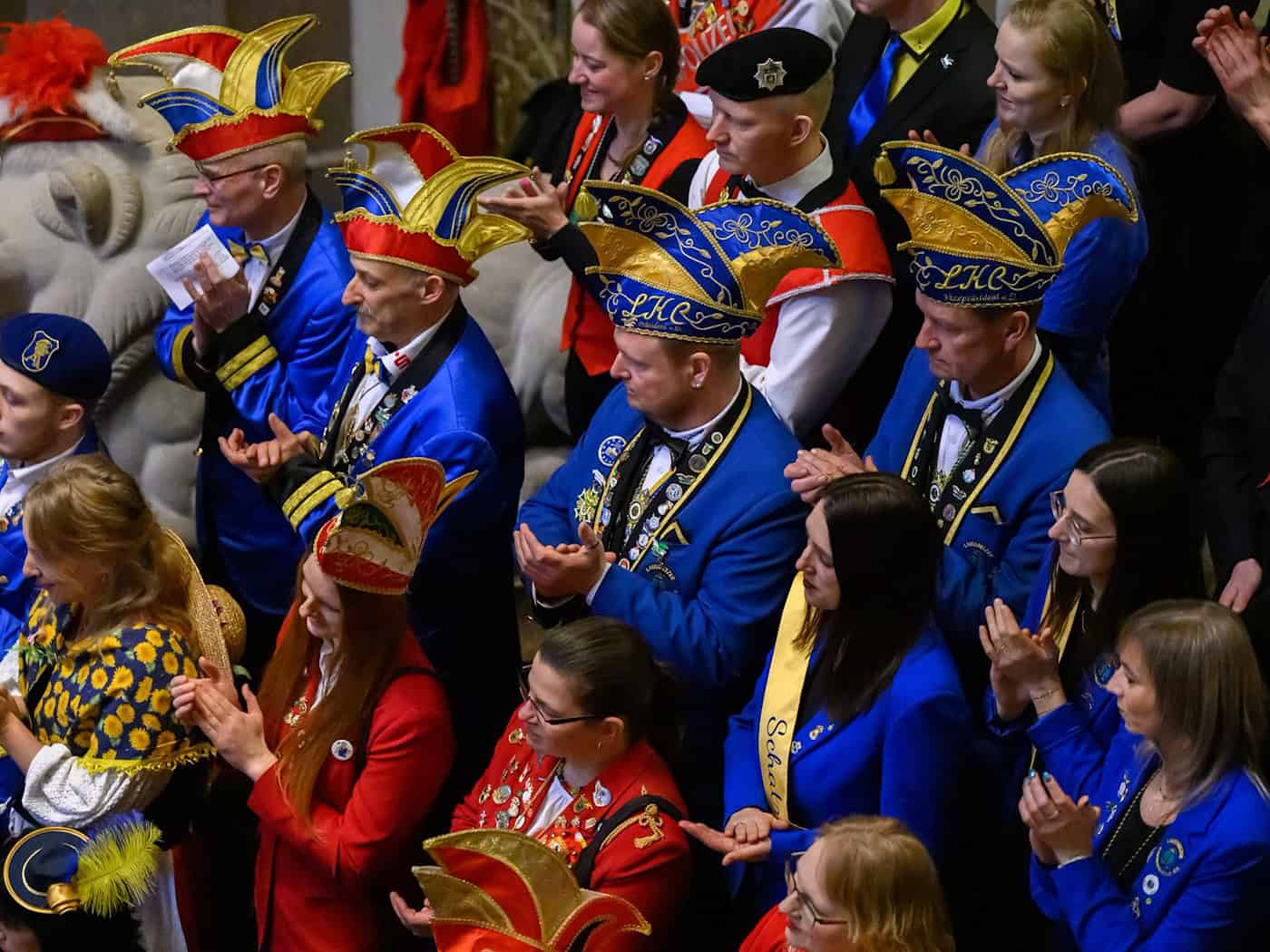
Saxon carnivalists are pushing for their centuries-old tradition to be recognized as intangible cultural heritage. It is important that the extensive voluntary work with children and young people is also considered and recognized in terms of cultural promotion, as the President of the Saxon Carnival Association, Jörg Weiser, said. The East German carnival associations had submitted a corresponding application last autumn. According to him, carnival clubs are rejected as "social clubs" when applying for funding. "Festivals or markets outside of the traditional season of our clubs would be inconceivable in some areas without us," emphasized Weiser. The conference of culture ministers is to decide on the application by March 2027. The historical roots of the East German carnival lie between court culture and folk custom. The first evidence can be found as early as the end of the 14th century, such as the "Unweisen Rat" in Königsee (1391) or a Wasungen receipt for a barrel of beer (1524). The customs developed from pre-Christian winter exorcism rituals, later also in the context of courtly festivities. In Saxony, Thuringia and Brandenburg in particular, so-called redoutes - mask and dance events - developed at the princely courts of Dresden, Weimar, Gotha and Potsdam. These courtly celebrations were broadcast to the population. Copyright 2026, dpa (www.dpa.de). All rights reserved


