

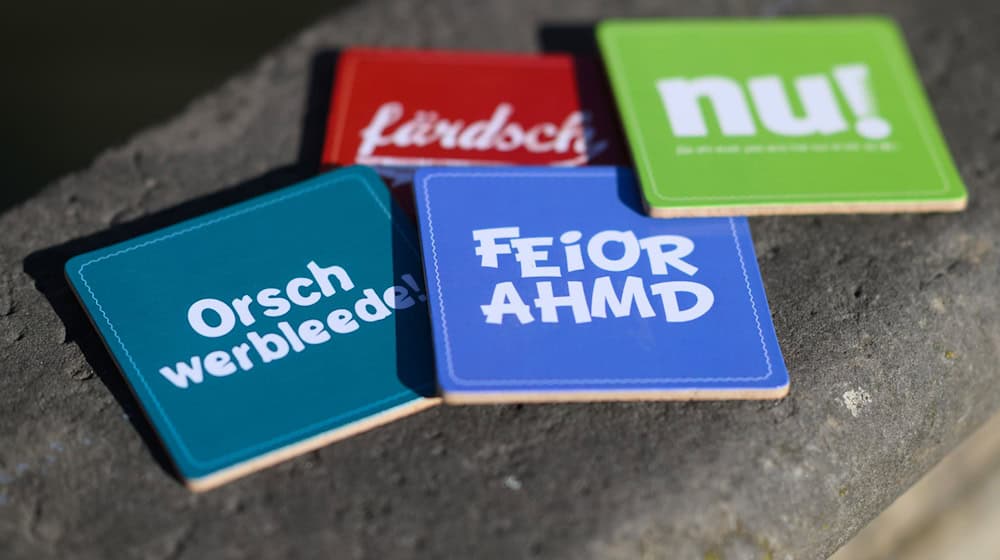
The Saxons no longer want to be seen as the nation's fools with their special dialect. A new film series from the image campaign "So geht sächsisch" (This is how Saxon works) is now taking a linguistic approach to the phenomenon. In the three-part series "History of Saxon", historian André Thieme, Managing Director of Festung Königstein, takes viewers on a journey into the history of the Saxon dialect. "Saxon is a comparatively young dialect that only developed from the 12th century onwards. During this time, settlers from all over Europe flocked to the Mark Meissen - today's Saxony - and brought their own dialects with them. This collision of dialects ultimately led to the emergence of new dialects," explained the historian. "A central chapter of the film series is dedicated to the language-shaping influences of the Wettins, who as Margraves of Meissen and later as Electors of Saxony developed a more standardized administrative language: the so-called 'Meißner Kanzleideutsch'," announced the Saxon State Chancellery. This written language found its way into the entire empire with Martin Luther's translation of the Bible and had a lasting impact on High German. However, the film series also sheds light on how Saxon later became a ridiculed and reviled dialect. "With the rise of Prussia in the 18th century, Saxon lost its linguistic influence and the Berlin language variety set the new standard," says Thieme. Soon Saxon was considered provincial, and in the 19th century it even became an object of ridicule and a symbol of bourgeois Saxony. During the Nazi era and later in the GDR, the image deteriorated further. Even the fall of communism in the GDR could not stop the loss of image. Clichés are still being reproduced in the media today, it was said. However, more recent surveys such as the one conducted by the Gesellschaft für deutsche Sprache in 2023 indicate a gradual change in image. According to the survey, fewer and fewer Germans find Saxon unappealing. Young people in particular are speaking dialect more often again. "Dialect fluencers" on social media are also contributing to this. The Saxon government had already made it clear last year that the local dialect was no longer a cause for ridicule and malice. Under the slogan "Saxon for everyone!", the Free State therefore wants to present the various dialects of the population in a humorous way in a campaign and at the same time promote the federal state. "With the new campaign, we want to celebrate our dialect. Because it is a part of Saxon identity and means home, pride, familiarity and diversity," explained Minister President Michael Kretschmer (CDU). In his opinion, there is no such thing as the "one" Saxon dialect. The dialects are as diverse as the regions. "But what unites us all: We love our dialect. We carry it in our hearts and confidently on our tongues." The first part of the "History of Saxon" has been broadcast on the social media channels of "So geht sächsisch", the Königstein Fortress and Sachsen Fernsehen since this week. Parts 2 and 3 will be published on YouTube, Facebook and the website on November 10 and 14. Copyright 2025, dpa (www.dpa.de). All rights reservedSaxon is a comparatively young dialect
Saxon dialect later became an object of ridicule
Image change on the horizon
Saxony wants to celebrate its dialect confidently in future


