

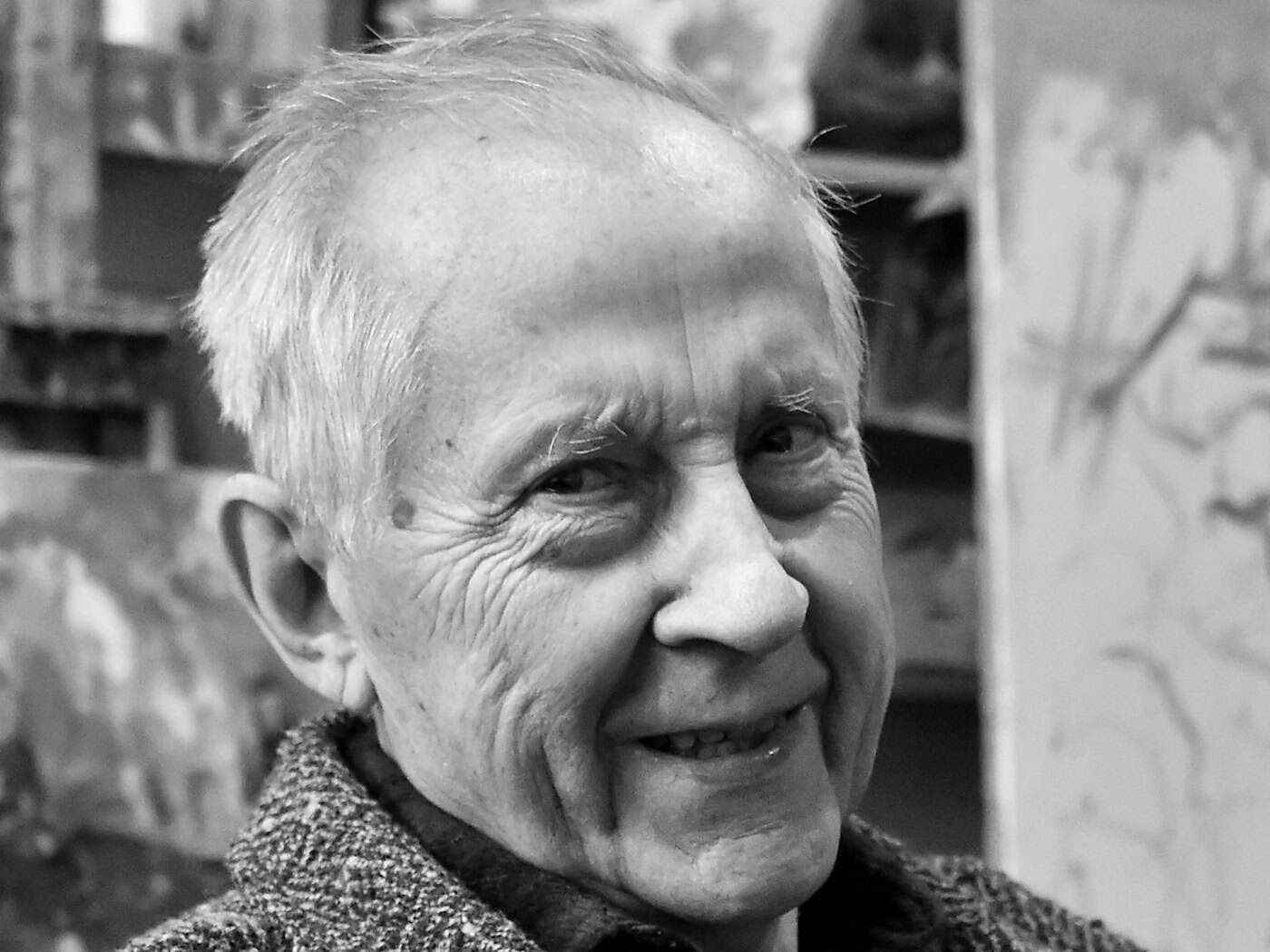
He once defied socialist realism and created his own "world theater". The painter Harald Metzkes is dead. The artist died last Thursday at the age of 97 in Wegendorf in Brandenburg surrounded by his family. This was confirmed by his son, the sculptor Robert Metzkes, to the German Press Agency. Harald Metzkes is also known as the "Cézannist" of Prenzlauer Berg in reference to his former place of residence. The artist, who grew up in the GDR, is one of the representatives of the Berlin school of painting. One of his best-known works is "The Removal of the Six-Armed Goddess", reported his son (72). Metzkes became famous in GDR times above all because he had nothing to do with socialist realism. "He was not interested in implementing cultural-political demands," his son said. Instead, he was inspired by famous painters such as Rembrandt and Velázquez. "And Paul Cézanne, my friend," the painter himself told the German Press Agency in his studio shortly before his 90th birthday. The Impressionist inspired him to use color, after he had almost given it up at the beginning. During his time in the GDR, the painter was adamant about comedy, harlequins and circus scenes. These were motifs "which, as parables, offer the possibility of depicting reality in a translation", his son explained. Because of the many theatrical figures, Metzkes' work is often referred to as "world theater". Metzkes was born in 1929 in Bautzen, Saxony. He completed an apprenticeship as a stonemason there from 1947 to 1949, after which he studied at the Dresden Academy of Fine Arts. He was later a master student at the German Academy of Arts in Berlin under Otto Nagel. He then worked as a freelancer in Berlin and had a studio apartment on Kollwitzplatz in the Prenzlauer Berg district. He had his first exhibitions, but earned his living with book illustrations. From the mid-1950s, Metzkes belonged to the "Berlin School" - a group of artists who created their work far removed from official GDR cultural policy. In 1984, one of his paintings was sent to the Venice Biennale. Collectors in the West discovered his work. After the fall of the Berlin Wall, he was able to build on these connections. Today, his works can be found in collections and museums throughout Germany. In 1997/98, he was one of the participants in the exhibition "The XX Century. A Century of Art in Germany" at the National Gallery in Berlin. Shortly before his 90th birthday, the painter described how important a regular daily routine was to him: "I want to be at the easel at 7.30 a.m.. There's enough to do," the elderly artist told dpa at the time in his studio east of Berlin. He then worked until the afternoon. "Sometimes even longer, as the strength and inspiration lasts," reported the tall artist. About his intention, Metzkes said: "The viewer has to go their own way and find their own associations." When he paints, he doesn't think about the viewer. "I'm sure some people will follow, and that's enough for me." Copyright 2026, dpa (www.dpa.de). All rights reservedRembrandt instead of socialist realism
Stonemason apprenticeship, studies, book illustrator
7.30 a.m. at the easel


