

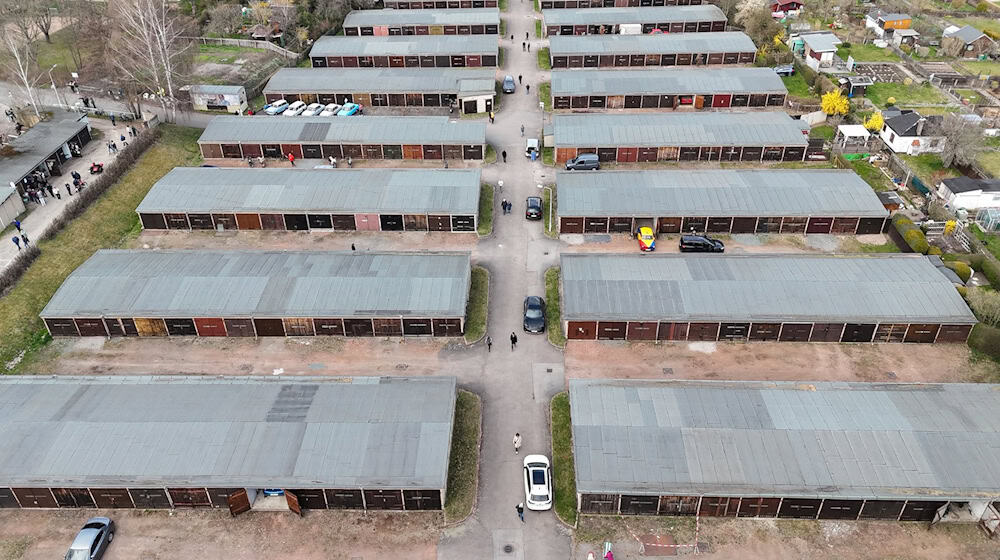
The Free State of Saxony made 1,262 inheritances last year. This always happens when a person resident in Saxony dies who had no relatives or no partner, or when they turn down the inheritance. But what ends up in the possession of the Free State in this way? And is it worthwhile for the state to be an heir? Last year, almost 7.9 million euros flowed into the state through so-called fiscal inheritances. According to the Free State's Central Land Management (ZFM), this was slightly less than the previous year with just under 8.7 million euros. However, processing these inheritances is expensive. Together with personnel and material costs, Saxony had to spend almost 5 million euros on this. 22 employees handle the cases in the Fiscal Inheritances department. And even the difference cannot be booked as a profit by the Free State, according to the ZFM. This is because inheritances are often accompanied by obligations - for example for the maintenance or public safety of properties. The bottom line is that the state, as the heir, is therefore happy if it ends up with a "black zero". "Houses, garages, farmsteads, gardens, commercial properties and agricultural land" end up with the Free State through inheritances, according to ZFM. Most of the properties are located in Saxony, but some are also in other federal states or abroad. "In many cases, these are encumbered with mortgages beyond their value or are in poor structural condition," explained ZFM director Martin Oberacher. If there are also unknown co-owners, the process becomes complex. One of the Free State's complicated inheritances is a former fiberboard factory. The industrial wasteland is recorded in Saxony's register of contaminated sites - there are probably hazardous substances in the soil. Investigations are still underway, but according to an expert opinion, the removal of pollutants deposited above ground alone will cost 2.5 million euros. Insolvency proceedings have been ongoing for several years due to over-indebtedness of this estate. I also often find jewelry in the legacies. This is then sold via auction houses or precious metal dealers. However, Saxony has hardly benefited from the sharp rise in gold and silver prices. "Unfortunately, there were no outstanding valuables," says Oberacher. In May 2000, the poet Hildegard Maria Rauchfuß died in Leipzig. She wrote the poem "Am Fenster", which the band City set to music in 1974 - and which became an iconic song that is still played a lot today. Initially, there were no known heirs, so Saxony was declared Rauchfuß's legal heir by the local court in 2002. Year after year, royalties flowed to the Free State. However, this - quite lucrative - inheritance was not permanent, as the ZFM announced. Inheritance claims only expire after 30 years - the Free State therefore always becomes an heir on revocation. In the case of Hildegard Maria Rauchfuß, an heir tracing agency did find third-order heirs, i.e. distant relatives. They claimed the estate from the Free State - and Saxony had to pay the royalties totaling around 161,000 euros to the true heirs. Copyright 2026, dpa (www.dpa.de). All rights reservedWhat did Saxony receive from inheritances in 2025?
What does the state inherit?
What does the state have to do with the GDR hit "Am Fenster"?


