

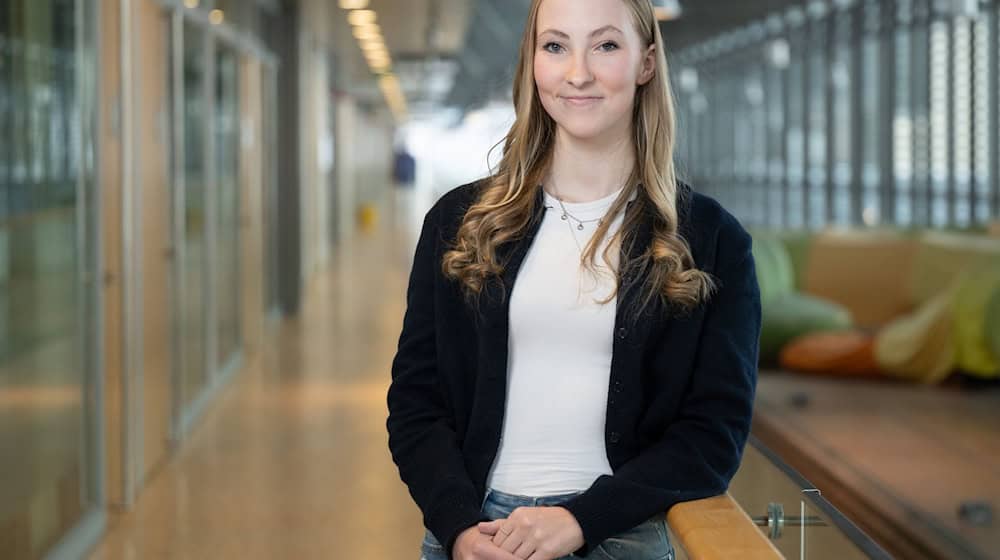
Every day counts. This is especially true for people like Lilly Hiebenthal. The 20-year-old from the Saxon village of Böhla suffers from a rare immune disorder. There are only around 20 recorded cases of it worldwide. A genetic defect prevents her immune system from working properly. As a result, she constantly has to deal with cold symptoms, skin eczema and currently an intestinal inflammation. All of this is accompanied by exhaustion. Nevertheless, she is full of life. "I'm grateful for every day - just the way it is," says the young woman. In the European Union, a disease is considered rare if it affects no more than five in 10,000 people. In Germany alone, around four million patients have to live with such a diagnosis. These diseases are often incurable and reduce life expectancy. Worldwide, a good 8,000 diseases are classified as "rare". What many sufferers have in common is that the path to diagnosis is long. On average, it takes five years before doctors can get to the bottom of it beyond doubt. Lilly has developed a kind of "theory of relativity" for herself, putting things into perspective according to the motto: "It could be worse". "You see cases of people who are much worse off than me. I'm grateful for what I can do and what still works for me. Maybe it's an advantage that I've never known it any other way." She was actually diagnosed with the disease at the age of six. You can't see it on the outside. She hasn't forgotten how to laugh. Of course, there are always doubts, admits Lilly, who is currently training as a medical assistant at Leipzig University Hospital. Her career choice was not made by chance. She wanted to learn as much as possible about diseases. "I've always known what to look out for. There are also moments when it all gets on my nerves. Then I'm sad that I can't live as easily as others. But at the end of the day, everyone has to carry their own baggage." Lilly Hiebenthal sees her illness as a "challenge", as she describes it. Basically, she is grateful that she got it off and not her two brothers, who are 15 and two years old. She would rather take it all on herself. "Sure, I have no idea what the future holds. That's the unpredictable thing about her illness. But that's precisely why she wants to take each day as it comes and simply be grateful." For Timmy Strauß, pediatrician and trainee immunologist at Dresden University Hospital, Lilly Hiebenthal is an ideal patient with her courage to face life. "She is very tough. We admire her because she copes with several problems at the same time. Others would probably prefer to bury their heads in the sand." But Lilly actively deals with her illness and always stays in contact with the doctors. "There are other patients for whom things don't go so well." In Dresden, the University Center for Rare Diseases (USE) looks after patients like Hiebenthal - including sufferers from Bavaria, Brandenburg and Thuringia. Specialists from various disciplines work together here to develop a suitable therapy for each case. Because each disease is unique in itself. Haemophilia, sarcoidosis or narcolepsy: the list of rare diseases gets longer and longer the better the diagnostics are. Many patients are happy when their condition finally has a name. "That alone sometimes helps them enormously, even if you can't cure their disease," says Timmy Strauß. This is because many patients often go through a year-long odyssey from specialist to specialist until they are diagnosed. Once the diagnosis is confirmed, those affected finally feel that they are being taken seriously. Experts like Strauß do not believe that rare diseases will one day die out. A treatment approach cannot always be found. Even at Lilly, there is no one drug that solves all problems. "We treat the different symptoms." Lilly receives immunoglobulins to better protect the immune system against infections. In recent months, she has been given various medications to treat the intestinal symptoms. Only a stem cell transplant could bring a cure. "However, this is a very complex procedure, which is also associated with a risk," reports the doctor. Lilly is still in the discovery phase on this point. If the decision is ultimately made, family members would be the first choice. It is in this environment that a suitable donor is most likely to be found. There is no perfect time for such a therapy. The disease must not be too advanced and the patient must still be in a stable condition. Lilly Hiebenthal cannot claim that everything has gotten better over time when looking back on her medical history - quite the opposite. Especially since puberty, it has felt more complicated from year to year. Sometimes when she wakes up in the morning, she has the feeling that a new symptom has appeared. Her bowel has been bothering her for a year and a half and she has lost ten kilograms. "You have to test what might help and what might not." Strauß is not surprised that the number of rare diseases is on the rise. "We are finding many more of them because we have better access to genetic diagnostics." Since 2024, a pilot project at Dresden University Hospital has made it possible to have genome sequencing carried out if a genetic disease is suspected. In some cases, targeted treatment can then begin. In order to ensure comprehensive care, university hospitals in particular have set up centers for rare diseases throughout Germany in recent years, explains Reinhard Berner. The professor is spokesperson for the USE and Director of the local Clinic for Pediatric and Adolescent Medicine. It is also important to ensure that these patients come out of the isolation in which they often find themselves. Across Germany, 37 such centers are a point of contact for those seeking advice. In Dresden, a good 600 cases were processed in 2025. In order to raise public awareness of the fate of those affected, the last day of every year is celebrated internationally as "Rare Disease Day". "We want to bring patients together and sensitize other people to their concerns," says USE Coordinator Tanita Kretschmer, describing the aim. For the past five years, the day has been linked to an art campaign organized by the Berlin-based association Allianz Chronischer Seltener Erkrankungen (Axis). At train stations and in clinics, a show presents portraits and artistic works by people who have such a disease. They testify to a great deal of courage to face life. Copyright 2026, dpa (www.dpa.de). All rights reservedFour million people in Germany have a rare disease
"There are also moments when it all gets on my nerves."
Patients often experience an odyssey lasting years before being diagnosed
Only a stem cell transplant could bring a cure
Number of rare diseases on the rise - due to better diagnostics


