Logo Die Sachsen News
News / Environment

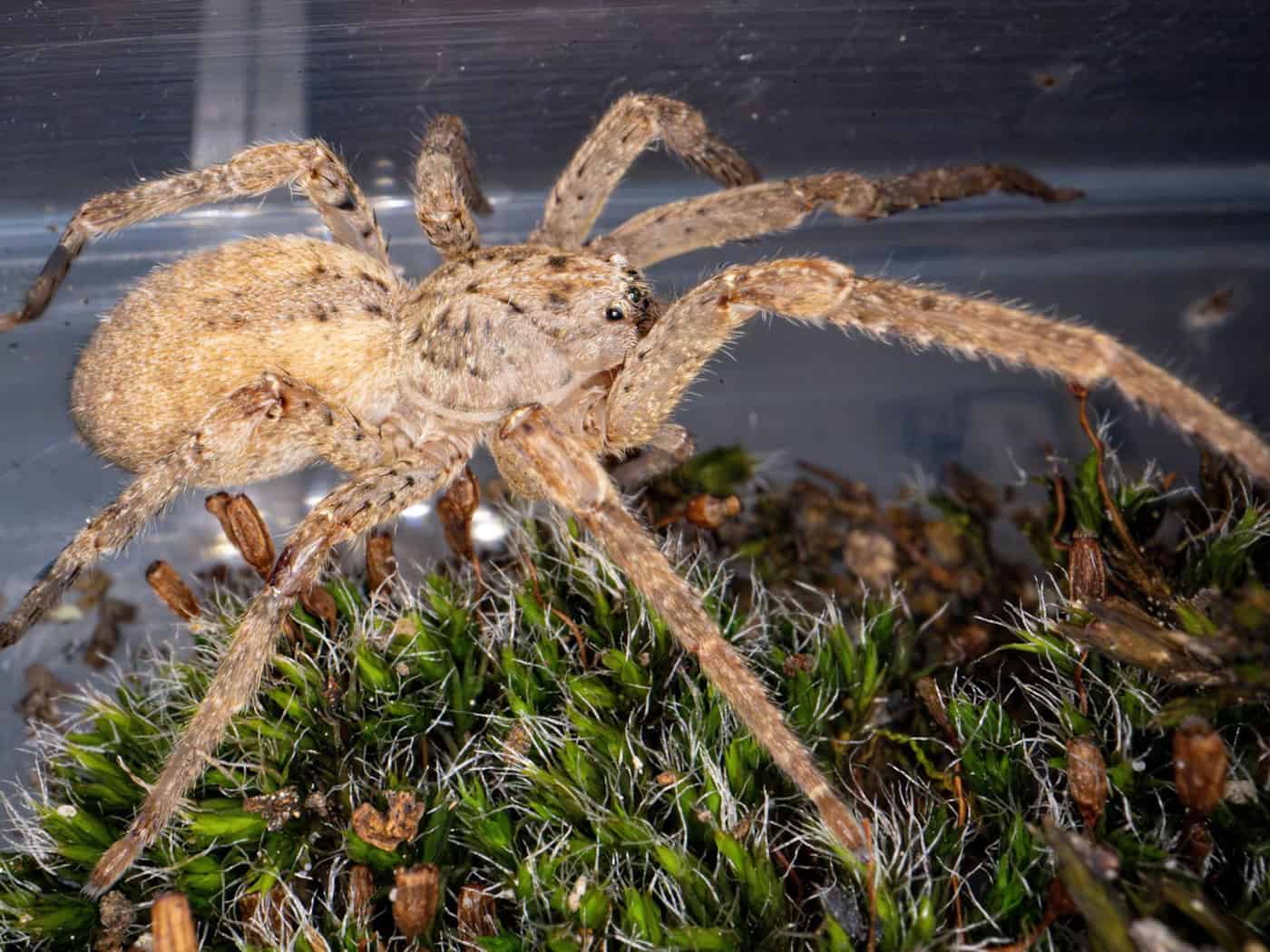
The Nosferatu spider is also at home in Saxony

The Nosferatu spider is also at home in Saxony
There have now been several sightings of the Nosferatu spider in Saxony as well. (File photo) / Photo: Benjamin Westhoff/dpa
From: DieSachsen News
Spiders trigger fear in many people. Yet these animals are very useful, as they help keep the populations of flies, mosquitoes, moths, and aphids in check.

The Nosferatu spider is now part of the native fauna in Saxony as well. The Nature and Biodiversity Conservation Union (NABU) recorded 24 sightings at five locations last year. According to NABU, there are between 3,000 and 5,000 reports with photos nationwide every year. This spring saw a particularly high number of sightings—more than 2,500 photos were submitted from January to May.

Nature Conservation Union expects a “good Nosferatu year”

“If this continues, 2026 will be another good Nosferatu year. We would be pleased if every sighting continues to be reported, preferably with a photo. This will allow us to track the further development of the population and the lifestyle of this new species," said NABU expert Alexander Wirth. 

“Under the Federal Nature Conservation Act, the species is not classified as invasive, so there is no legal basis for targeted government monitoring,” explains the Saxon State Office for Environment, Agriculture, and Geology regarding uncertainties about the exact population size. 

More from this category

Concentration in the Dresden and Leipzig areas and an east-west gradient

“The sightings are scattered throughout nearly all of Saxony, with a concentration in the Dresden and Leipzig areas. Compared to the western federal states or Berlin, the species is observed much less frequently in Saxony. Currently, an east-west gradient can be observed in the spider’s distribution data in Germany, with the west being much more densely populated,” emphasizes State Office spokesperson Falk Hofer.

According to experts from the State Office, this spider was originally found in the Mediterranean region. Over the past three decades, however, it has spread significantly northward. There have even been repeated sightings on the islands of Rügen and Usedom. According to the State Office, the “immigration” most likely occurred initially via the transport of goods. The first confirmed sighting in Germany was in Freiburg in 2005. 

Climate change favors the spread of the Nosferatu spider

“Due to climate change, the species can spread more easily north of the Alps, although it remains predominantly tied to buildings. It therefore cannot be ruled out that Nosferatu spiders will also become more common in Saxony in the coming years," said Hofer.

The body of the Nosferatu spider (Zoropsis spinimana) grows to about one to two centimeters in length. Its leg span can reach up to five centimeters, according to NABU’s description of the animal. “The name derives from the characteristic markings on the front of the body, which remind many creative observers of the vampire’s grimace from the film of the same name, Nosferatu,” wrote the Karlsruhe Natural History Museum in April.

A bite is generally harmless to humans

Thanks to its venom, robust build, and hunting skills, the predominantly nocturnal spider is reportedly capable of handling even fairly large prey. It is also said to be one of the few species capable of piercing human skin with its venomous fangs. However, the bite is generally harmless.

Saxony is rich in spider species

The only Red List for harvestmen and web spiders in Saxony to date was compiled in 1996. This Red List assessed 27 species of harvestmen and 615 species of web spiders. Of these species, 37 percent were endangered, extinct, or missing. In Germany, a total of 971 native species and 21 “non-native” species that had been introduced were known in 2015.

The Entomofaunistic Society, based in Dresden, has a checklist of spiders in Saxony from the mid-1990s, which was updated in 2008. It lists 650 species in 37 spider families. The State Operating Company for Environment and Agriculture (BfUL) estimates that there are currently about 670 species in Saxony, some of which are recent immigrants.

Due to ongoing changes in land use and climate, experts assume that the populations of many species have changed. Similar to insects, intensive agriculture and forestry—with excessive accumulation of nutrients such as nitrogen and phosphorus—also has consequences for spiders. Interference with the natural water balance or the fragmentation of habitats endangers these animals, it was reported. 

In Saxony, the State Office and the operating company Umwelt und Landwirtschaft are examining not only ground beetles but also spiders at six selected arable and grassland sites as part of an insect monitoring program. The aim is also to gain insights into natural fluctuations in spider populations. Spiders themselves are not insects, but belong to the class of arachnids.

Copyright 2026, dpa (www.dpa.de). All rights reserved

The translations are automated with the help of AI. We look forward to your feedback and your help in improving our multilingual service. Write to us at: language@diesachsen.com.
Sachsen News
Article from

Sachsen News

Sachsen News is responsible for the content itself. The platform's code of conduct applies. The platform checks and treats content in accordance with the legal requirements, in particular the NetzDG.

Social Media