


☢️ Nuclear power vs. 🌬️ Wind power: a detailed comparison of costs and performance 💰📊
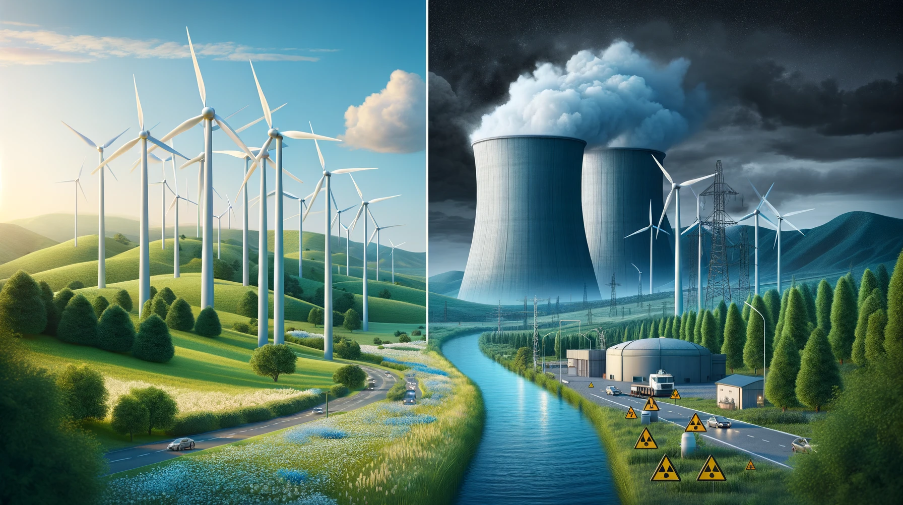
In the course of global efforts to achieve a more sustainable and environmentally friendly energy supply, two key technologies are often at the center of the debate: nuclear energy and wind power. Both energy sources offer unique advantages and challenges and are central components in the discussion about the energy transition and the fight against climate change. While nuclear power plants are known for their high energy yield and constant power generation, wind turbines offer a renewable and emission-free energy source whose potential and efficiency are constantly growing. In this article, I would like to draw a comparison between nuclear power plants and wind turbines by examining factors such as cost and performance and their relationship to each other.
Wind Power - Taking the Wind to a Clean Future
Advantages of Wind Power
- Renewable and environmentally friendly: Wind power is a clean energy source that does not produce greenhouse gases or air pollution.
- Inexhaustible energy source: Wind is a natural and inexhaustible resource.
- Lower operating costs: Once installed, the operating and maintenance costs of wind turbines are relatively low compared to other energy sources.
- Decentralized power generation: Wind turbines can be distributed over a large area, helping to provide energy in remote or rural areas.
Disadvantages of wind power
- Inconstancy: Wind is a variable and unpredictable source of energy; wind turbines only generate electricity when the wind blows.
- Space requirements: Wind farms require large areas of land, which can lead to land use conflicts.
- Impact on wildlife: Wind turbines can have a negative impact on birds and bats.
- Aesthetics and noise: Wind turbines are sometimes perceived as visual and acoustic disturbances.
Nuclear power: A bright vision for a constant and low-emission energy future
Advantages of nuclear power
- High energy yield: Nuclear power plants generate an enormous amount of energy with relatively little fuel input.
- Constant energy source: Unlike wind power, nuclear power is a stable and predictable source of energy.
- Low greenhouse gas emissions: When in operation, nuclear power plants produce no greenhouse gases, making them a climate-friendly option.
- Space efficiency: Nuclear power plants require much less space than wind or solar power plants of comparable capacity.
Disadvantages of nuclear power
- Nuclear risks: Nuclear power involves risks such as meltdowns, radioactive contamination and the need for safe storage of radioactive waste.
- High initial costs: The construction of nuclear power plants is very capital-intensive and requires extensive safety measures.
- Long construction times: The construction of nuclear power plants is time-consuming, which can lead to delays and higher costs.
- Political and social opposition: Nuclear power is controversial and faces public opposition in many parts of the world.
The decision to use either technology depends on many factors, including local conditions, political guidelines, environmental concerns and economic considerations.
The direct comparison of wind power vs. nuclear power
In the debate about a sustainable energy future, wind power and nuclear power are often compared directly: while wind power is considered a renewable and clean energy source, nuclear power offers high and constant performance. It is therefore worth taking a look at the costs in relation to performance.
Costs and performance of nuclear power plants
The costs and construction time for building a new nuclear power plant can vary greatly and depend on several factors, such as the size and design of the reactor, the location, regulatory requirements and labor costs in the respective region. In general, the costs are often in the range of several billion euros. For example, modern nuclear power plants in Western countries such as the USA or Europe can cost 6-9 billion euros or more.
The output of a nuclear power plant (NPP) varies depending on the type and number of reactors. Large commercial reactors are the most common and typically have an output of around 1,000 to 1,600 MW per reactor. Some of the latest designs can even reach a capacity of up to 1,700 MW.
Costs and performance of wind turbines
The cost of building wind turbines varies depending on the location (onshore or offshore), size of the turbine, and other factors. Here are some general guidelines:
Onshore wind turbines (on land):
The costs for onshore wind turbines are generally lower than for offshore turbines. The average total cost of installing an onshore wind turbine can vary depending on the country and specific site conditions, but is typically in the range of €1,000 to €1,500 per kilowatt (kW) installed. This means that a typical onshore wind turbine with a capacity of 3 MW could cost around €3 to €4.5 million.
Offshore wind turbines (at sea):
Offshore wind turbines are more expensive to build, mainly due to the challenges associated with construction at sea, such as stronger foundations and more complex logistics. The cost of offshore wind turbines can range from 2,500 to 4,000 euros per kilowatt installed. For an offshore wind turbine with a capacity of 3 MW, the costs can therefore be between 7.5 and 12 million euros.
Cost and performance comparison using the example of the Hinkley Point nuclear power plant, England
One nuclear power plant that is currently under construction is the Hinkley Point nuclear power plant in Sommerset, England. This is being extended by a new section (Hinkley Point C), which will consist of two EPR reactors (European Pressurized Water Reactor). Each reactor will have a capacity of around 1,600 MW, which would give the power plant a total capacity of around 3,200 MW.
Hinkley Point C is particularly notable as it is the first new nuclear power station to be built in the UK for many years and plays an important role in the country's energy policy. It is an example of the new generations of nuclear reactors that offer higher performance and improved safety features.
Originally, construction costs were estimated at around £18 billion. However, costs have increased due to various factors, including delays and complexity in construction. More recent estimates suggest costs in the region of £32.7 billion and a construction period of over 11 years. This increase reflects the challenges associated with building such a large and complex nuclear power plant.
Now doing the math...
For the original £18 billion budget for the Hinkley Point C project, approximately 5,760 onshore wind turbines with a capacity of 3 megawatts each could theoretically be built, based on an average cost of €1,250 per kilowatt and an exchange rate of €1.2 per pound. After updating the costs to 32.7 billion pounds, this budget could even be used to build around 10,464 of these wind turbines, which would correspond to a total capacity of around 31,392 megawatts (MW).
Without further ado #micdrop
Sources:

