


Heat protection: New tool reveals how prepared cities are for climate change
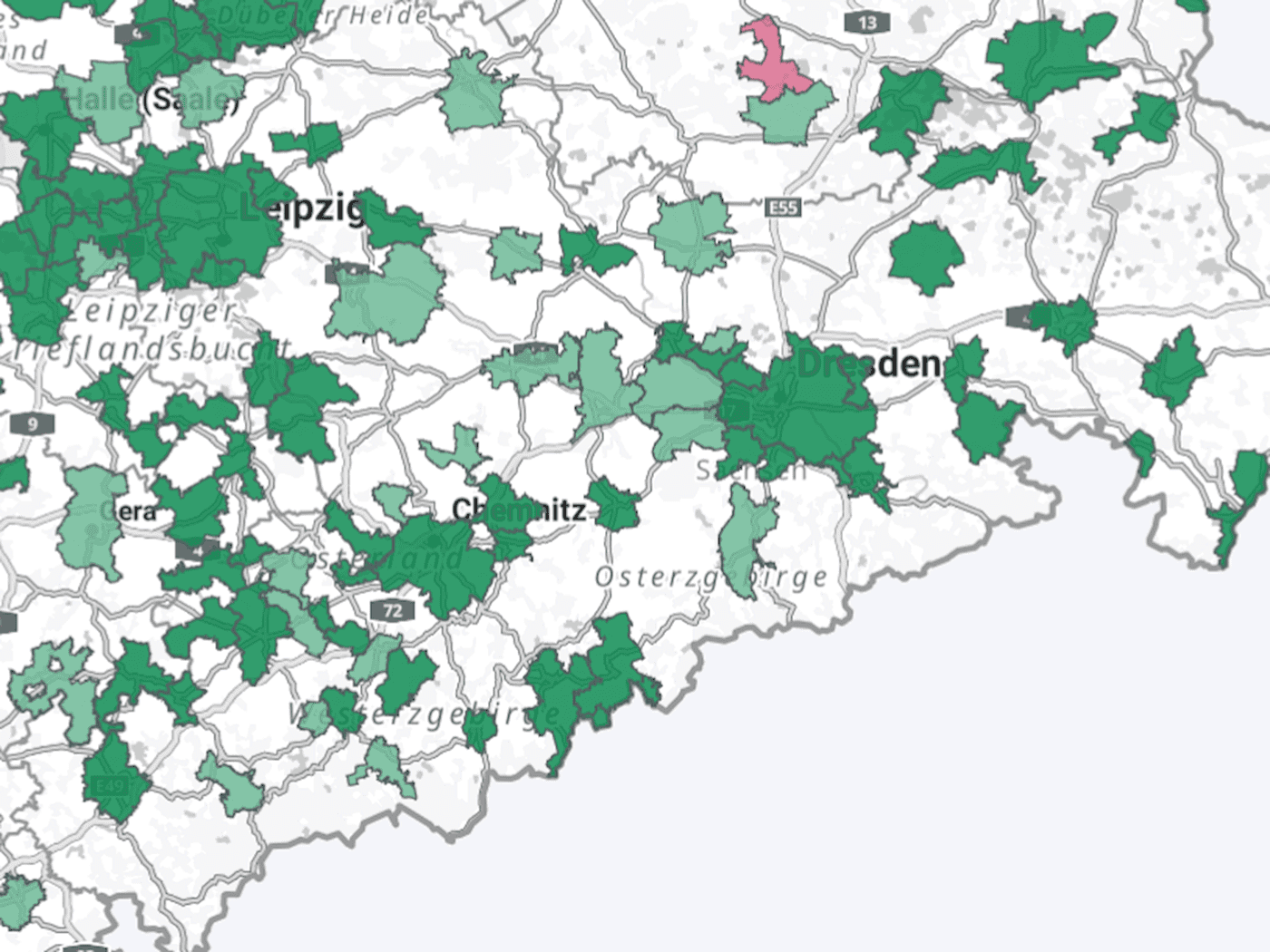
On a hot summer's day, it makes a big difference where you live. If you live in a street without trees, you often have to walk a long way to the nearest shady park. If you live near green spaces or a lake, you can cool off more quickly. But how big are these differences in German cities really? You can now find out online.
The Leibniz Institute of Ecological Urban and Regional Development (IÖR) in Dresden has developed the Urban Climate Dashboard together with partners. It has been online since May 2026 and shows all German cities with a population of 10,000 or more how well prepared they are for heat, heavy rain and drought. For the first time, cities can be compared using standardized criteria. Municipalities can see where they are well positioned in terms of adapting to climate change and where there is a need for action.
What the dashboard shows
Two questions are at the heart of the project. Firstly, how many people can reach a park, green space or body of water within 500 meters, i.e. about ten minutes on foot? Such areas cool the air and provide shade. Secondly, how much surface area in a city can absorb rainwater, i.e. allow it to seep away? Asphalt and concrete are sealed. Rain runs off instead of soaking into the ground. This makes flooding more likely and heats up the city even more.
This is becoming increasingly important because heatwaves in Germany are becoming more frequent and more intense. Older people and people with pre-existing conditions in particular suffer from high temperatures in densely built-up districts.
The dashboard also shows how much green space is available per inhabitant, which districts are particularly poorly supplied and how the cities compare to European requirements. It is based on satellite data, official maps from the state surveying offices and population data from the 2022 census.
Help for cities without their own experts
Many municipalities do not have their own employees who could evaluate such data. The tool should be particularly useful for these cities. "The urban climate dashboard could be particularly interesting for cities that have little or no resources of their own in the field of spatial analysis and environmental monitoring," says Tobias Krüger from the IÖR. He and his team hope that the application can provide considerable support there.
The dashboard is still under development. Further measured values are to be added by July 2027. The IÖR is looking for interested cities and municipalities that would like to test the tool in practice.
The application is freely accessible at https://stadtklimadashboard.de.

