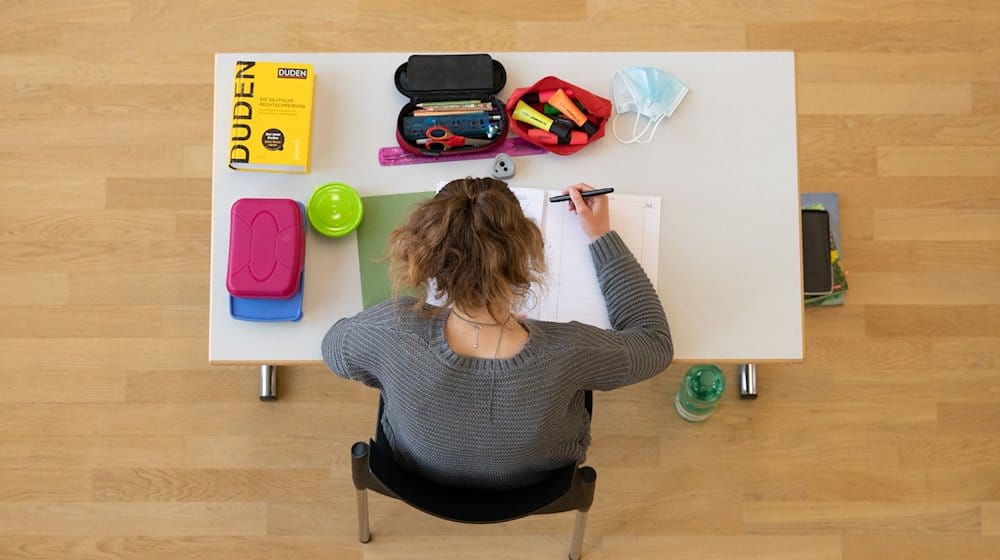
In Saxony, children's attendance at grammar school is particularly dependent on their parents' income and level of education. According to a study by the Ifo Institute, the inequality of educational opportunities is very pronounced throughout Germany. Although there are differences between the federal states, no federal state offers anywhere near the same opportunities for all children, write the authors from the Leibniz Institute for Economic Research at the University of Munich. Factors such as migration background or the economic situation of a federal state play no role, nor is there a systematic east-west difference in equal opportunities.
According to the study, the probability of a child with two parents without a high school diploma and a monthly household income of less than 5,000 euros net attending grammar school is 26.8 percent in Bavaria. In contrast, the probability for pupils with a so-called higher background is 66.9 percent - the highest proportion in Germany, according to the study published on Monday. In this case, at least one parent has A-levels or the household income is in the top quarter. According to the study, 26.7 percent of children from a lower background attend a grammar school in Germany, compared to 59.8 percent from a higher background.