

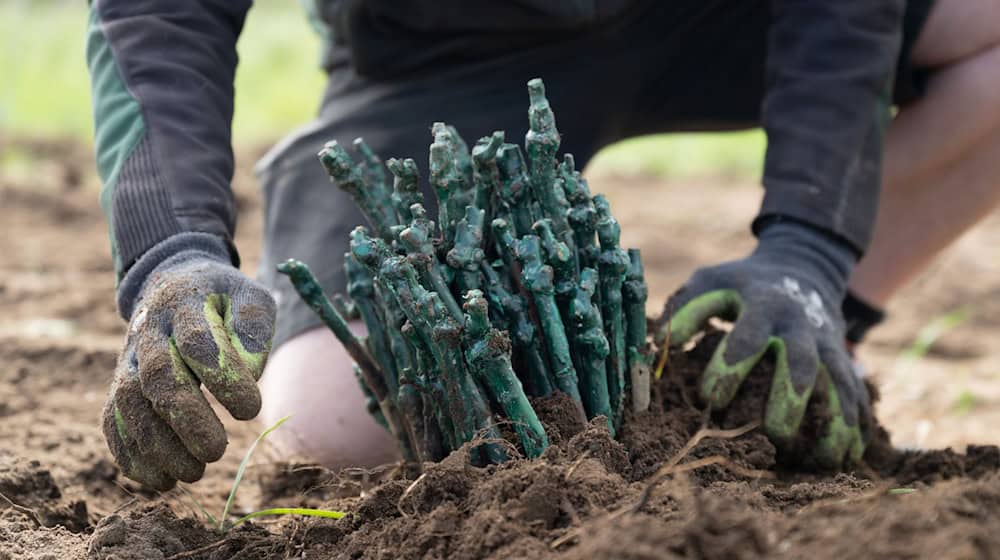
The Sächsische Staatsweingut Schloss Wackerbarth is testing two fungus-resistant grape varieties in the local climate. On a 1.4-hectare vineyard in Weinböhla on Monday, a GPS-controlled planting machine planted 4,000 flowering Muscat and 1,500 Merlot Khorus young vines in the ground with pinpoint accuracy - within just a few hours. The winegrowers also want to determine their potential for future viticulture in the Elbe Valley. Blütenmuskateller, a cross between the Severnyj and Muscat Blanc varieties, was created in 1947 and is already cultivated in Austria and elsewhere, said Wackerbarth spokesman Martin Junge. It sprouts late and is less susceptible to late frosts. The new Merlot Khorus variety is also "very resistant to frost" and is occasionally cultivated in Ticino in Switzerland. According to Junge, patience is still needed before the first grapes from Weinböhla can be processed. The first three years are about developing strong and healthy vines. "This is the basis for the vines to deliver the desired yield and high quality over decades." The first red and white grapes are expected to be harvested in the fall of 2029. Last year, Saxony's winegrowers lost around 80 percent of their usual yield due to the capricious weather. The second budding of the vines was only able to compensate for this to a very limited extent. The wineries also had to invest significantly more in vineyard management. In view of the expected sub-zero temperatures on Tuesday night, Wackerbarth is again planning vineyard fires in frost-prone locations, according to a press release. If necessary, several small fires will be lit on a total of 28 hectares to protect over 100,000 vines. The vines in the Elbe Valley have been sprouting since the end of April. Late frosts are a particular threat to young shoots, which can turn brown and die due to the sudden cold. Young plants and vineyards where the cold cannot drain away are particularly at risk. Copyright 2025, dpa (www.dpa.de). All rights reservedFirst grape harvest expected in 2029
Wackerbarth prepared for late frosts


