


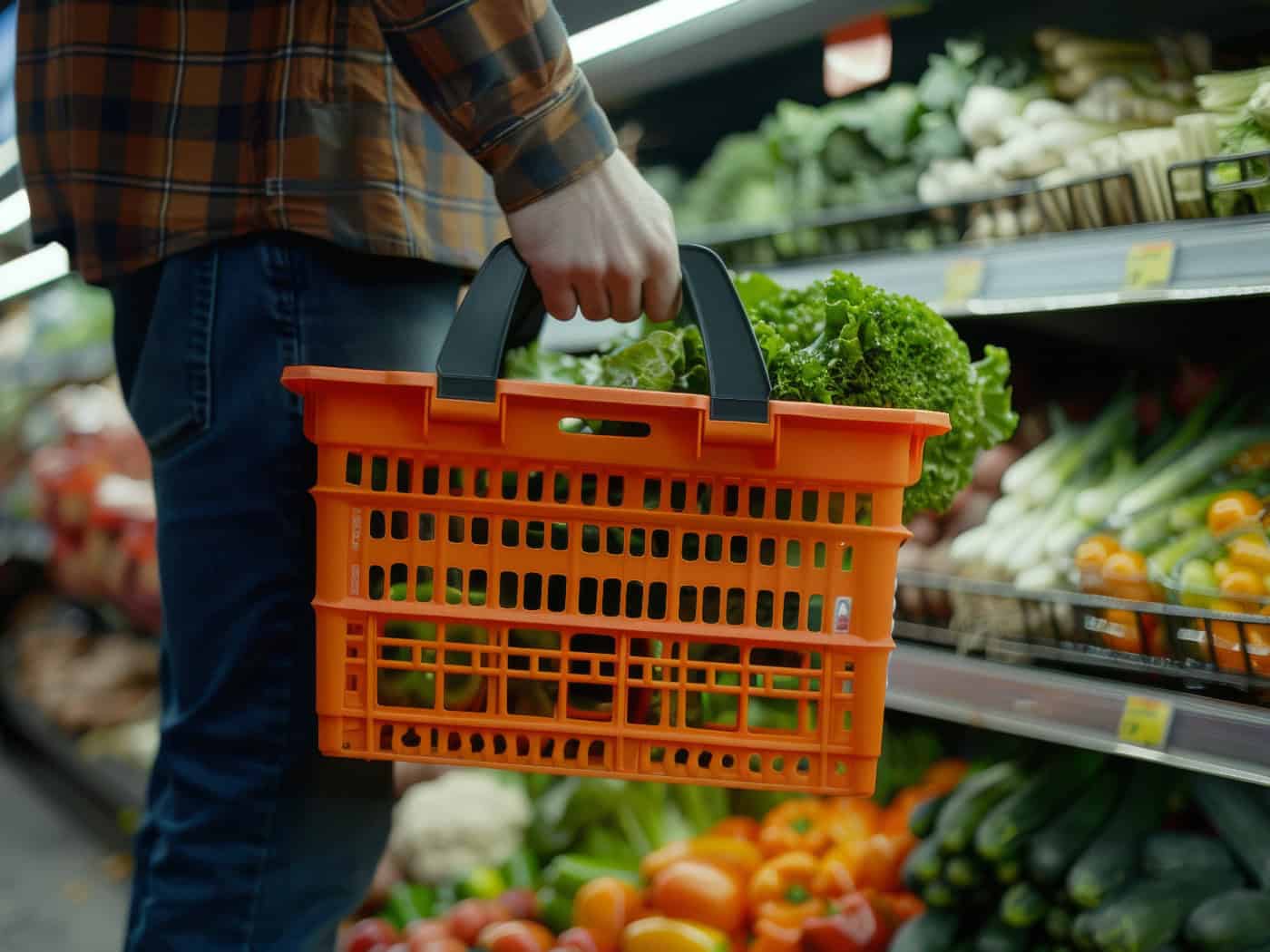
When food prices rise, many people think more carefully about what goes into their shopping carts. As prices go up, some people are more likely to cut back on organic foods. However, this does not apply to everyone, as a study by the University of Leipzig and the Leibniz Institute for Economic Research in Halle (IWH) shows. Inflation concerns influence sustainable consumption in different ways – depending on how important environmental and climate protection are to people.
People with a strong environmental consciousness continue to buy organic food even as prices rise. Those who are less interested in these issues, on the other hand, are less likely to choose sustainable products. According to the researchers, there are several possible reasons for this. In times of rising inflation concerns, organic food is more often perceived as a luxury good. Furthermore, it is more socially acceptable to forgo organic products, which are usually more expensive, explains economist Prof. Dr. Lena Tonzer of the University of Leipzig.
Two surveys and a shopping cart experiment
Tonzer and her colleague Prof. Dr. Sabrina Jeworrek from the IWH analyzed two online surveys conducted in 2023 and 2024. The participants represented a cross-section of the German population. Some were given current inflation figures. The researchers then compared whether this changed their willingness to buy organic food.
In addition, participants in Halle (Saale) and Magdeburg filled a virtual shopping cart online in 2023. Depending on whether they had first received information about inflation or sustainable consumption, their shopping choices differed. “We found that higher inflation rates and the associated concerns affect not only consumption in general but also sustainable consumption behavior,” says Sabrina Jeworrek.
Environmental awareness makes a difference
Previous studies had already shown that income or social norms can influence sustainable shopping behavior. “A sudden drop in income can lead to a reduction in sustainable consumption, since sustainable products are often more expensive than conventional ones,” explains Tonzer. However, the role that inflation concerns play in this context has hardly been studied to date.
“The research findings show that the consumption of organic food, in particular, can decline during periods of high inflation and the resulting concerns,” Tonzer summarizes.
The researchers therefore see two possible approaches. Stable price trends could support sustainable consumption. At the same time, greater environmental awareness could encourage people to choose organic foods more often, even during periods of high inflation. According to the researchers, educational programs on climate change and the conscious use of resources can help in this regard.

